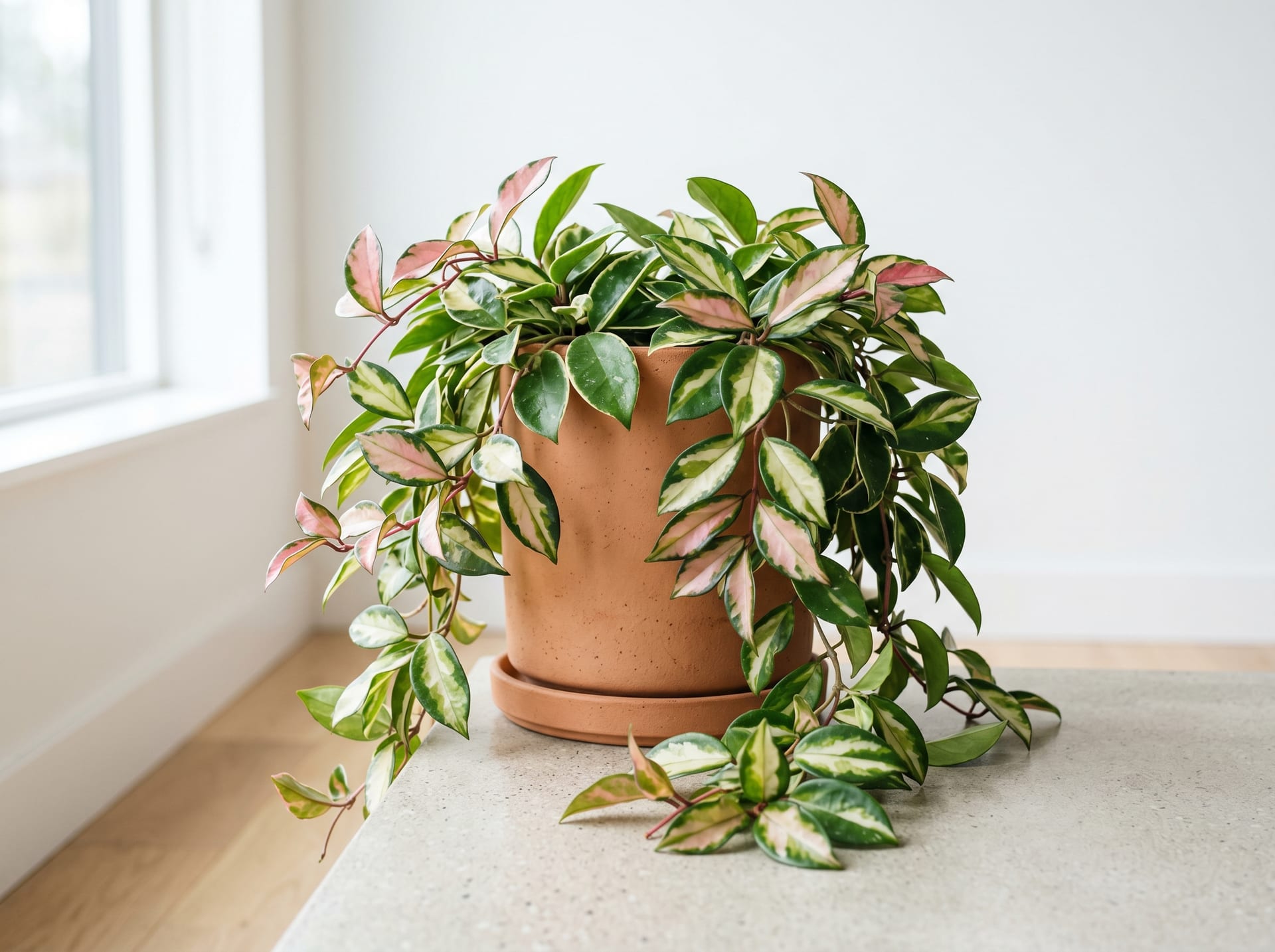
Hoya
Hoya is a vining succulent native to Southeast Asia, prized for its thick, glossy leaves and clusters of star-shaped flowers with a sweet fragrance. It tolerates low light and requires infrequent watering, making it an excellent choice for beginners and busy plant owners. With hundreds of varieties offering diverse leaf shapes and variegation patterns, Hoya has become a favorite among collectors.
Grower Wanted!
List your plants on GrowerDirect and sell directly to customers nationwide!
6 Transparency Commitments from GrowerDirect
Every Grower selling Foliage Plants provides complete transparency: variety, origin, light requirements, and care difficulty.
- Variety Information
- Real Photos
- True Colors
- Origin Information
- Light Requirements
- Care Difficulty
Browse all 139 varieties
Light Requirements
Care Difficulty
No listings match your filters
Adjust your filters, or get notified when new listings arrive.
Getting alerts is free with a member account. When new listings match your saved search, we'll notify you by email and in-app.
Browse other categories
Verified growers (preview)
Are you growing foliage plants?
Register as a grower and connect with buyers directly.
Apply as a growerAbout Hoya
Hoya, a member of the family Apocynaceae, is a genus of trailing succulents distributed across more than 300 species from Southeast Asia to northern Australia. The genus was named in the early 19th century by British botanist Robert Brown in honor of the renowned horticulturist Thomas Hoy. Its most distinctive feature is the umbel-shaped flower cluster—a hemispherical arrangement of star-shaped blooms that appear in white, pink, red, or yellow depending on the variety, and often emit a sweet, honey-like fragrance from central nectaries. The thick, glossy leaves retain moisture, giving Hoya a notable tolerance for dry conditions and irregular watering schedules, a quality that appeals to busy plant owners. Its adaptability to lower light levels makes it well suited to indoor cultivation, provided bright indirect light is available. As collector interest has grown, the number of varieties available in Japan has expanded steadily year by year, inviting enthusiasts to start with a single plant and build a diverse living collection over time.
7 things to know before growing Hoya
1Bright Indirect Light Is Best
Hoya thrives in bright indirect light but can suffer leaf scorch under prolonged direct sun. A spot near a window filtered by a sheer curtain is ideal. While it tolerates lower light, insufficient brightness will reduce or prevent flowering.
2Water Only When Soil Is Dry
Hoya stores water in its fleshy leaves and is susceptible to root rot if kept too wet. Allow the soil to dry out completely, then wait a few more days before watering thoroughly. During winter, when growth slows, reduce watering frequency further.
3Never Remove Old Flower Spurs
Hoya blooms repeatedly from the same peduncles (flower spurs). Cutting off these spurs after flowering eliminates future blooms from that stem. Remove only the spent flower clusters and leave the spur intact for continued flowering in coming seasons.
4Loves Warmth, Humidity, and Airflow
As a tropical plant, Hoya prefers warm temperatures and moderate to high humidity, ideally 50–70%. In dry winter conditions, misting or a humidifier can help. However, stagnant air promotes disease, so ensure adequate ventilation alongside humidity.
5Fertilize Lightly During Growth Season
Feed Hoya with diluted liquid fertilizer once or twice a month during the spring and summer growing season. Over-fertilizing encourages lush foliage at the expense of flowers. Stop fertilizing entirely in autumn and winter when the plant is dormant.
6Hoya Prefers a Snug Pot
Hoya actually tends to bloom better when slightly root-bound, so frequent repotting is unnecessary. Repot every two to three years into a pot just one size larger. The best time to repot is in spring, around May or June.
7Train as a Vine or Let It Trail
As a vining plant, Hoya looks great trained up a trellis or hoop, or allowed to cascade from a hanging pot. When guiding the vines, avoid tying too tightly and adjust as the plant grows. Some varieties can extend several meters in length under good conditions.
Frequently asked questions about Hoya
- Q.Why isn't my Hoya blooming?
- A.Insufficient light or too much root space in the pot are the most common reasons for a lack of blooms. Move the plant to a brighter spot with indirect light and hold off on repotting until the roots are mildly pot-bound. Also check that you haven't removed last year's flower spurs, as new buds emerge from the same stalks.
- Q.Why are the leaves turning yellow?
- A.Overwatering and the resulting root rot is the most frequent cause. Check whether the soil is staying persistently damp and hold off watering until it dries out. Leaf scorch from direct sun or sudden temperature drops can also cause yellowing.
- Q.How often does Hoya need repotting?
- A.Repot when roots begin to emerge from the drainage holes or when the soil repels water. Hoya is a slow grower, so repotting every two to three years is generally sufficient. Avoid repotting during active flowering or in the middle of winter.
- Q.Can Hoya be propagated from cuttings?
- A.Yes, stem cuttings root quite readily. Take a cutting with two or three nodes, remove the lower leaves, and place it in water or moist sphagnum moss. In bright indirect light, roots typically develop within a few weeks to a month.
- Q.Is Hoya safe to grow in homes with cats or dogs?
- A.Hoya is not listed on the ASPCA's toxic plant database and is generally considered to have low toxicity to cats and dogs. That said, ingesting large amounts may still cause mild gastrointestinal upset, so placing the plant out of reach on a high shelf is a sensible precaution in pet-friendly households.
Handy Growing Tools for Hoya
Hoya related articles
Complete Guide to Growing Hoya (Wax Plant) | Management and Training of Popular Varieties like Carnosa and Curly
A guide to growing Hoya (wax plant), a vining foliage plant. We provide detailed information on watering, potting soil, and flowering techniques for popular varieties like Hoya Carnosa and Hoya Curly, as well as training methods and propagation by cuttings.
Houseplants 2026 Trends | Complete Market Analysis & 15 Must-Watch Species Explained
Comprehensive analysis of 2026 houseplant trends. Based on SNS and domestic/global market movements, we've curated 15 must-watch species. Detailed guide to the houseplants to prioritize this year—including Philodendrons, Hoyas, and rare Aroids—plus purchasing methods and price ranges.
More in this category
Can't find the plant you're looking for?
Post your wishes for free and growers with matching plants will contact you with introductions.