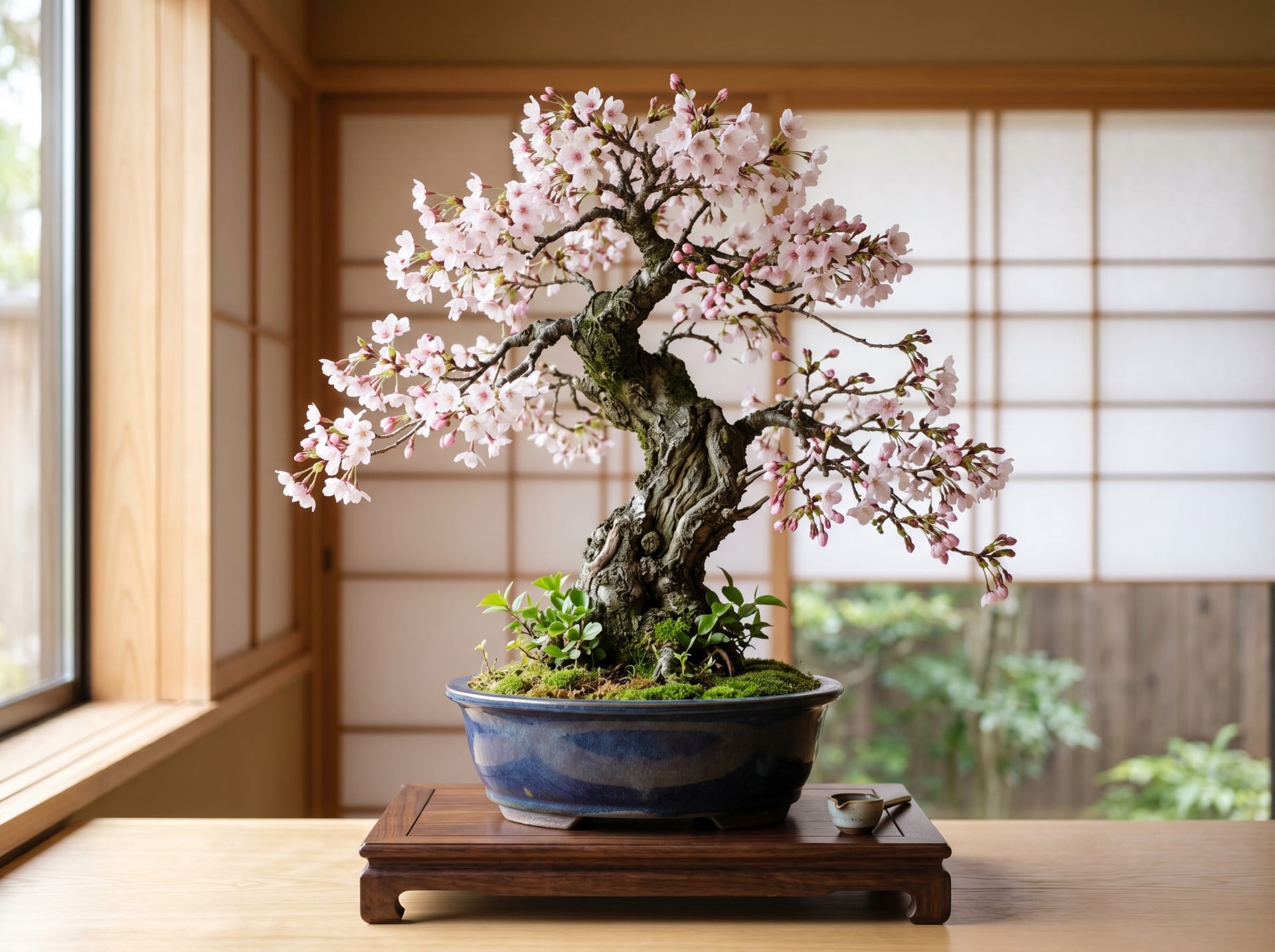
Cherry Blossom
Cherry blossom bonsai captures the essence of Japanese aesthetics through its spectacular spring blooms and delicate branching structure. Varieties such as Somei Yoshino and Fuji Cherry offer different flower sizes and hues, letting you enjoy the full cycle of seasons in a single pot. It is an intermediate-level tree that calls for attention to pests and post-pruning care, but once you have the fundamentals down, it rewards you with the satisfaction of blooms each year.
View Cherry Blossom encyclopedia →Grower Wanted!
List your plants on GrowerDirect and sell directly to customers nationwide!
6 Transparency Commitments from GrowerDirect
Growers clearly display the following information for all Bonsai listings. Guaranteed transparency for tree variety, origin, light requirements, and difficulty level.
- Tree Variety
- Real Photos
- Color & Appearance
- Growing Region
- Light Requirements
- Difficulty Level
Browse all 144 varieties
Light Requirements
Difficulty Level
No listings match your filters
Adjust your filters, or get notified when new listings arrive.
Getting alerts is free with a member account. When new listings match your saved search, we'll notify you by email and in-app.
Browse other categories
Verified growers (preview)
Cherry Blossom key facts
- Growing Difficulty
- Intermediate
- Lifespan
- 100+ years
- Size
- 15-50cm (bonsai size)
- Placement
- Full sun outdoors. Winter cold needed for flower buds
- Watering
- Very water-loving. Twice daily in summer
- Styling
- Avoid heavy pruning as the saying goes
- Notes
- Cuts are disease-prone. Seal with fungicide
About Cherry Blossom
The cherry blossom is a deciduous tree long bound up with Japanese aesthetics, cherished together with the culture of flower viewing. As a bonsai it is popular as a flowering subject, and compact varieties such as Fuji Cherry and Asahiyama suit bonsai especially well. Visually, the tree's finest traits are its intricately ramifying branches and the five-petaled flowers that burst open simultaneously each spring. Flower color ranges from pure white through soft to deep pink depending on the variety, and the vibrant fresh leaves that follow extend the display well into the green season. Autumn brings warm yellows and oranges, while the bare silhouette of winter branches carries its own quiet elegance. What makes cherry blossom bonsai especially rewarding is the unmistakable annual payoff: careful tending across all four seasons comes back to you as a canopy of bloom every spring — a satisfaction few other bonsai can match.
7 things to know before growing Cherry Blossom
1Sunlight Is Essential
Cherry blossom bonsai thrives in full sun and is best kept in a bright, sunny position. Insufficient light weakens flower bud formation, reducing or eliminating blooms the following spring. Keep your tree outdoors in the sunniest spot available as its default position.
2Watering Frequency
Cherry blossom bonsai dislikes drying out; water thoroughly whenever the soil surface begins to dry. During spring budding and summer heat, water stress can quickly kill the tree, so check moisture once or twice daily. In winter, root activity slows, so take care not to overwater.
3Prune Right After Bloom
Pruning immediately after flowering has a direct impact on the following year's bloom. Remove unnecessary branches as soon as the petals fall to refine the tree's shape. The Japanese saying "a fool cuts cherry trees" warns against large cuts on thick branches, but routine trimming of thin branches is both necessary and beneficial.
4When to Fertilize
The primary fertilizing window runs from after flowering through summer. Apply a balanced solid fertilizer with nitrogen, phosphorus, and potassium one to twice a month. In autumn, shift to a formula higher in phosphorus and potassium to strengthen flower buds, then pause fertilizing through winter.
5Watch for Pests and Disease
Cherry bonsai are prone to aphids, scale insects, and powdery mildew. Aphids tend to cluster heavily during new bud break, so early detection and appropriate pesticide application are effective countermeasures. Always seal pruning cuts with wound paste to prevent rot-causing fungi from entering.
6Cold Exposure in Winter
Cherry blossom bonsai requires a period of cold dormancy to bloom vigorously the following spring. In regions where temperatures drop below 0°C, shelter the tree under eaves or in an unheated cold frame—protecting it from frost and strong wind while still exposing it to outdoor cold. Overwintering in a warm indoor environment often leads to poor flowering the next year.
7Repotting Schedule
Cherry bonsai are vigorous root growers, so repotting every two to three years is recommended. The best time is in spring, immediately after flowering ends and before new growth begins in earnest. Neglecting repotting causes drainage to deteriorate and vigor to decline, which ultimately affects blooming, so maintain a regular repotting schedule.
Frequently asked questions about Cherry Blossom
- Q.Can I grow cherry blossom bonsai indoors?
- A.Cherry blossom bonsai is fundamentally an outdoor tree and is not suited to long-term indoor growing. Brief indoor display is fine, but keeping it inside year-round weakens the tree and reduces flowering over time. Exposure to winter cold during dormancy is necessary to trigger blooms the following spring.
- Q.Why won't my cherry blossom bonsai bloom?
- A.The most common causes are pruning at the wrong time (removing flower buds that form in summer), insufficient winter chilling, or inadequate sunlight. Prune right after flowering ends, allow full outdoor dormancy in winter, and keep the tree in a bright, sunny spot from spring to autumn. Review your fertilizing routine too, as nutrient deficiency can also reduce flowering.
- Q.Which varieties suit bonsai?
- A.Compact varieties such as Fuji Cherry (Mame-zakura), which grows densely branched, and Asahiyama suit bonsai well. Cherry is an intermediate-level tree that demands attention to pests and post-pruning care, so when choosing one, check the tree's form and condition carefully and build up your skills with the basics as you go. Somei Yoshino also offers lovely blooms, but it tends to grow larger than the compact varieties, so keep that in mind.
- Q.When and how often should I repot?
- A.The ideal time to repot is immediately after the flowers fall, before new growth gets going. As a general guide, repot once every two to three years. Root binding degrades drainage and weakens the tree, so check root condition regularly rather than waiting for obvious decline.
- Q.What should I check when buying a cherry blossom bonsai?
- A.First check that the branches ramify finely and the shape is well balanced, and that the trunk and pruning cuts are free of damage. It is also important to look for aphids, scale insects, or signs of powdery mildew on the leaves and branches. Check the flower bud set and the condition of the base as well; for first-time growers, starting with a smaller, easier-to-handle tree is the usual approach.
Handy Growing Tools for Cherry Blossom
Learn more about Cherry Blossom in the encyclopedia
View Cherry Blossom encyclopedia entry →
Care difficulty, size, origin and light needs — all basics covered.
More in this category
Can't find the plant you're looking for?
Post your wishes for free and growers with matching plants will contact you with introductions.