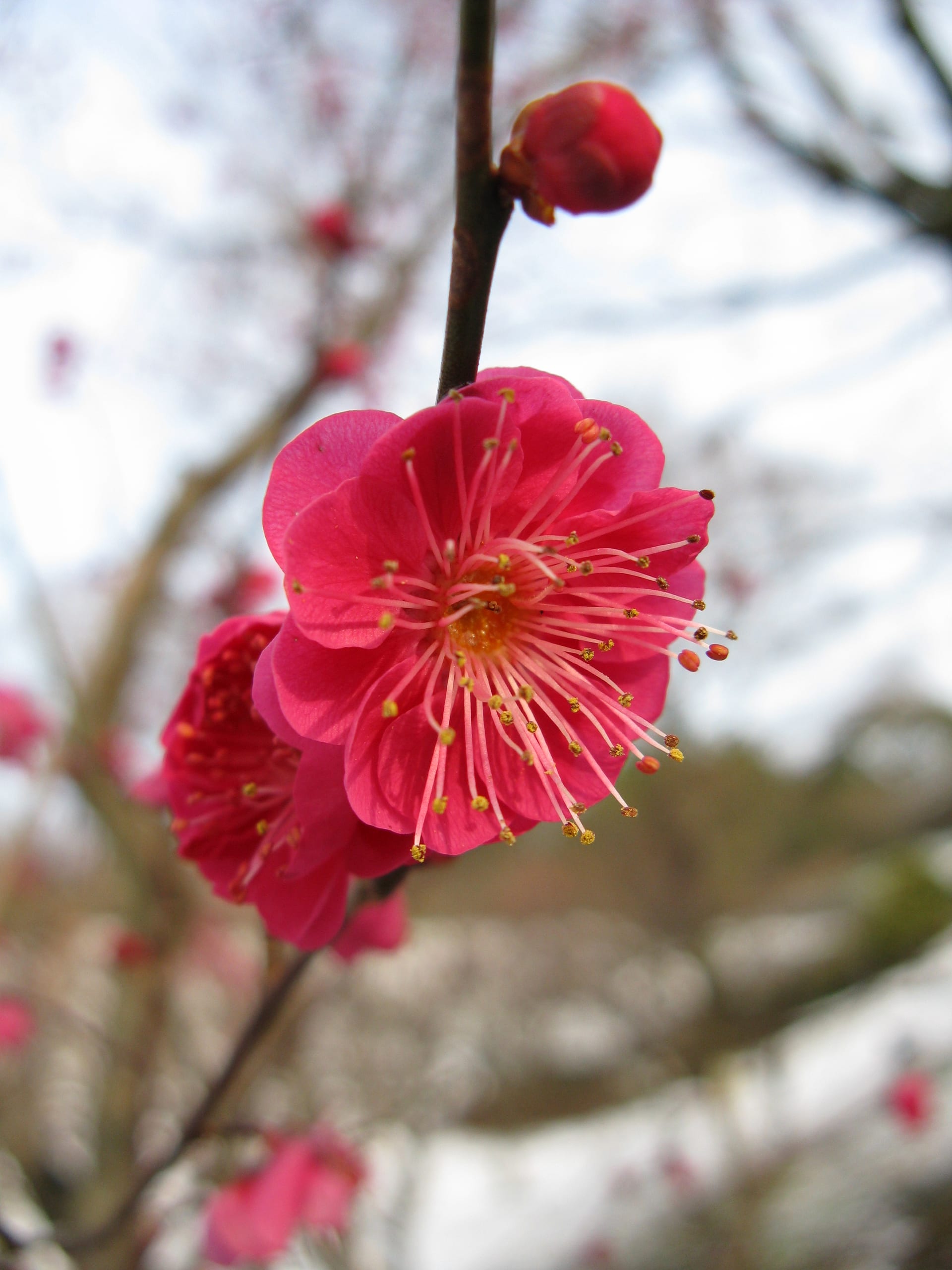
 © KENPEI / CC BY-SA 3.0
Kagoshima-beni Japanese apricot
Kagoshima-beni is one of the most iconic red-flowering plum (ume) varieties, belonging to the hibai group known for its richly colored blossoms. Its deep crimson, double-petaled flowers are medium-sized and bloom generously along the branches. What sets this variety apart is that the color runs deeper than the petals alone — even the pith of young branches and the leaf stalks take on the same rich red, so the tree carries a touch of its color even when not in bloom. Hibai varieties are also prized for their fragrance, and Kagoshima-beni is often the first name that comes up when bonsai growers talk about red ume. Ume trees are long-lived, and over the years this variety develops the dignified, aged character bonsai enthusiasts look for. Because it calls for solid basic care knowledge, it tends to suit growers who already have some experience with ume.
View Kagoshima-beni Japanese apricot encyclopedia →0% commission on your first sales!Register by September 30, 2026 and your first 2 plants are commission-free!
Grower Wanted!
List your plants on GrowerDirect and sell directly to customers nationwide!
6 Transparency Commitments from GrowerDirect
Growers clearly display the following information for all Bonsai listings. Guaranteed transparency for tree variety, origin, light requirements, and difficulty level.
- Tree Variety
- Real Photos
- Color & Appearance
- Growing Region
- Light Requirements
- Difficulty Level
Browse all 144 varieties
Light Requirements
Difficulty Level
No listings match your filters
Adjust your filters, or get notified when new listings arrive.
Getting alerts is free with a member account. When new listings match your saved search, we'll notify you by email and in-app.
Browse other categories
Verified growers (preview)
Kagoshima-beni Japanese apricot key facts
- Growing Difficulty
- Intermediate
- Lifespan
- Ume is long-lived; some potted ume are said to be 400 years old
- Size
- Ume is a small deciduous tree of 3–10 m; as bonsai it is trained to suit the pot
- Watering
- Fertilizer (March–June after flowering and Sept–Nov; none in summer)
- Light & placement
- Needs plenty of sun from spring to set flower buds. Keep in a sunny, airy spot, with shade cloth in summer as leaves scorch easily
- Watering
- Naturally thirsty and dries fast while in leaf: 1–2 times daily in spring/autumn, 2–3 in summer, every 2–3 days in winter, soaking once the surface dries
- Temperature & overwintering
- Dormant in winter. Protect under the bench or in a cold frame so frozen soil and late frosts do not damage the roots
- Soil & repotting
- Mostly akadama with about 20% free-draining grit. Repot around February before budbreak, together with post-flowering pruning: every 1–2 years, 2–3 for old trees
- Fertilizer
- A heavy feeder: small regular feeds March–June after flowering, stop in summer while buds form, then feed well Sept–Nov. Use a phosphorus-rich flowering/fruiting fertilizer
- Pruning & styling
- Remove spent flowers at 50–70% bloom to save the tree's strength, and prune right after flowering. Buds form in July–August, so in May pinch new shoots on mature trees at 4–6 nodes
- Pests & cautions
- Watch for aphids, spider mites, scale, clearwing moth borers (oozing sap), powdery mildew and scab. Flowering ume are prone to bacterial canker, so avoid strong wind
About Kagoshima-beni Japanese apricot
Kagoshima-beni is a classic red-flowering bonsai plum from the hibai group, known for its deep crimson double blooms and red-tinted branch pith. Ume are long-lived trees, and growing this variety calls for some basic care experience.
7 things to know before growing Kagoshima-beni Japanese apricot
1Give It Full Sun
Ume are sun-loving trees, and Kagoshima-beni needs light reaching even its outer branch tips to flower well. Keep it outdoors in a well-ventilated, sunny spot rather than growing it indoors long-term.
2Water in Wet-Dry Cycles
Water thoroughly once the soil surface has dried out. Avoid keeping the soil constantly damp, since overwatering can lead to root rot — alternating between moist and dry is the safer rhythm.
3Choose Well-Draining Soil
A soil mix based mainly on akadama with good drainage and aeration works best. Fine, compacted soil can cause root congestion, so a blend formulated for bonsai is a safer choice.
4Repot Before Bud Break
Repot around February, before the buds break, together with the post-bloom pruning. Tidying the roots once every one to two years (every two to three years for old trees) keeps the tree from becoming pot-bound and healthy.
5Prune Right After Flowering
Kagoshima-beni sets flower buds on the previous year's growth, so pruning at the wrong time reduces next year's blooms. Trim back the branches right after flowering ends, letting the new shoots develop the following season's buds.
6Red Runs Into the Pith
Beyond the flower color, Kagoshima-beni is known for turning deep red even in the pith of thin branches and the leaf stalks. This inner coloring is a useful clue for identifying the variety even outside the blooming season.
7Watch for Pests Early
Ume can be affected by aphids and black spot disease, among other issues. Keeping the tree well-ventilated and checking the branches and leaves regularly makes it easier to catch problems early.
Frequently asked questions about Kagoshima-beni Japanese apricot
- Q.Is Kagoshima-beni suitable for beginners?
- A.This variety is considered intermediate-level, requiring a basic understanding of pruning and watering. Growers who already have some experience with ume can take it on without much difficulty.
- Q.When does it bloom?
- A.Ume flower in late winter to early spring, and Kagoshima-beni blooms with deep crimson flowers during that same window. The exact timing shifts depending on the region and climate.
- Q.What makes Kagoshima-beni distinctive?
- A.Beyond its deep red, double-petaled, medium-sized flowers, its defining trait is that even the pith of thin branches and the leaf stalks turn deep red. The fragrance, typical of hibai varieties, is another draw.
- Q.How long can this tree live?
- A.With ongoing care it can be grown for many years, and over time it develops the dignified character of an aged specimen.
- Q.How large does it get as a bonsai?
- A.As a bonsai it is shaped to fit its pot, so it stays compact. Pruning lets you keep it at the size you prefer.
Handy Growing Tools for Kagoshima-beni Japanese apricot
Learn more about Kagoshima-beni Japanese apricot in the encyclopedia
View Kagoshima-beni Japanese apricot encyclopedia entry →
Care difficulty, size, origin and light needs — all basics covered.
More in this category
Can't find the plant you're looking for?
Post your wishes for free and growers with matching plants will contact you with introductions.