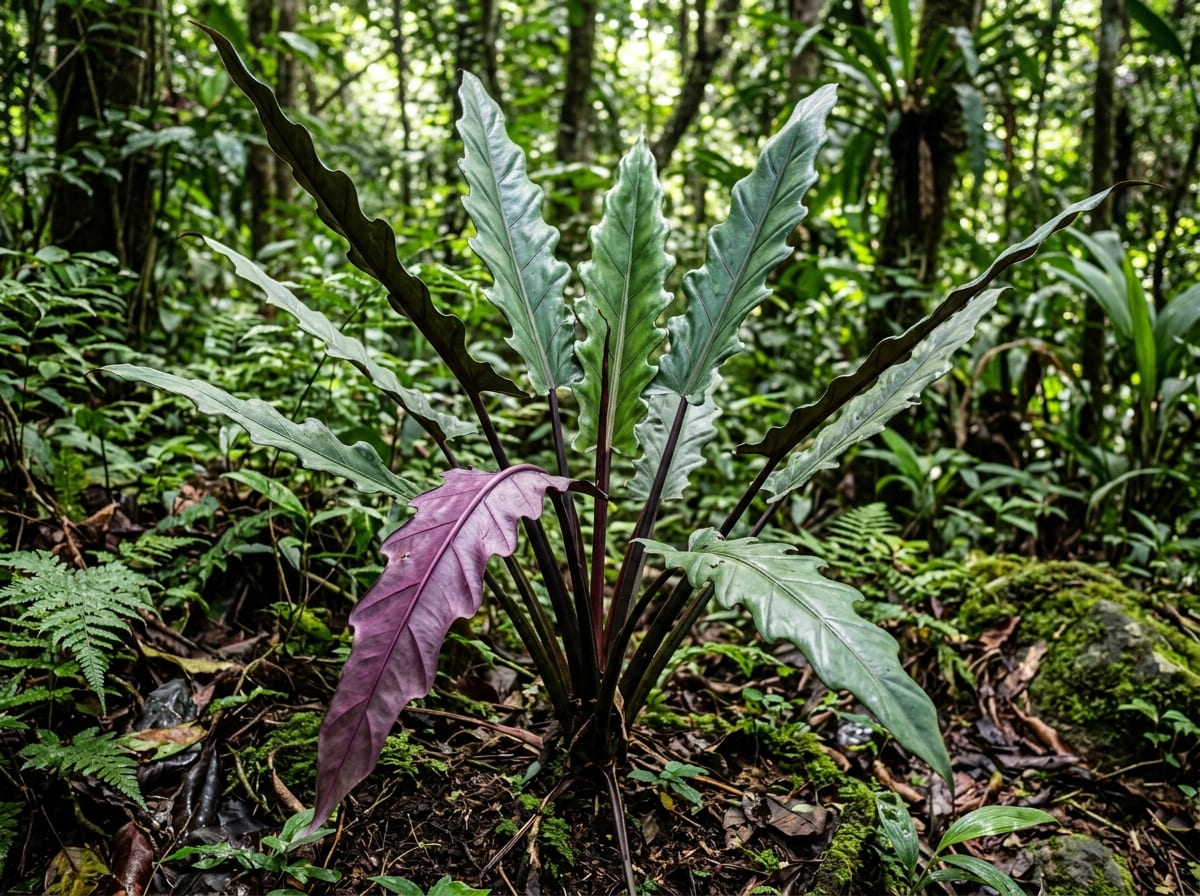
Purple Sword
Alocasia lauterbachiana, widely known by its trade name "Purple Sword," is a striking aroid native to New Guinea. Its long, blade-like leaves grow upright, with margins that curve into a gentle wavy scallop along each edge. The upper leaf surface carries a metallic green sheen, while the underside reveals a deep purple hue, giving the plant a dramatic two-tone character that shifts with the angle of view. As a perennial suited to growers with some prior experience, it rewards attentive care with years of striking upright foliage, adding vertical presence even to compact spaces.
View Purple Sword encyclopedia →0% commission on your first sales!Register by September 30, 2026 and your first 2 plants are commission-free!
Grower Wanted!
List your plants on GrowerDirect and sell directly to customers nationwide!
6 Transparency Commitments from GrowerDirect
Every Grower selling Foliage Plants provides complete transparency: variety, origin, light requirements, and care difficulty.
- Variety Information
- Real Photos
- True Colors
- Origin Information
- Light Requirements
- Care Difficulty
Browse all 139 varieties
Light Requirements
Care Difficulty
No listings match your filters
Adjust your filters, or get notified when new listings arrive.
Getting alerts is free with a member account. When new listings match your saved search, we'll notify you by email and in-app.
Browse other categories
Verified growers (preview)
Are you growing foliage plants?
Register as a grower and connect with buyers directly.
Apply as a growerPurple Sword key facts
- Growing Difficulty
- Intermediate
- Lifespan
- Perennial
- Size
- Upright leaves reach about 1.5 m; blades about 50 cm long
- Temperature
- 20〜25℃
- Humidity
- 60〜70%
- Watering
- Dilute liquid feed in the growing season
- Light & Placement
- Bright shade or light through a sheer curtain. Too little light makes the petioles stretch and flop.
- Watering
- Water well when the surface dries in the growing season; water less often and keep drier in winter.
- Temperature & Overwintering
- Its habitat is humid tropical forest at about 60-70% humidity year-round. Aim for the genus optimum of about 20-25°C and keep it warm indoors in winter.
- Soil & Repotting
- A free-draining, slightly acidic mix with organic matter. Repot in spring to early summer when root-bound.
- Propagation
- Propagate from offsets or tubers.
- Pests & Cautions
- Watch for spider mites, aphids and mealybugs. Contains calcium oxalate; keep away from pets and children.
About Purple Sword
Alocasia lauterbachiana, or "Purple Sword," is a New Guinea native with long, blade-like leaves — metallic green above, deep purple below. An intermediate-level perennial prized for its upright, sculptural form.
7 things to know before growing Purple Sword
1Light & Placement
Alocasia lauterbachiana prefers bright, indirect light, such as a spot behind a sheer curtain, and should be kept out of direct sun. Strong direct sunlight can scorch the leaves, so extra care is needed in summer. Since the leaves grow upright, choose a spot with enough overhead clearance for the plant to reach its full height.
2Watering Basics
Water thoroughly once the topsoil has dried out, and empty any water left in the saucer to prevent root rot. During the winter dormant period, space out waterings and keep the soil slightly drier to avoid stressing the plant.
3Soil & Drainage
This plant favors well-draining soil, so mixing pumice or perlite into a standard houseplant potting mix helps improve aeration. Since excess moisture can lead to root rot, make sure the pot itself drains well too.
4When to Repot
Repot into a slightly larger pot once the roots have filled the current one. Doing this during the warmer growing season helps minimize stress on the plant.
5Winter Care
This plant is sensitive to cold, so keep it in a warm indoor spot as temperatures drop. Avoid sudden temperature swings and cold drafts, which can damage the leaves.
6Maintaining Humidity
In dry conditions the leaf tips can become damaged, so misting occasionally to maintain humidity around the plant helps keep it healthy. Also avoid spots where air conditioning airflow hits it directly, as that dries the air further.
7Choosing a Healthy Plant
Look for a plant with thick, glossy, well-colored leaves as a sign of good health. Avoid plants with browning leaf tips or an unstable, wobbly base.
Frequently asked questions about Purple Sword
- Q.How difficult is Alocasia lauterbachiana to grow?
- A.It's considered suitable for growers with some prior experience, and as a perennial it can be enjoyed for years once you get the basics of placement and watering right. If it's your first Alocasia, getting comfortable with light and humidity management is a good place to start.
- Q.Why is the underside of the leaf purple?
- A.This is a defining trait of the plant — the upper leaf surface has a metallic green sheen while the underside is a deep purple. This color contrast is why it's sold under the trade name "Purple Sword."
- Q.How large does this plant get?
- A.The leaves grow upright and can reach around 1.5 meters, with individual leaf blades reaching about 50 cm in length. Its long, sword-like leaves stretch upward as the plant matures.
- Q.Why are the leaf tips turning brown?
- A.This is commonly caused by dry air, inconsistent watering, or sudden temperature changes. Misting to maintain humidity and avoiding spots with temperature swings can help prevent it.
- Q.Where should I place this plant?
- A.A bright spot out of direct sunlight works best. Since the leaves grow upward, choosing a location with enough overhead clearance helps the plant maintain its natural upright form.
Handy Growing Tools for Purple Sword
Learn more about Purple Sword in the encyclopedia
View Purple Sword encyclopedia entry →
Care difficulty, size, origin and light needs — all basics covered.
More in this category
Can't find the plant you're looking for?
Post your wishes for free and growers with matching plants will contact you with introductions.