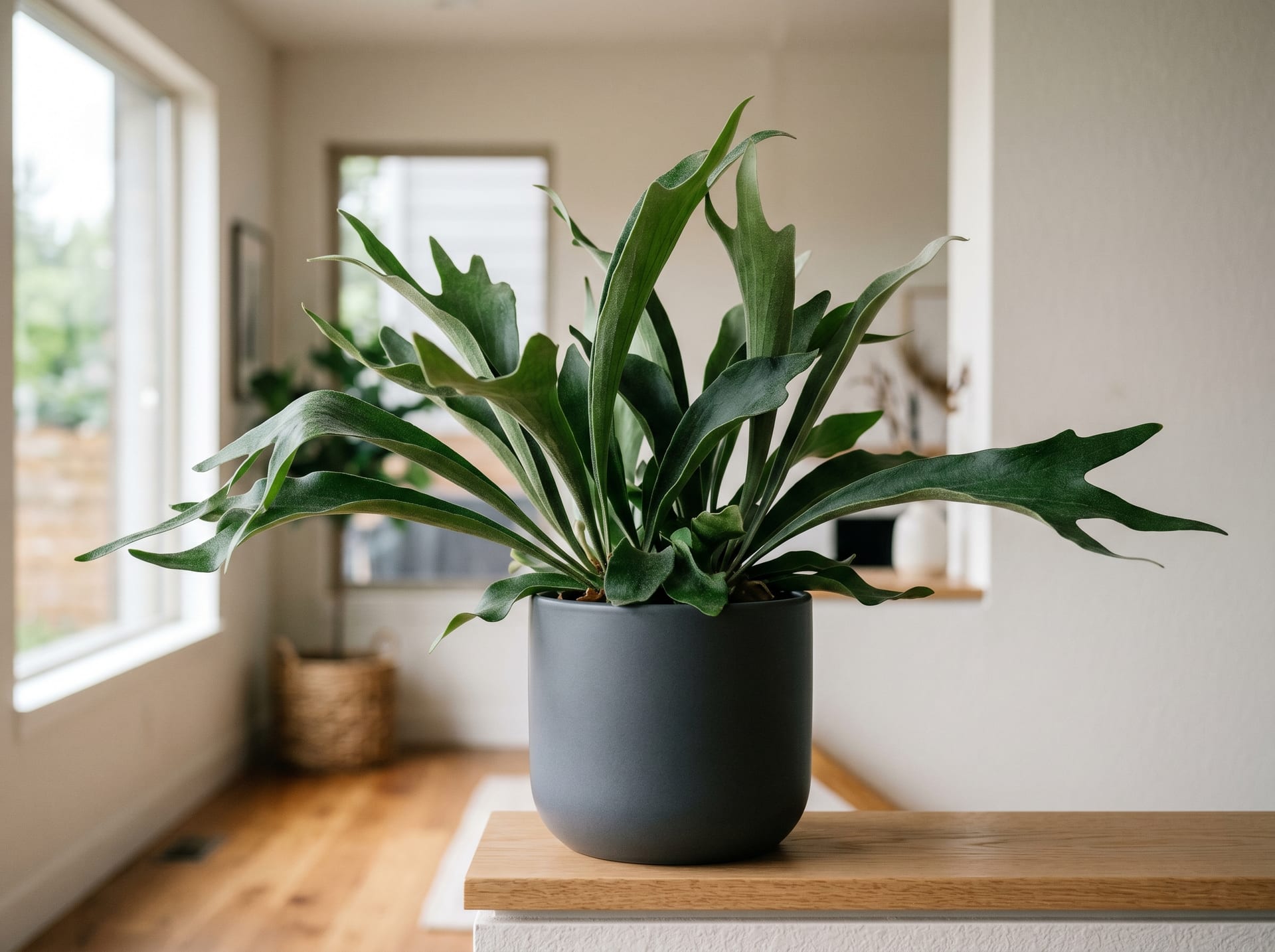
Staghorn Fern
Staghorn fern (Platycerium) is an epiphytic fern prized for its striking antler-shaped fronds that resemble a bat in flight. It thrives mounted on driftwood or cork boards, making it a popular choice for living wall art. With bright indirect light and careful watering that keeps water out of the shield fronds, it is a rewarding intermediate-level plant that lasts for many years once you get the hang of it.
View Staghorn Fern encyclopedia →Grower Wanted!
List your plants on GrowerDirect and sell directly to customers nationwide!
6 Transparency Commitments from GrowerDirect
Every Grower selling Foliage Plants provides complete transparency: variety, origin, light requirements, and care difficulty.
- Variety Information
- Real Photos
- True Colors
- Origin Information
- Light Requirements
- Care Difficulty
Browse all 139 varieties
Light Requirements
Care Difficulty
No listings match your filters
Adjust your filters, or get notified when new listings arrive.
Getting alerts is free with a member account. When new listings match your saved search, we'll notify you by email and in-app.
Browse other categories
Verified growers (preview)
Are you growing foliage plants?
Register as a grower and connect with buyers directly.
Apply as a growerStaghorn Fern key facts
- Growing Difficulty
- Intermediate
- Lifespan
- 20+ years
- Size
- 30-100cm
- Temperature
- 15〜30℃
- Humidity
- 60〜80%
- Watering & Fertilizer
- Liquid fertilizer 1-2x monthly in spring-fall. Root nutrition important for epiphyte
- Placement
- Bright indirect light. Direct sun causes leaf burn
- Watering
- For mounted plants, submerge fully in water to hydrate
- Humidity
- Prefers high humidity. Mist leaves regularly
- Temperature & Overwintering
- Optimal is 20-25°C, within a 15-30°C range. Bring it into a warm room in winter and aim for 60-80% humidity.
- Mounting
- Mounting on boards or driftwood is standard style
- Pests & Cautions
- Do not remove shield fronds even when they turn brown. Water at the base or from behind the fronds so water does not pool in the shield.
About Staghorn Fern
The staghorn fern (Platycerium) is an epiphytic fern native to eastern Australia and the Pacific islands. Its genus name derives from the Greek for "flat horn," a nod to its dramatic antler-shaped fronds. In the wild, it clings to tree trunks and rocky surfaces, thriving without soil. Its most distinctive feature is its dual-frond system: rounded shield fronds that protect roots and retain moisture, and spreading antler fronds that carry spores and give the plant its iconic silhouette. This sculptural form has made it a favorite in interior design. Relatively hardy and resistant to common pests, it adapts well to mounted displays, hanging baskets, and living wall art. With popular species ranging from Platycerium bifurcatum to the showstopping P. grande and P. willinckii, there is a staghorn fern for every aesthetic — a quality that keeps collectors coming back for more.
Featured Growers Selling Staghorn Fern
Browse all Staghorn Fern growers (1 total) →7 things to know before growing Staghorn Fern
1Two Types of Fronds
Staghorn ferns produce two distinct frond types: shield fronds (basal fronds) that turn brown and protect the root ball, and antler fronds that grow outward and bear spores. The brown shield fronds should never be removed, as they store water and nutrients for the plant. Understanding this two-frond system is key to proper care.
2Light Requirements
Direct sunlight can scorch the fronds, so bright indirect light is ideal indoors, such as near a window with filtered light. Outdoors, a sheltered spot with dappled shade works well. Insufficient light will result in poor frond growth, so finding the right balance is important.
3Watering Timing
For mounted or hanging specimens, water thoroughly once the shield fronds and moss feel dry to the touch; a mounted plant can be soaked whole in water to absorb moisture. Water from the base or the underside of the fronds so that water does not collect in the shield fronds. Good air circulation is essential to prevent root rot from prolonged moisture, so adjust the frequency to the season and the plant's condition.
4Mounting on Boards
As a naturally epiphytic plant, staghorn ferns grow best when mounted on boards, cork slabs, or driftwood — a method called "ita-tsuke" in Japanese. Attach the plant with moist sphagnum moss using jute twine or fishing line. Mounting improves airflow around the roots, reducing rot risk while showcasing the plant's dramatic form.
5Humidity and Airflow
Staghorn ferns prefer high humidity, and keeping it at around 60–80% helps them grow steadily. However, stagnant humid air can cause rot, so good airflow is equally important. Using a small fan or placing the plant under a sheltered outdoor eave during the rainy season helps maintain the right balance.
6Fertilizing Tips
During the growing season (spring to autumn), apply diluted liquid fertilizer once or twice a month to encourage healthy growth. Slow-release solid fertilizer can also be tucked behind the shield fronds for a steady supply of nutrients. Avoid fertilizing in winter when the plant is dormant to prevent root stress.
7Winter Temperature Care
The ideal growing temperature is 20–25°C, and it is best kept within a range of 15–30°C. In winter, bring the plant into a warm room and keep humidity at around 60–80%. Also keep it away from cold drafts near windows.
Frequently asked questions about Staghorn Fern
- Q.Should I remove the brown shield fronds?
- A.Browning shield fronds are a natural part of the plant's life cycle and should not be removed. They continue to store water and nutrients while protecting the root mass, so leaving them in place is essential for the plant's health. Removing them forcibly can damage the plant.
- Q.Is pot growing or board mounting easier for beginners?
- A.Potted growing can be more straightforward for beginners since it is easier to monitor moisture levels. However, mounting on a board provides better airflow and reduces root rot risk, and many find it more rewarding once they get the hang of it. Both methods work well with sphagnum moss as the growing medium.
- Q.Can staghorn ferns tolerate direct sunlight?
- A.Intense direct sunlight, especially afternoon summer sun, can scorch the fronds and should be avoided. Bright indirect light or gentle morning sun is ideal. If growing outdoors, a 30–50% shade cloth will help protect the plant during the hottest months.
- Q.How do you propagate a staghorn fern?
- A.The most common propagation method is dividing offsets (pups) that naturally emerge around the base of a mature plant. Wait until each pup has developed at least one shield frond before separating and mounting it. Growing from spores is also possible but takes several years to reach maturity, making it better suited for experienced growers.
- Q.What should I do if the base turns black and rots?
- A.Blackening at the base may indicate root rot, which requires prompt attention. First, improve airflow around the plant and replace overly wet sphagnum moss with fresh, barely moist moss. Remove any visibly rotten tissue with clean scissors and let the cut area dry. If you use a fungicide, check the label to confirm it is registered for the disease in question and follow the directions given there.
Handy Growing Tools for Staghorn Fern
Learn more about Staghorn Fern in the encyclopedia
View Staghorn Fern encyclopedia entry →
Care difficulty, size, origin and light needs — all basics covered.
More in this category
Can't find the plant you're looking for?
Post your wishes for free and growers with matching plants will contact you with introductions.