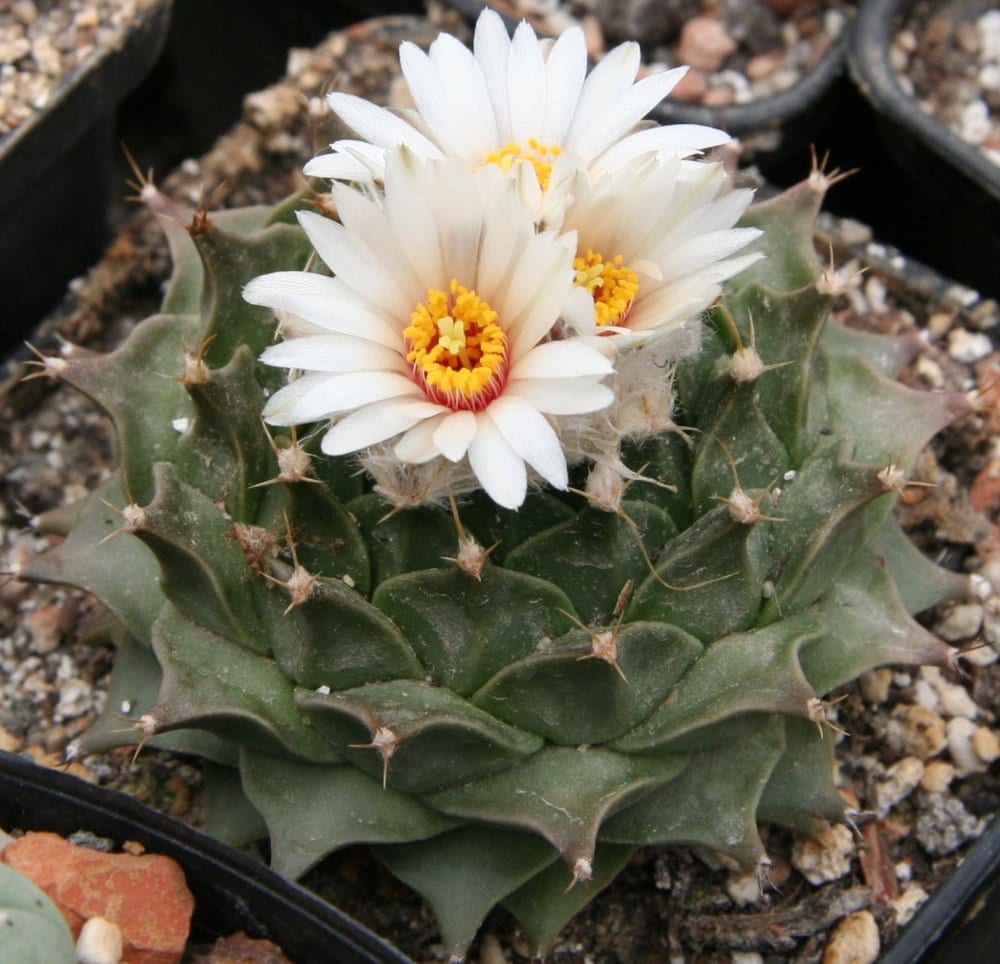
 © Michael Wolf / CC BY 2.5
Grower Direct Marketplace
Succulents & Cacti Direct from Growers
Buy Succulents & Cacti directly from verified Grower who cultivate them with care. All listings include variety, origin, light requirements, and difficulty level.
Grower Wanted!
List your plants on GrowerDirect and sell directly to customers nationwide!
6 Transparency Commitments from GrowerDirect
Grower disclose this information for Succulents & Cacti. We guarantee transparency in variety, origin, light requirements, and difficulty level.
- Variety Disclosed
- Real Photos
- Color Details
- Origin Disclosed
- Light Requirements
- Difficulty Level
Browse all 131 varieties
Light Requirements
Difficulty Level
No listings match your filters
Adjust your filters, or get notified when new listings arrive.
Getting alerts is free with a member account. When new listings match your saved search, we'll notify you by email and in-app.
Browse other categories
Verified growers (preview)
Are you growing succulents & cacti?
Register as a grower and connect with buyers directly.
Apply as a growerCan't find the plant you're looking for?
Post your wishes for free and growers with matching plants will contact you with introductions.
Explore the plant encyclopedia

About succulent
The succulent category on GrowerDirect lets you welcome distinctive succulents — Echeveria, Sedum, Haworthia, Kalanchoe and more — directly from the growers. With few steps in distribution, you can check how compact the plant is and the condition of leaves and roots before choosing. Succulents tolerate dryness well, but watering and light need a little know-how — learn their nature before you start.
7 things to know before growing succulent
1Prevent etiolation from too little light
When succulents lack light, stems stretch and leaves spread out in a condition called etiolation. A stretched form does not return to normal. Grow them where sun reaches well, and indoors place them at the brightest window, to keep a compact shape.
2Water sparingly and let the soil dry out
Succulents store water in their leaves and stems, so frequent watering is unnecessary. Water once the soil is fully dry, then leave a gap until it dries again — this supports healthy growth. Constantly wet soil is a major cause of root rot, so be careful not to overwater.
3Use a well-draining soil mix
Well-draining soil is essential for succulents. Standard foliage-plant soil holds too much water and can cause root rot. A succulent-specific mix, or a well-draining blend with pumice and akadama, helps roots grow healthy.
4Know the growth cycle — summer or winter type
Succulents include spring-autumn growers, summer-growing types, and winter-growing types. Watering amounts differ greatly between growing and resting periods. Knowing which type your succulent is, and adjusting care for the growing and dormant seasons, keeps it healthy.
5Keep watering minimal during dormancy
Succulents go dormant in periods of severe heat or cold, and growth nearly stops. Watering as usual then easily causes root rot. During dormancy, cut watering back sharply and keep plants in a well-ventilated spot — this prepares them for the next growing season.
6Catch the signs of root rot and humidity stress
Leaves turning translucent and soft, or a darkening base, are signs of root rot or humidity stress. When noticed, remove the damaged parts and replant in dry soil — the plant may recover. Keeping good airflow and observing the plant regularly leads to early detection.
7Confirm the plant's condition and growing environment with the grower
On GrowerDirect you welcome plants directly from growers, so you can ask the seller how compact the plant is and about leaf damage, etiolation, and root condition. Knowing whether it was grown outdoors or indoors makes adjusting light and watering at home easier.
Frequently asked questions about succulent
- Q.Are there succulents that are easy for beginners?
- A.Sedum, Graptopetalum, and some hardy Echeveria are considered relatively easy. Start with readily available species to learn light and watering, then move on to more demanding ones.
- Q.How often should I water?
- A.Water once the soil is fully dry — thoroughly during the growing season, much more sparingly in dormancy. Rather than fixing a number of days, judge by how dry the soil is and the growth cycle.
- Q.The stem stretched out and grew leggy.
- A.This is etiolation from too little light, and the stretched form will not revert. To reshape it, cut the stretched part and use it as a cutting, then grow it in a brighter spot for a compact form.
- Q.The leaves became translucent and soft.
- A.This is often a sign of root rot from overwatering or humidity. Remove damaged leaves and roots, replant in dry soil, and keep it on the dry side in a well-ventilated spot — it may recover.
- Q.How should I care for succulents in summer and winter?
- A.Many succulents go dormant in severe heat or cold. Cut watering back sharply during dormancy, focus on airflow and shading in summer and cold protection in winter, and let them rest gently before the growing season.
Handy Growing Tools for succulent
succulent related articles
Autumn–Winter Color Display and Styling Strategy | Color-Change Mechanisms and Management Techniques for Red, Purple, and Black Hues
A guide to the light, temperature fluctuation, and watering management techniques for bringing out autumn colors in succulents. Includes causes of weak or failed coloration, troubleshooting solutions, and how to select varieties with beautiful autumn displays.
Lithops (Living Jewels) Cultivation and Propagation ~ Complete Guide to Seasonal Management and Division Techniques
A succulent plant with a unique form—Lithops. It requires a unique seasonal pattern and advanced soil and moisture management. We'll explain in detail the professional techniques to multiply beautifully, organized by category.
Autumn Preparation Management for Summer-Type Succulents
A guide to autumn care for summer-type succulents, covering plant changes from September to November, timing for gradual watering reduction, placement and temperature management for transitioning plants indoors, autumn fertilizing and pest control, variety-specific care checkpoints, and preparation for winter dormancy.
Complete Guide to Growing Kalanchoe tomentosa (Panda Plant) | Tips for Keeping Fuzzy Leaves and Edge Markings Beautiful
Kalanchoe tomentosa (Panda Plant), popular for its leaves covered with fuzzy hairs that resemble rabbit ears. This guide explains how to care for it, including placement, watering, soil, and propagation methods, while keeping its fuzzy leaves and leaf-tip markings beautiful.
Mealybug Control on Succulents | Complete Guide to Early Detection, Removal, and Prevention
Mealybugs hide easily at the base of succulent leaves and on new growth. This guide covers their characteristics, the environments where they thrive, tips for early detection, removal methods using cotton swabs and alcohol, and daily care practices to prevent recurrence.
How to Care for Astrophytum: Preventing Root Rot Through Watering Control and the Summer Type Dormancy Cycle
A guide to caring for Astrophytum cactus. Introduces seasonal care steps from watering and light management during the growing period, water restriction during dormancy, to the timing of resuming watering in spring.