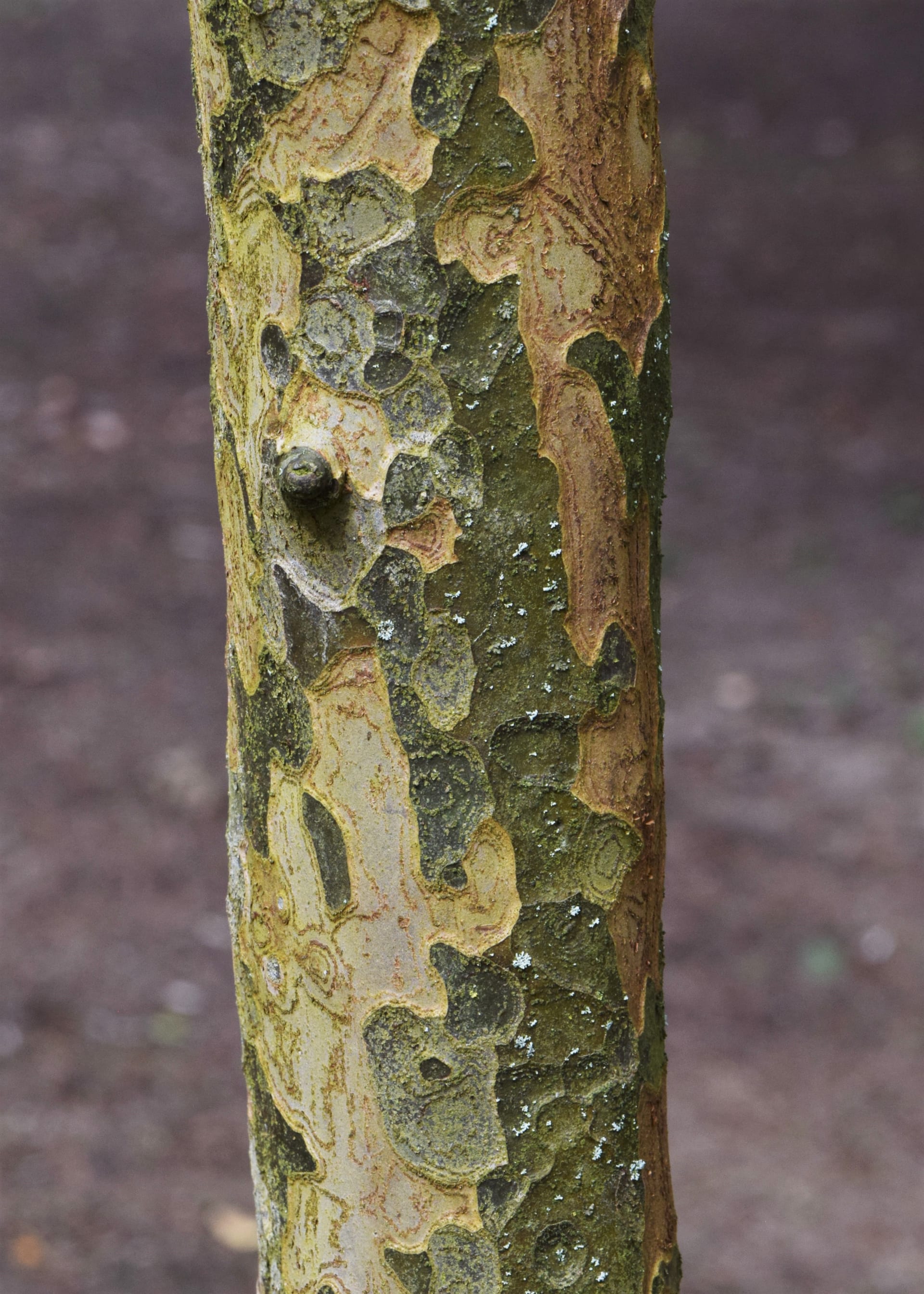
 © Krzysztof Ziarnek, Kenraiz / CC BY-SA 4.0
Chinese quince
Chinese quince (karin) is a deciduous tree native to China in the rose family, prized among fruiting bonsai for its dignified form and striking fruit. Its bark peels away in scale-like patches, leaving a mottled greenish-brown pattern that gives the trunk real character. Pale pink flowers appear in spring, followed in autumn by large yellow fruit 10 to 15 cm long, earning it the nickname "king of fruiting bonsai." In the wild it grows into a tree 5 to 10 meters tall, and as bonsai it is often trained into a medium-to-large form to keep it in proportion with its heavy fruit. Best suited to growers with some experience, it rewards patience with changing seasonal interest across bark, blossom, and fruit.
View Chinese quince encyclopedia →0% commission on your first sales!Register by September 30, 2026 and your first 2 plants are commission-free!
Grower Wanted!
List your plants on GrowerDirect and sell directly to customers nationwide!
6 Transparency Commitments from GrowerDirect
Growers clearly display the following information for all Bonsai listings. Guaranteed transparency for tree variety, origin, light requirements, and difficulty level.
- Tree Variety
- Real Photos
- Color & Appearance
- Growing Region
- Light Requirements
- Difficulty Level
Browse all 144 varieties
Light Requirements
Difficulty Level
No listings match your filters
Adjust your filters, or get notified when new listings arrive.
Getting alerts is free with a member account. When new listings match your saved search, we'll notify you by email and in-app.
Browse other categories
Verified growers (preview)
Chinese quince key facts
- Growing Difficulty
- Intermediate
- Lifespan
- Little data on lifespan
- Size
- 5–10 m tall (as bonsai often grown medium to large to balance the fruit)
- Watering
- Fertilizer (late April–July and Sept–Nov; none in August)
- Light & placement
- Sun-tolerant: keep in a sunny, airy spot, but give afternoon shade in summer. Protect flowers and new shoots from late spring frosts in the evening
- Watering
- Likes water: 1–2 times daily in spring, 2–3 in summer, every 2–3 days in winter. Never let it dry out from flowering to early fruit set, and keep water off the flowers
- Temperature & overwintering
- Cold-hardy, but in winter shelter it from cold wind and keep the pot from freezing
- Soil & repotting
- Repot every 1–2 years around February before budbreak (autumn also possible). Roots are vigorous and can be pruned boldly
- Fertilizer
- Feed well from late April to July as fruit develops, stop in August to help colouring, then feed again Sept–Nov, with extra phosphorus
- Pruning & styling
- Let new shoots grow until mid-June to early July, then cut back to 2–3 nodes to form short flowering spurs. Branches snap easily—do not wire mature trees
- Pests & cautions
- Watch for fruit borers, aphids, scale and cedar-quince rust. It is largely self-fertile, but pollen from another plant improves fruit set. Do not let it carry too many fruits
About Chinese quince
Chinese quince is a Chinese deciduous tree in the rose family, known as the "king of fruiting bonsai" for its peeling, mottled bark and large yellow autumn fruit 10-15 cm long. Best suited to intermediate growers, it is typically trained into a medium-to-large form.
7 things to know before growing Chinese quince
1Sun and Air Circulation
Chinese quince thrives with plenty of sunlight, so keep it outdoors in a bright, well-ventilated spot year-round. Strong afternoon sun in midsummer can scorch the leaves, so consider partial afternoon shade if your growing spot gets intense western sun.
2Watering Basics
During the growing season, water thoroughly once the soil surface has dried out. Summer heat dries the pot quickly, and letting it dry out while fruit is developing can cause fruit drop, so check soil moisture often.
3Well-Draining Soil
Chinese quince dislikes soggy roots, so use a well-draining mix based mainly on akadama soil. A standard bonsai potting mix works too, but make sure the pot drains well to help prevent root rot.
4When to Repot
Young trees grow roots quickly, so repot roughly every one to two years. The best time is early spring, before the flower buds begin to swell — trim the roots and move up to a slightly larger pot, or refresh the soil in the same one.
5Flower Buds and Pruning Timing
Chinese quince tends to set flower buds near the tips of the previous year's growth, so pruning at the wrong time can reduce next spring's flowers and fruit. Do any major shaping right after flowering through early summer, and avoid heavy cutting from autumn onward.
6Overwintering Care
As a deciduous tree, Chinese quince tolerates cold reasonably well, but potted trees are more prone to root damage from freezing than trees in the ground. During the coldest weeks, protect the roots by keeping the pot low to the ground or wrapping it in straw or garden fleece.
7Choosing a Young Tree
When selecting a tree to start with, look for one where the bark has already begun its characteristic scaly peeling near the base of the trunk, which lets you enjoy the classic texture sooner. A tree with a clear branch structure and not too many branches is also easier to train later.
Frequently asked questions about Chinese quince
- Q.Is Chinese quince the same as common quince?
- A.No, they are different plants. Chinese quince (karin) is native to China and has smooth-skinned fruit, while common quince (Cydonia oblonga) is a related but distinct species with fuzzy fruit skin.
- Q.Can you eat the fruit?
- A.The fruit is highly aromatic but too astringent to eat raw; it is more often used in fruit liqueurs or jam. If you are growing it as bonsai, it is best enjoyed mainly for its flowers and fruit display rather than as a food crop.
- Q.Is this a good tree for beginners?
- A.Chinese quince is generally considered better suited to intermediate growers, with a few things to watch such as soil drainage and pruning timing. It is easier to take on once you are comfortable with the basics of bonsai care.
- Q.Will it flower and fruit every year?
- A.With pruning at the right time and consistent watering, Chinese quince can flower and fruit reliably from year to year. That said, how much it blooms or fruits in a given year can vary with pruning timing and growing conditions.
- Q.How large does it grow?
- A.Left to grow naturally, Chinese quince reaches 5 to 10 meters tall, but as bonsai it is shaped to fit the pot. Because the fruit is large and heavy, it is often trained into a medium-to-large form to keep it in proportion.
Handy Growing Tools for Chinese quince
Learn more about Chinese quince in the encyclopedia
View Chinese quince encyclopedia entry →
Care difficulty, size, origin and light needs — all basics covered.
More in this category
Can't find the plant you're looking for?
Post your wishes for free and growers with matching plants will contact you with introductions.