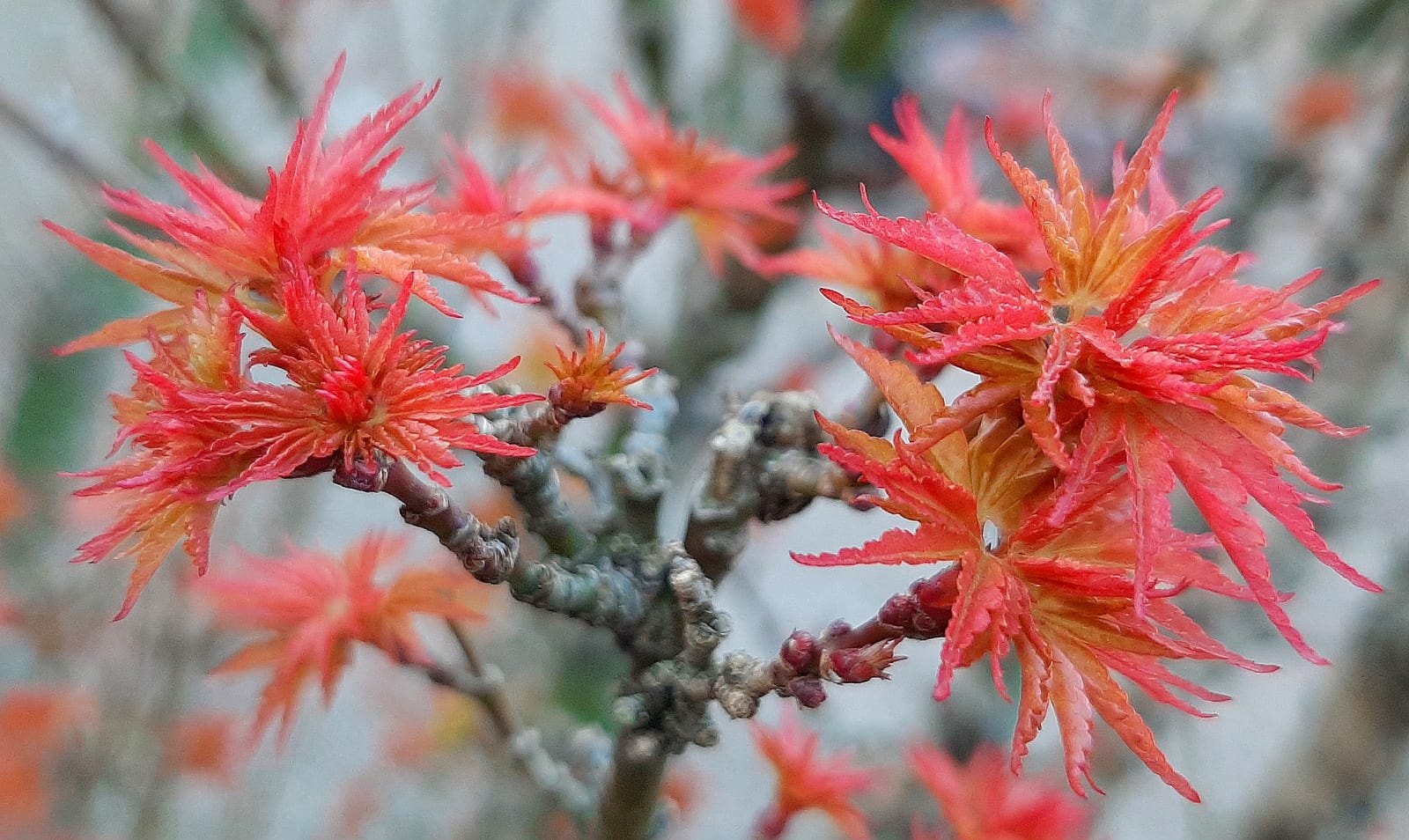
 © Jonathan Billinger / CC BY-SA 2.0
Shishigashira Japanese maple
Shishigashira is a distinctive Japanese maple cultivar known for its thick, tightly curled small leaves that cluster densely at the branch tips. Unlike typical Japanese maples with thin, flat-opening leaves, its foliage has such a unique texture that the cultivar can be identified by its leaves alone. With a compact, tightly branching growth habit, it is trained as a small-to-medium bonsai and is also grown as a garden tree. Beyond its striking foliage through spring and summer, it offers attractive autumn color as well, giving year-round visual interest. Because it benefits from general Japanese maple growing knowledge, it suits growers with some prior experience rather than absolute beginners.
View Shishigashira Japanese maple encyclopedia →0% commission on your first sales!Register by September 30, 2026 and your first 2 plants are commission-free!
Grower Wanted!
List your plants on GrowerDirect and sell directly to customers nationwide!
6 Transparency Commitments from GrowerDirect
Growers clearly display the following information for all Bonsai listings. Guaranteed transparency for tree variety, origin, light requirements, and difficulty level.
- Tree Variety
- Real Photos
- Color & Appearance
- Growing Region
- Light Requirements
- Difficulty Level
Browse all 144 varieties
Light Requirements
Difficulty Level
No listings match your filters
Adjust your filters, or get notified when new listings arrive.
Getting alerts is free with a member account. When new listings match your saved search, we'll notify you by email and in-app.
Browse other categories
Verified growers (preview)
Shishigashira Japanese maple key facts
- Growing Difficulty
- Intermediate
- Lifespan
- Little data for the cultivar
- Size
- Shohin to medium bonsai; also sold as a garden tree (little data on mature size)
- Watering
- Fertilizer (spring and autumn, sparingly)
- Light & placement
- Sun and good airflow; space pots apart because the foliage is dense. Shade from the end of the rainy season to early September
- Watering
- Dries fast once in leaf: about twice daily in spring, 2–3 in summer, every 1–2 days in winter, aiming at the soil. Summer drought spoils autumn colour
- Temperature & overwintering
- Cold-hardy (A. palmatum: USDA zone 5). After leaf fall let it see 2–3 frosts, then shelter from drying wind and late frost
- Soil & repotting
- Free-draining mix; repot around March before budbreak, every 2–3 years (1–2 for mini), pruning roots to encourage fine feeders
- Fertilizer
- Organic fertilizer in mid-April once leaves harden, a top-up in May; autumn feeding from mid-August, finishing in September to aid colour
- Pruning & styling
- Pinch the central bud mid-March to mid-April. With such dense leaves, thin rather than fully defoliate to open the interior. Prune around leaf fall
- Pests & cautions
- Dense foliage invites powdery mildew and damp from the rainy season; aphids on new shoots. Watch for spray damage
About Shishigashira Japanese maple
Shishigashira is a Japanese maple cultivar prized for its thick, curled leaves clustered at the branch tips, with attractive autumn color. Suited to small-to-medium bonsai, it's best for intermediate growers.
7 things to know before growing Shishigashira Japanese maple
1Light & Airflow
Like most Japanese maples, Shishigashira prefers a spot with good sun and airflow. Strong direct west sun in midsummer can scorch the leaves, so partial shade or light filtering in the afternoon is a safer bet.
2Watch for Dryness
Because the thick, densely clustered leaves cover the pot, the soil can dry out faster than expected. Water thoroughly once the surface soil dries, and be especially careful not to let the pot dry out during summer.
3Well-Draining Soil
As with Japanese maples generally, it does best in soil that balances drainage with moisture retention. A bonsai potting mix or an akadama-based blend is a practical starting point.
4Regular Repotting
The roots tend to fill the pot fairly quickly, so repotting every few years is recommended. Do this before the buds start moving in spring, gently loosening the root ball before placing it in fresh soil.
5Thin Leaves for Airflow
Shishigashira's leaves crowd tightly at the branch tips, so the interior easily gets stuffy. Full defoliation to force a second flush tends to weaken maples in general, so avoid it and instead thin out leaves selectively to let light and air into the canopy. This also helps prevent powdery mildew and humidity problems from the rainy season onward.
6Winter Care
After the leaves drop, some exposure to cold helps set up healthy budding the following spring, but extreme dryness and hard frost should still be avoided. For potted trees, choose a spot where the roots won't freeze.
7Choosing a Healthy Plant
When selecting one, check that the leaves are thick and tightly curled, and that they cluster densely at the branch tips. A tree with little leggy growth and tightly spaced branching tends to show the cultivar's characteristic leaf texture more clearly.
Frequently asked questions about Shishigashira Japanese maple
- Q.Is Shishigashira suitable for beginners?
- A.Shishigashira is generally considered a variety for intermediate growers, so it's best approached after gaining some experience with Japanese maples. Basic care like watering and placement follows the same principles as other maples, so starting with an easier cultivar first can help build a solid foundation.
- Q.How is it different from a regular Japanese maple?
- A.The biggest difference is the leaf shape: Shishigashira has thick, curled small leaves that cluster densely at the branch tips. This looks very different from the thin, flat-opening leaves of typical Japanese maples, so the cultivar can be identified by its foliage alone.
- Q.Is it better suited to a pot or the garden?
- A.Shishigashira is trained as a small-to-medium bonsai and is also sold as a garden tree, so it can be grown either way. Potted and garden-grown trees differ in how often they need watering and repotting, so it helps to match your care routine to the growing style you choose.
- Q.When does the autumn color appear?
- A.Shishigashira does develop attractive autumn color. The exact timing varies with your local climate and region, so it's best to use your area's general autumn foliage season as a guide.
- Q.How often does it need repotting?
- A.As a general guide, repotting every few years before the roots become pot-bound works well. The exact interval depends on pot size and growth, so it's best to check the root condition periodically and decide accordingly.
Handy Growing Tools for Shishigashira Japanese maple
Learn more about Shishigashira Japanese maple in the encyclopedia
View Shishigashira Japanese maple encyclopedia entry →
Care difficulty, size, origin and light needs — all basics covered.
More in this category
Can't find the plant you're looking for?
Post your wishes for free and growers with matching plants will contact you with introductions.