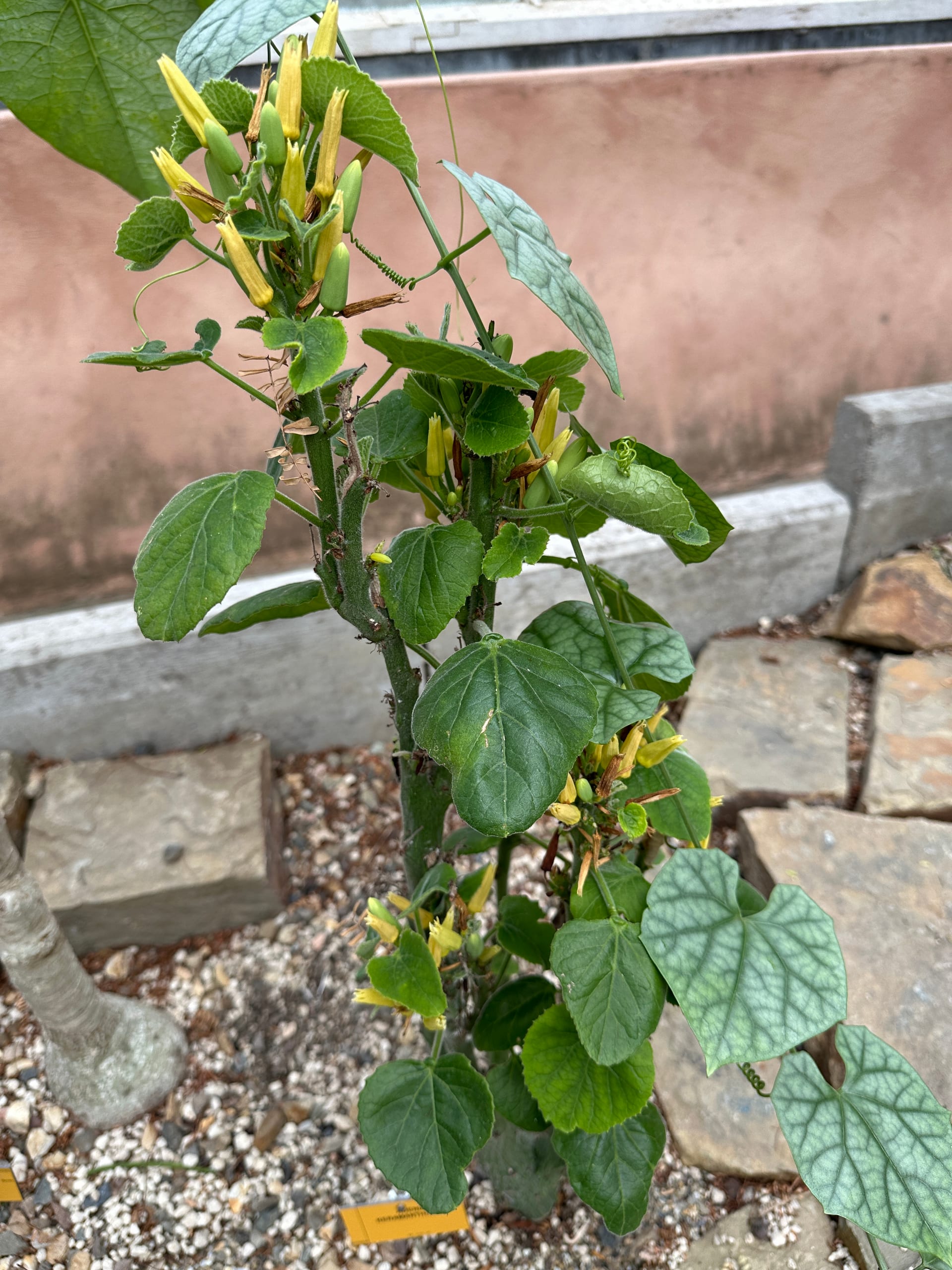
 © Michael Wolf (Webseite) / CC BY-SA 3.0
Adenia keramanthus
Adenia keramanthus is a caudex-forming succulent native to Kenya and Tanzania, instantly recognizable by the fine gray-to-reddish-brown hairs that cover both its stem and leaves — a trait shared by almost no other species in the Adenia genus, most of which are smooth and hairless. As it matures, it can produce downward-facing, urn-shaped cream flowers followed by egg-sized red fruit. Considered a good match for growers with some prior succulent experience, it rewards patient care with a thickening caudex and a distinctive, textured presence that develops slowly over many years.
View Adenia keramanthus encyclopedia →0% commission on your first sales!Register by September 30, 2026 and your first 2 plants are commission-free!
Grower Wanted!
List your plants on GrowerDirect and sell directly to customers nationwide!
6 Transparency Commitments from GrowerDirect
Our Grower disclose all key information for Caudex Plants listings, ensuring complete transparency on variety, origin, light needs, and difficulty.
- Variety Disclosed
- Real Plant Photos
- Color Details
- Origin Disclosed
- Light Requirements
- Difficulty Level
Browse all 146 varieties
Light Requirements
Difficulty Level
No listings match your filters
Adjust your filters, or get notified when new listings arrive.
Getting alerts is free with a member account. When new listings match your saved search, we'll notify you by email and in-app.
Browse other categories
Verified growers (preview)
Are you growing caudex plants?
Register as a grower and connect with buyers directly.
Apply as a growerAdenia keramanthus key facts
- Growing Difficulty
- Intermediate
- Lifespan
- Long-lived (little published data)
- Size
- 50–100 cm tall; caudex about 10 cm thick
- Watering
- Moderate slow-release feeding in the growing season
- Light & Placement
- Grow it in full sun to light shade, avoiding the harshest midsummer sun; indoors give it bright light.
- Watering
- It photosynthesizes through both leaves and stems, so water evenly in the growing season, though it rots if kept too wet.
- Dormancy Care
- When the branches die back in winter, stop watering and keep it dry; too much water while leafless causes rot.
- Temperature & Overwintering
- Keep it above 10°C in winter, ideally around 15°C; it is very prone to rot in cool, wet conditions.
- Soil & Repotting
- Use a very porous mix with plenty of pumice and perlite and repot every two years. Raising the base a little over several years lets the caudex emerge and swell.
- Propagation
- Propagate from seed or cuttings; cuttings root easily, but plants grown for their caudex are raised from seed.
- Pests & Cautions
- Adenia are reported to be highly toxic in all parts: wear gloves when pruning or repotting and keep plants away from children and pets.
About Adenia keramanthus
Adenia keramanthus is a rare hairy-stemmed caudex succulent from Kenya and Tanzania, known for urn-shaped flowers and red fruit. See its care basics and FAQs.
7 things to know before growing Adenia keramanthus
1Light & Placement
Adenia keramanthus prefers bright light, so place it outdoors or near a sunny window whenever possible. Young plants or those moved into stronger sun should be acclimated gradually to avoid leaf scorch. Good airflow around the plant also helps keep it healthy.
2Watering Rhythm
During the growing season, water generously once the soil surface has dried out, giving the plant a clear wet-dry cycle. In dormancy, water uptake slows dramatically, so cut back both frequency and volume. Keeping the caudex constantly damp risks root rot, so drainage should always take priority.
3Well-Draining Soil
A fast-draining mix sold for caudiciform or succulent plants works well. Blending in a generous portion of hard mineral aggregates such as baked clay granules or pumice helps prevent excess moisture from lingering. Choose a mix with good aeration so the caudex doesn't sit in damp conditions underground.
4When to Repot
Repotting is best done as the plant comes out of dormancy and growth resumes. The caudex and roots are delicate, so handle them gently when removing the plant from its pot or loosening old soil. Move up to a slightly larger pot with fresh, well-draining mix.
5Winter Dormancy Care
As temperatures drop, the plant may shed its leaves and enter dormancy. During this period, cut back watering significantly and keep it somewhere warm, away from cold drafts and sudden temperature swings. Fewer leaves don't necessarily mean the plant is struggling, so resist the urge to overwater out of concern.
6Choosing a Healthy Plant
Look for a plant with a plump, firm caudex and an even covering of hair across its surface. Avoid specimens with patchy bald spots or a caudex that looks dented or wrinkled. Also check the leaves and branches for discoloration or wilting before buying.
7The Hairy Surface
While most Adenia species are hairless, this one stands out for the gray-to-reddish-brown fuzz covering everything from stem to leaves — its signature ornamental feature. Because trapped moisture in that fuzz can encourage dampness-related issues, keeping airflow good and avoiding excessive misting helps the plant stay in good condition.
Frequently asked questions about Adenia keramanthus
- Q.Is this suitable for beginners?
- A.Adenia keramanthus is generally considered better suited to growers with some experience, rather than absolute beginners. Getting the light exposure and dormant-season watering right takes a bit of practice, so prior experience with succulents or caudex plants is a real advantage.
- Q.How big does it grow?
- A.It typically reaches a height of about 50 to 100 cm, with a caudex that thickens to roughly 10 cm across. Growth is slow, so part of the appeal is watching the caudex gradually swell over many years.
- Q.Will it flower or fruit?
- A.The plant can produce downward-facing, urn-shaped cream flowers, followed by egg-sized red fruit. Whether it flowers or fruits depends on the individual plant and its growing conditions, so this isn't guaranteed every time.
- Q.How should I care for it in winter?
- A.As temperatures fall, the plant may drop its leaves and go dormant. During this period, watering should be cut back significantly, and the plant should be kept somewhere warm and protected from cold.
- Q.How is it different from other Adenia species?
- A.Most Adenia species have smooth, hairless surfaces, but this one is a notable exception, with fine gray-to-reddish-brown hairs covering its stem and leaves. That hairiness is what gives Adenia keramanthus its distinctive character.
Handy Growing Tools for Adenia keramanthus
Learn more about Adenia keramanthus in the encyclopedia
View Adenia keramanthus encyclopedia entry →
Care difficulty, size, origin and light needs — all basics covered.
More in this category
Can't find the plant you're looking for?
Post your wishes for free and growers with matching plants will contact you with introductions.