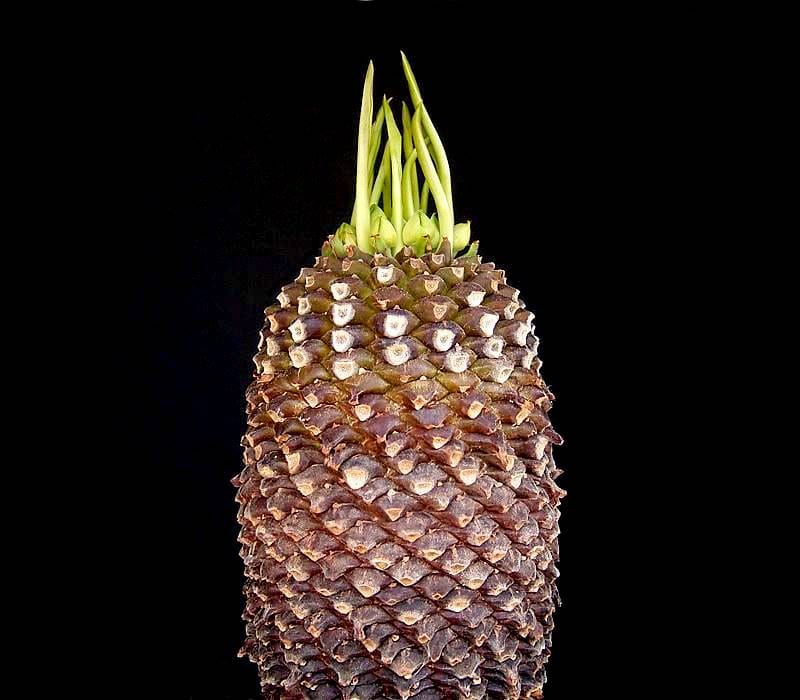
 © Frank Vincentz / CC BY-SA 3.0
Pine-cone Plant
Euphorbia bupleurifolia, known in Japanese as Tekkomaru and often called the pine-cone plant, is a succulent native to South Africa. Its signature feature is a stout brown trunk marked with neatly arranged leaf scars that resemble the scales of a pine cone, topped by a tuft of slender, willow-like leaves. Growth is slow: the trunk reaches about 20 cm tall and 7.5 cm across, and the leaves grow 7 to 15 cm long. It dislikes being left dry for long in hot weather, so keep it moderately moist in summer and cut back on water in winter. In March 2026 it moved to CITES Appendix I, and in Japan transfers and displays or advertisements for sale now in principle require a registration certificate. Because the change is recent, check the Ministry of the Environment's latest designation status and whether a certificate is available before buying. It is considered suitable for intermediate growers.
View Pine-cone Plant encyclopedia →0% commission on your first sales!Register by September 30, 2026 and your first 2 plants are commission-free!
Grower Wanted!
List your plants on GrowerDirect and sell directly to customers nationwide!
6 Transparency Commitments from GrowerDirect
Our Grower disclose all key information for Caudex Plants listings, ensuring complete transparency on variety, origin, light needs, and difficulty.
- Variety Disclosed
- Real Plant Photos
- Color Details
- Origin Disclosed
- Light Requirements
- Difficulty Level
Browse all 145 varieties
Light Requirements
Difficulty Level
No listings match your filters
Adjust your filters, or get notified when new listings arrive.
Getting alerts is free with a member account. When new listings match your saved search, we'll notify you by email and in-app.
Browse other categories
Verified growers (preview)
Are you growing caudex plants?
Register as a grower and connect with buyers directly.
Apply as a growerPine-cone Plant key facts
- Growing Difficulty
- Intermediate
- Lifespan
- Long-lived perennial (little published data)
- Size
- Stem to about 20 cm tall and 7.5 cm thick; leaves 7-15 cm long
- Watering
- Sparingly in the growing season
- Light & Placement
- It prefers bright light shade. Avoid strong midsummer sun and keep it in a well-ventilated spot.
- Watering
- It dislikes long dry spells in hot weather, so keep it evenly moist in summer. Reduce water in winter; it rots if left wet.
- Temperature & Overwintering
- Keep it above 10°C in winter. When dormant and dry it is relatively cold-tolerant.
- Soil & Repotting
- Use a very free-draining mineral mix and repot once the weather warms.
- Pests & Cautions
- Like all Euphorbia, its white latex irritates skin and eyes. Wear gloves when cutting or repotting and keep it away from eyes and mouth. Since its move to Appendix I, transfers within Japan are also subject to registration, so check before buying or listing.
About Pine-cone Plant
Euphorbia bupleurifolia (Tekkomaru), the Pine-cone Plant, is a South African succulent with a pine-cone-patterned brown trunk and willow-like leaves. An intermediate-level caudiciform reaching about 20 cm tall and 7.5 cm thick — here's what to know before growing one.
7 things to know before growing Pine-cone Plant
1Light and Placement
During the growing season, this plant thrives in bright light with good airflow, though intense midday summer sun can scorch the leaves — filtered light or partial shade works well at that time of year. In winter, keep it somewhere warm and bright indoors, as it doesn't tolerate cold well.
2Watering Basics
Water thoroughly once the soil surface has dried out during the growing season, letting excess drain freely from the pot to prevent root rot. Cut back gradually in autumn and keep the soil on the dry side as the plant heads into dormancy.
3Choosing Soil
A fast-draining mix is essential for keeping the succulent trunk healthy. A blend of akadama, pumice, and perlite (or a similar mineral-rich mix) gives the roots the airflow and drainage they need.
4When to Repot
Repot during the active growing season, handling the trunk and roots carefully to avoid damage. Move up just one pot size at a time — an oversized pot holds excess moisture and raises the risk of rot.
5Dormant-Season Care
As temperatures drop, growth slows and the plant may shed some leaves — this is a normal part of its cycle, not a cause for concern. Reduce watering during this period and keep the plant warm and relatively dry.
6Picking a Good Plant
Look for a trunk with evenly, neatly arranged leaf scars in that signature pine-cone pattern and a firm, plump surface. Avoid plants with a soft or mushy trunk, or dark discoloration near the base, as these can signal rot.
7Handling the Sap
Like other Euphorbias, this plant releases a white latex sap from cut surfaces that can irritate skin and eyes. Wear gloves when pruning or repotting, wash your hands afterward, and keep the sap away from young children and pets.
Frequently asked questions about Pine-cone Plant
- Q.Is this a good plant for beginners?
- A.It's generally considered suited to intermediate growers rather than complete beginners. With well-draining soil and adequate light, though, it's manageable for anyone who already has some experience growing succulents or caudiciforms.
- Q.Is it normal for it to drop leaves in winter?
- A.Yes — losing some or all of its leaves as temperatures drop is part of its natural seasonal cycle and usually nothing to worry about. Simply cut back on watering during this dormant period and keep it warm until new growth appears in spring.
- Q.How big does it get?
- A.The trunk typically reaches around 20 cm in height and about 7.5 cm in diameter, topped with a tuft of slender leaves 7 to 15 cm long. Growth is slow, so the plant's distinctive trunk texture develops gradually over many years.
- Q.Where's the best place to keep it?
- A.It prefers bright light and good airflow, but intense direct summer sun can scorch the leaves, so some shade during the hottest hours is a good idea. In winter, bring it indoors to a warm, bright spot rather than leaving it exposed to cold.
- Q.Is the sap safe to touch?
- A.The white latex that seeps from cut surfaces can irritate skin and eyes on contact, so it's best not to handle it with bare hands. Wear gloves when pruning or repotting, and wash your hands thoroughly afterward.
Handy Growing Tools for Pine-cone Plant
Learn more about Pine-cone Plant in the encyclopedia
View Pine-cone Plant encyclopedia entry →
Care difficulty, size, origin and light needs — all basics covered.
More in this category
Can't find the plant you're looking for?
Post your wishes for free and growers with matching plants will contact you with introductions.