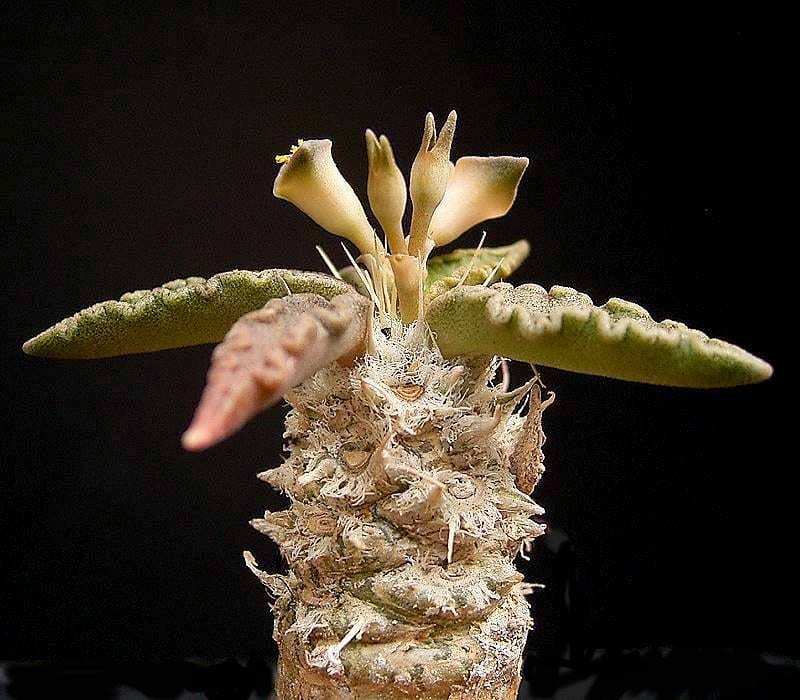
 © Frank Vincentz / CC BY-SA 3.0
Euphorbia tulearensis
Euphorbia tulearensis is a small euphorbia native to southwestern Madagascar. From a rounded, cork-textured caudex it sends out short, thick branches topped with rosettes of distinctive crinkled leaves reminiscent of its relative Euphorbia decaryi. Growth is slow, and its bonsai-like form, about 20cm tall, becomes more striking with age. The species is listed in CITES Appendix I, and in Japan transfers and displays or advertisements for sale in principle require a registration certificate. Plants sold in Japan are mostly seed-grown, but even so, check whether a registration certificate is available before buying. It's best suited to growers with some experience who want to appreciate its sculptural character over the long term.
View Euphorbia tulearensis encyclopedia →0% commission on your first sales!Register by September 30, 2026 and your first 2 plants are commission-free!
Grower Wanted!
List your plants on GrowerDirect and sell directly to customers nationwide!
6 Transparency Commitments from GrowerDirect
Our Grower disclose all key information for Caudex Plants listings, ensuring complete transparency on variety, origin, light needs, and difficulty.
- Variety Disclosed
- Real Plant Photos
- Color Details
- Origin Disclosed
- Light Requirements
- Difficulty Level
Browse all 145 varieties
Light Requirements
Difficulty Level
No listings match your filters
Adjust your filters, or get notified when new listings arrive.
Getting alerts is free with a member account. When new listings match your saved search, we'll notify you by email and in-app.
Browse other categories
Verified growers (preview)
Are you growing caudex plants?
Register as a grower and connect with buyers directly.
Apply as a growerEuphorbia tulearensis key facts
- Growing Difficulty
- Advanced
- Lifespan
- Slow-growing and long-lived (little published data)
- Size
- About 20 cm tall and a little wider
- Watering
- A potassium-rich succulent fertiliser in summer
- Light & Placement
- Heat-tolerant; grow in sun to light shade. More sun deepens leaf colour and keeps branches short.
- Watering
- Water regularly while growing and keep almost dry in winter. It rots quickly with too much or out-of-season water: warm and moist in growth, cooler and dry at rest.
- Temperature & Overwintering
- Tender and especially prone to rot if cold and damp while dormant. Overwinter it dry in a bright, warm room or greenhouse.
- Soil & Repotting
- Use an airy mineral mix in pots with generous drainage. Repot every two years and trim off dead branches.
- Propagation
- Propagate by seed, cuttings or grafting. Seed quickly loses viability, so sow it fresh; it germinates in one to two weeks.
- Pests & Cautions
- Like all Euphorbia, its white latex irritates skin and eyes. Wear gloves when cutting or repotting and keep it away from eyes and mouth. Seed-raised plants form a rounded tuber while cuttings tend to produce a tangle of thin roots, so choose seedlings if the caudex shape matters. As an Appendix I species, international trade in wild-collected plants is prohibited, so plants on the Japanese market are mainly seed-raised. Even so, check for a registration certificate before buying or listing.
About Euphorbia tulearensis
A small Madagascar euphorbia with a rounded, cork-textured caudex and wavy leaves, growing into a bonsai-like form around 20cm tall. Slow-growing and best suited to experienced succulent growers.
7 things to know before growing Euphorbia tulearensis
1Light & Placement
This plant prefers a bright spot with good air circulation. Direct, intense summer sun can scorch the leaves, so during hot periods it's safer to move it to bright indirect light or provide light shading.
2Watering Carefully
During the growing season, water thoroughly once the soil surface has dried out. The corky caudex is sensitive to excess moisture and prone to rot, so avoid letting the soil stay wet for long periods. Cut back watering significantly during dormancy.
3Well-Draining Soil
Soil rich in organic matter retains too much moisture and raises the risk of root rot, so a mineral-based mix with pumice or hard-fired akadama for good drainage works best. Always make sure the pot has drainage holes.
4Repotting Frequency
Repot about every two years, using an airy, mostly mineral mix and a pot with large drainage holes. Tidy away any dead branches at the same time, and handle the roots gently.
5Dormant-Season Care
Growth slows and the plant enters a near-dormant state as temperatures drop. Water sparingly during this period, and keep it somewhere bright and protected from cold indoors.
6Choosing a Healthy Plant
Look for a caudex that feels firm, with no soft or damaged spots. A rosette of vigorous, well-formed leaves is a good sign that the plant is growing steadily.
7Patience Pays Off
This is a slow-growing, long-lived plant, so it rewards patience rather than quick results. Because it's considered a more advanced plant to grow, prior experience with other caudex-forming succulents will help.
Frequently asked questions about Euphorbia tulearensis
- Q.Can beginners grow this plant?
- A.This species is considered a more advanced plant to grow, so it can be challenging for someone growing succulents or caudex plants for the first time. Experience with other caudex-forming euphorbias makes it easier to get the hang of its care.
- Q.How big does it get?
- A.It stays compact, reaching about 20cm in height with a width slightly greater than that. Its small, bonsai-like form is something you can enjoy for a long time.
- Q.How fast does it grow?
- A.Growth is slow overall, so it won't transform dramatically in a short period. It's a plant whose caudex and form change gradually over many years.
- Q.My plant has dropped leaves. Is it dying?
- A.Leaf loss can happen in response to temperature changes and doesn't necessarily mean the plant is dying — check that the caudex and branches still feel firm. Rather than assuming the worst right away, watch how it responds as you adjust watering with the season.
- Q.What kind of spot suits it best?
- A.A bright location with good air circulation suits it well. Be mindful of intense direct sun in summer and cold, damp conditions in winter, adjusting its placement with the seasons.
Handy Growing Tools for Euphorbia tulearensis
Learn more about Euphorbia tulearensis in the encyclopedia
View Euphorbia tulearensis encyclopedia entry →
Care difficulty, size, origin and light needs — all basics covered.
More in this category
Can't find the plant you're looking for?
Post your wishes for free and growers with matching plants will contact you with introductions.