Othonna cacalioides
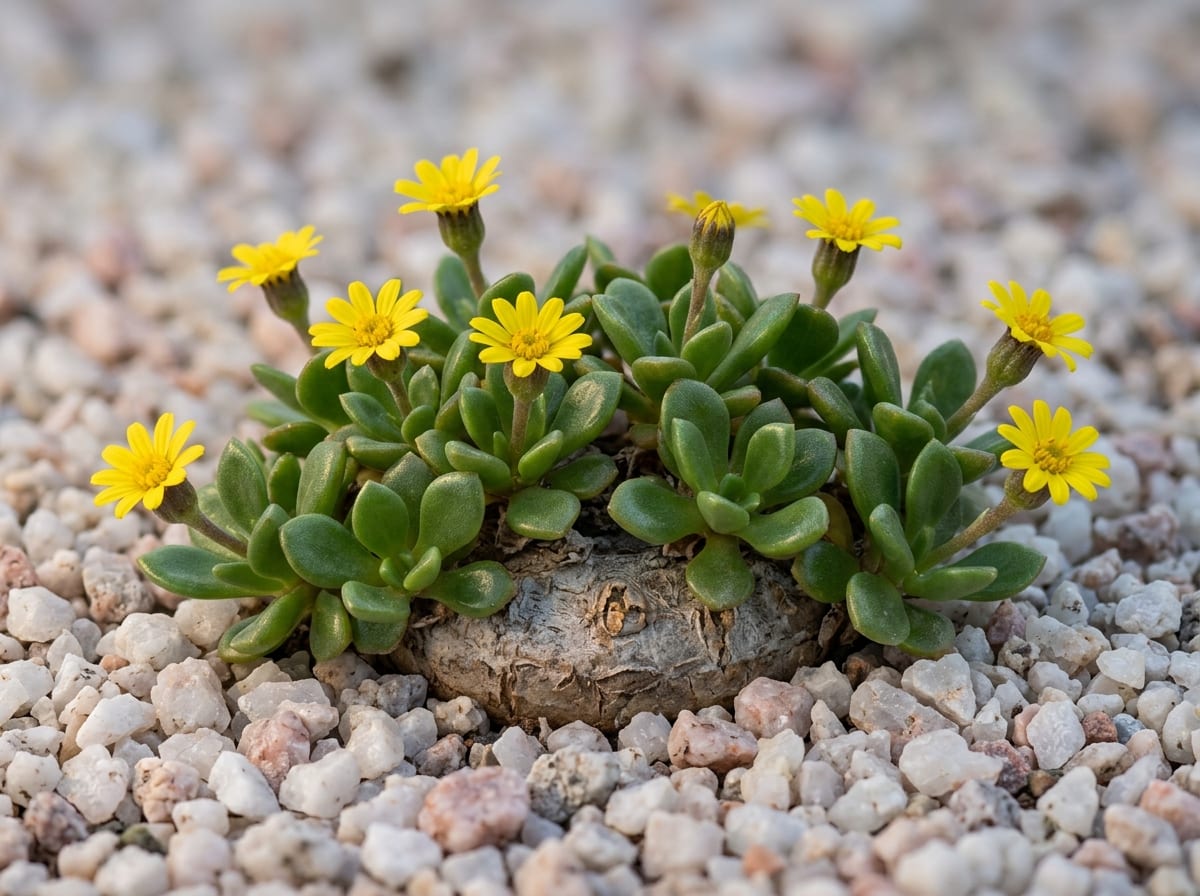
Othonna cacalioides is a strikingly compact succulent from South Africa's daisy family, one of the smallest of its kind. Below the soil it forms a flat, potato-like caudex, from which more than twenty short heads emerge almost flush with the ground, giving it a unique, low-slung silhouette. As a winter grower, it produces glossy little leaves during the growing season and bears small yellow flowers as the leaves die back. Growth is extremely slow, and the plant takes many years to develop its characteristic form, making it best suited to experienced succulent growers.
View Othonna cacalioides encyclopedia →0% commission on your first sales!Register by September 30, 2026 and your first 2 plants are commission-free!
Grower Wanted!
List your plants on GrowerDirect and sell directly to customers nationwide!
6 Transparency Commitments from GrowerDirect
Our Grower disclose all key information for Caudex Plants listings, ensuring complete transparency on variety, origin, light needs, and difficulty.
- Variety Disclosed
- Real Plant Photos
- Color Details
- Origin Disclosed
- Light Requirements
- Difficulty Level
Browse all 146 varieties
Light Requirements
Difficulty Level
No listings match your filters
Adjust your filters, or get notified when new listings arrive.
Getting alerts is free with a member account. When new listings match your saved search, we'll notify you by email and in-app.
Browse other categories
Verified growers (preview)
Are you growing caudex plants?
Register as a grower and connect with buyers directly.
Apply as a growerOthonna cacalioides key facts
- Growing Difficulty
- Advanced
- Lifespan
- Very slow-growing and long-lived (little published data)
- Size
- A dwarf barely above soil level; caudex 9 cm or more across
- Watering
- Light feeding in the growing season
- Light & Placement
- Grow it in full sun from autumn to spring; conditions close to its harsh habitat keep it compact.
- Watering
- A winter grower: start watering in autumn when new leaves appear, and let the mix dry between waterings through the growing season.
- Dormancy Care
- When the leaves yellow and fall in spring, reduce water and keep it dry through summer dormancy; wet soil while dormant rots the caudex.
- Soil & Repotting
- It grows in shallow sandy rock pans, so use a very free-draining mix rich in coarse sand or pumice.
- Pests & Cautions
- A Vulnerable species with a tiny range whose international trade requires permits. It is slow and difficult, so well-rooted, seed-grown plants from Japan are the safer choice and spare wild populations.
About Othonna cacalioides
Othonna cacalioides is a tiny South African caudex succulent, forming a flat underground tuber with clusters of small heads at soil level. A slow-growing, winter-flowering species for experienced growers.
7 things to know before growing Othonna cacalioides
1Sun and airflow
During the autumn-to-spring growing season, keep the plant somewhere bright and well-ventilated, such as a rain-sheltered outdoor shelf. In midsummer, move it out of direct sun into bright shade while it rests.
2Water on a winter-grower schedule
Begin watering once new growth appears in autumn, and water regularly through winter and into spring. In summer, withhold water almost entirely to let the plant rest in dormancy.
3Use fast-draining soil
Use a mineral-heavy, fast-draining mix with plenty of akadama or pumice to keep the caudex from staying damp. Avoid soil rich in organic matter, which raises the risk of root rot.
4Repot only every few years
Because growth is so slow, frequent repotting isn't needed. Repot only once roots fill the pot, timing it to the start of the growing season and using a shallow container.
5Winter cold protection
Despite growing in winter, it isn't very cold-hardy, so bring it indoors to a sunny window during sharp cold spells. Never let it be exposed to frost or freezing.
6Summer is dormancy
As temperatures rise, the plant stops growing and enters dormancy. The leaves may look wilted, but this is a natural response — simply keep it in a cool, airy spot and let it rest.
7Choose plants by caudex condition
Look for a caudex that feels firm, with little scarring or wrinkling. Specimens that have reached 9cm or more in diameter have real presence, and since the number and arrangement of heads varies plant to plant, choosing one whose form you love is part of the fun.
Frequently asked questions about Othonna cacalioides
- Q.Can beginners grow this plant?
- A.It's considered a species for experienced growers, since it grows very slowly and requires judgment about when to water. It's best attempted once you're already comfortable with succulent care.
- Q.If it's a "winter grower," why is it cold-sensitive?
- A."Winter grower" describes a cycle of summer dormancy and autumn-to-spring growth, not high cold tolerance. Even during the growing season, bring it indoors when temperatures drop sharply.
- Q.How large does the caudex get?
- A.The underground caudex is said to reach 9cm or more in diameter, with several short heads arranged almost flush with the soil surface. Since growth is extremely slow, reaching that size takes many years.
- Q.The leaves wilted in summer — is it dying?
- A.Wilting leaves in summer are usually a sign of dormancy, not a problem. Cut back on water and let it rest quietly in a cool, well-ventilated spot.
- Q.What do the flowers look like?
- A.It bears small yellow flowers toward the end of the growing season, as the leaves die back. The blooms are modest, but combined with its low, ground-hugging form they give the plant a distinctive appeal.
Handy Growing Tools for Othonna cacalioides
Learn more about Othonna cacalioides in the encyclopedia
View Othonna cacalioides encyclopedia entry →
Care difficulty, size, origin and light needs — all basics covered.
More in this category
Can't find the plant you're looking for?
Post your wishes for free and growers with matching plants will contact you with introductions.