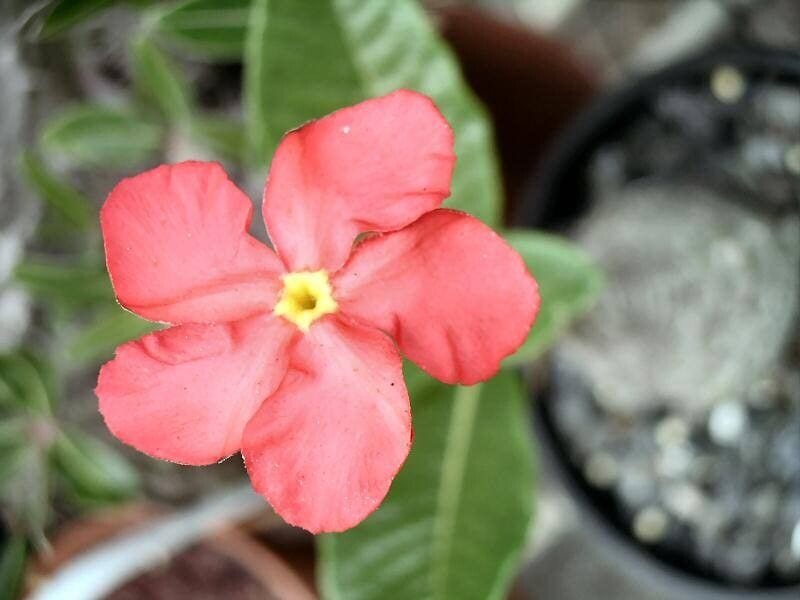
 © KP Laer / CC BY-SA 4.0
Pachypodium windsorii
Pachypodium windsorii is a caudex-forming succulent native to the northernmost tip of Madagascar. From its flask-shaped caudex, a few thin, twisting branches emerge, bearing vivid red flowers with pale green centers. It is more compact than the closely related P. baronii, and its flower stalks barely extend at all. Plants reach 0.5 to 1.5m tall with a caudex 35 to 60cm across. The species is listed in CITES Appendix I, and in Japan transfers and displays or advertisements for sale in principle require a registration certificate. Plants sold in Japan are mostly seed-grown, but even so, check whether a certificate is available before buying. Each specimen develops its own caudex shape and branching, making this a rewarding plant for experienced growers.
View Pachypodium windsorii encyclopedia →0% commission on your first sales!Register by September 30, 2026 and your first 2 plants are commission-free!
Grower Wanted!
List your plants on GrowerDirect and sell directly to customers nationwide!
6 Transparency Commitments from GrowerDirect
Our Grower disclose all key information for Caudex Plants listings, ensuring complete transparency on variety, origin, light needs, and difficulty.
- Variety Disclosed
- Real Plant Photos
- Color Details
- Origin Disclosed
- Light Requirements
- Difficulty Level
Browse all 146 varieties
Light Requirements
Difficulty Level
No listings match your filters
Adjust your filters, or get notified when new listings arrive.
Getting alerts is free with a member account. When new listings match your saved search, we'll notify you by email and in-app.
Browse other categories
Verified growers (preview)
Are you growing caudex plants?
Register as a grower and connect with buyers directly.
Apply as a growerPachypodium windsorii key facts
- Growing Difficulty
- Advanced
- Lifespan
- Slow-growing and long-lived (little published data)
- Size
- 0.5-1.5 m tall; caudex 35-60 cm across
- Watering
- Sparingly in the growing season
- Light & Placement
- Grow in full sun to light shade. It can go outdoors in sun in warm areas, but keep it out of winter rain.
- Watering
- Water sparingly in the heat of the growing season and not at all from late autumn to mid-spring. Older plants need less water.
- Temperature & Overwintering
- It is cold-sensitive; overwinter it completely dry at around 10°C and protect it from frost.
- Soil & Repotting
- Use a gritty, porous mix that is not strongly acidic. Repot about every three years.
- Propagation
- Mainly propagated by seed; fresh seed germinates well and seedlings are fairly easy.
- Pests & Cautions
- Pachypodium sap is toxic and the spines are sharp. Wear thick gloves or wrap the trunk in several layers of newspaper when repotting or moving it. As an Appendix I species, international trade in wild-collected plants is prohibited, so plants on the Japanese market are mainly seed-raised. Even so, check for a registration certificate before buying or listing.
About Pachypodium windsorii
Pachypodium windsorii: a slow-growing Madagascar caudex succulent with a flask-shaped caudex and striking red flowers, suited to experienced growers.
7 things to know before growing Pachypodium windsorii
1Bright Light and Airflow
Native to Madagascar's dry northern regions, Pachypodium windsorii thrives in strong light. Give it as much sun as possible, outdoors or near a bright window, with good air circulation. In peak summer sun it can scorch, so watch the leaves and consider light shading, introducing any change in light gradually.
2Water by Season
Water sparingly during the hot part of the growing season, and stop watering entirely from late autumn to mid-spring. The older the plant, the less water it needs. Overwinter it completely dry at around 10°C.
3Use Fast-Draining Soil
A dedicated caudex/succulent mix, or a blend of akadama, pumice, and perlite, works well for good drainage. Avoid soil heavy in organic matter, which stays wet and raises the risk of root rot. Always use a pot with drainage holes.
4Repot During the Growing Season
Repot in spring, as the plant begins actively growing. Because growth is slow and the caudex eventually reaches 35-60cm across, move up just one pot size at a time rather than repotting often. If roots are disturbed, let the plant rest dry for a while before resuming watering.
5Keep Dry Through Winter
Leaf drop in autumn is the plant's signal that it's entering dormancy. During this period keep it nearly dry and move it indoors to a bright spot, away from cold exposure. Protecting it from low temperatures matters, since cold can damage the plant.
6Choosing a Healthy Plant
Look for a caudex that's firm, without dents or damage. The twisting branch habit is characteristic of this species, so check for unnatural discoloration or spotting as well. Since growth is slow, the form you choose at purchase is one you'll enjoy for a long time to come.
7Notably Short Flower Stalks
Pachypodium windsorii's flowers resemble those of P. baronii, but its very short flower stalks are a key identifying feature. Flowering requires ample light and a well-established plant, and given the slow growth rate, it's best approached with patience.
Frequently asked questions about Pachypodium windsorii
- Q.Is this a good plant for beginners?
- A.Pachypodium windsorii is generally considered a plant for experienced growers. Without confidence in managing watering and light placement, it's easy to weaken the plant, so it's best approached after gaining experience with succulents or other caudex plants.
- Q.How large does it grow?
- A.At maturity it reaches roughly 0.5-1.5m in height, with a caudex 35-60cm in diameter. Since growth is slow, reaching this size takes many years.
- Q.Does it need to come indoors in winter?
- A.Yes - it's sensitive to cold, so keep it indoors in a bright spot during winter. This coincides with its dormant period, so cut back on watering and avoid exposing it to low temperatures.
- Q.How is it different from Pachypodium baronii?
- A.P. windsorii is generally smaller overall than P. baronii, and its flower stalks are notably shorter - the main distinguishing feature. The flowers themselves look similar, red with a pale green center.
- Q.How long does this plant live?
- A.It's described as slow-growing and long-lived, though detailed lifespan data is limited. It's a plant best enjoyed by watching its caudex change gradually over many years.
Handy Growing Tools for Pachypodium windsorii
Learn more about Pachypodium windsorii in the encyclopedia
View Pachypodium windsorii encyclopedia entry →
Care difficulty, size, origin and light needs — all basics covered.
More in this category
Can't find the plant you're looking for?
Post your wishes for free and growers with matching plants will contact you with introductions.