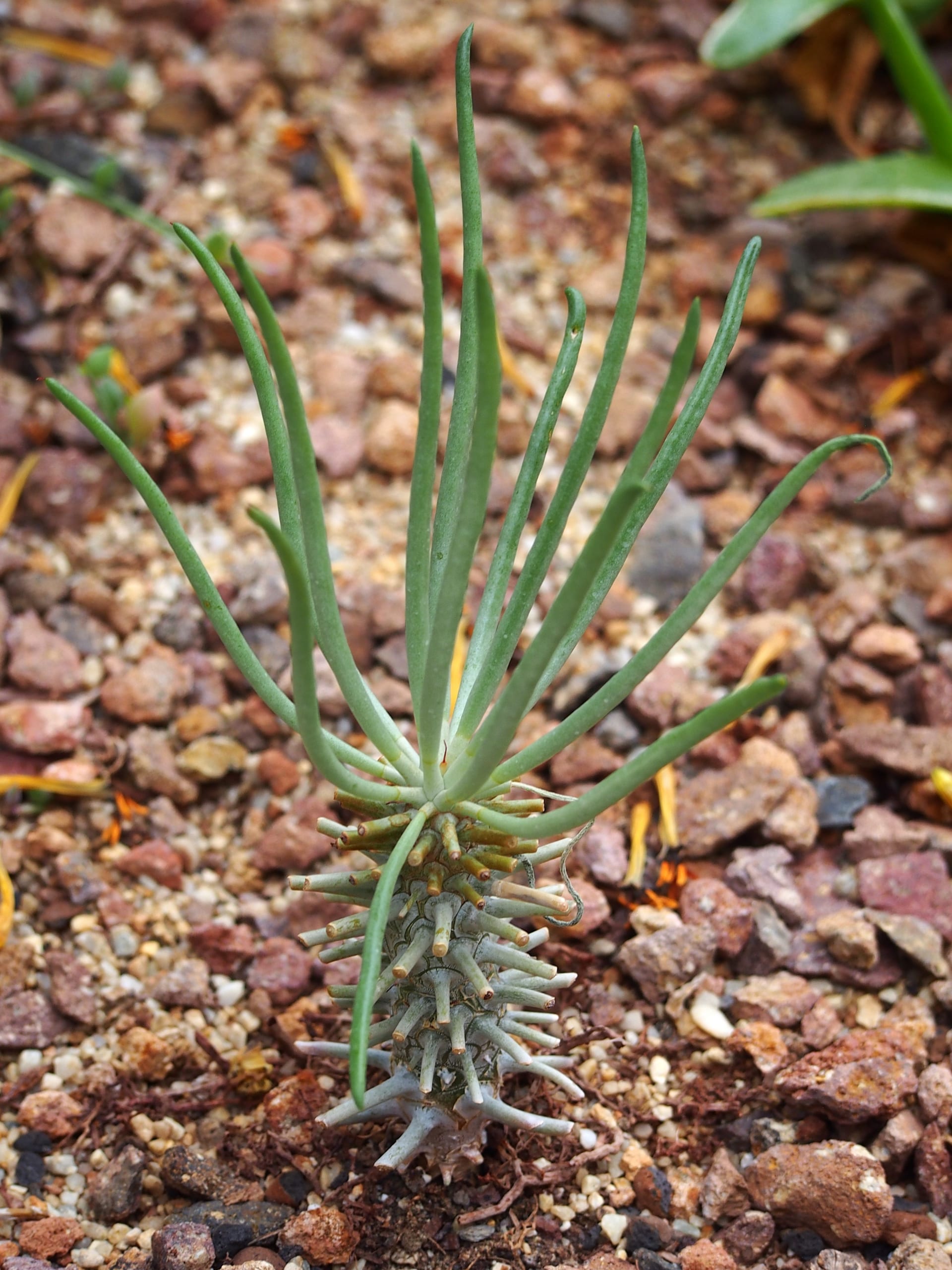
 © Agnieszka Kwiecień, Nova / CC BY-SA 4.0
Tylecodon wallichii
Tylecodon wallichii is a winter-growing caudiciform succulent known for its thick trunk and branches, densely covered in yellow-green, wart-like bumps left behind where old leaves have dropped. Narrow leaves cluster at the branch tips, and during its leafless summer dormancy the plant sends out drooping, urn-shaped, yellow-green flowers. Growth is extremely slow, so it develops its sturdy, characterful form over many years — a plant to enjoy on a long timeline rather than for quick results. It calls for a bit of growing experience, but that slow unfolding is part of its appeal.
View Tylecodon wallichii encyclopedia →0% commission on your first sales!Register by September 30, 2026 and your first 2 plants are commission-free!
Grower Wanted!
List your plants on GrowerDirect and sell directly to customers nationwide!
6 Transparency Commitments from GrowerDirect
Our Grower disclose all key information for Caudex Plants listings, ensuring complete transparency on variety, origin, light needs, and difficulty.
- Variety Disclosed
- Real Plant Photos
- Color Details
- Origin Disclosed
- Light Requirements
- Difficulty Level
Browse all 146 varieties
Light Requirements
Difficulty Level
No listings match your filters
Adjust your filters, or get notified when new listings arrive.
Getting alerts is free with a member account. When new listings match your saved search, we'll notify you by email and in-app.
Browse other categories
Verified growers (preview)
Are you growing caudex plants?
Register as a grower and connect with buyers directly.
Apply as a growerTylecodon wallichii key facts
- Growing Difficulty
- Intermediate
- Lifespan
- Very slow-growing and long-lived (little published data)
- Size
- About 50 cm tall (occasionally 1 m); stem up to 6 cm across
- Watering
- Dilute high-potassium feed in the growing season
- Light & Placement
- It does best fully exposed to sun but will grow and flower in half-sun.
- Watering
- A winter grower: from late summer to early spring water when the roots are almost dry, reducing to about once every two weeks in the cold of winter.
- Dormancy Care
- It is deciduous and dormant from late spring through summer; withhold water then.
- Temperature & Overwintering
- Keep it at a minimum of 5°C in winter, preferably 8°C; the leaves drop easily in cool conditions.
- Soil & Repotting
- Use a very free-draining mix (equal parts well-rotted compost or fine bark and river sand or pumice, or a gritty cactus mix) and repot every two to three years with slow-release fertilizer added. Plant with the neck at soil level and never bury the swollen stem deeply.
- Pests & Cautions
- The plant, especially the leaves, is highly poisonous and causes livestock poisoning; keep it away from children and pets. It is prone to mealybugs, so check the branch bases regularly.
About Tylecodon wallichii
A winter-growing caudiciform succulent whose thick trunk is covered in yellow-green, wart-like bumps, with narrow leaves and urn-shaped summer flowers. Very slow-growing and best suited to intermediate growers.
7 things to know before growing Tylecodon wallichii
1Light & Airflow
During its winter growing season, place it outdoors or by a bright window with good airflow. In summer dormancy, avoid direct sun and keep it in bright, indirect light to prevent excess humidity around the plant.
2Water on a Winter Cycle
Its growing season runs from autumn through spring while leaves are present; water thoroughly once the soil has dried out. During summer dormancy, when the leaves drop, hold back on water and keep the soil on the dry side.
3Well-Draining Soil
A well-draining mix formulated for caudiciform or succulent plants, based on pumice or akadama, works well. Good drainage at the bottom of the pot also helps prevent root rot from excess moisture.
4Repot During the Growing Season
Repotting is easiest on the roots when done during the growing season (autumn to spring), while the plant is in leaf. Gently loosen the root ball, trim away any damaged roots, and replant in fresh, well-draining soil.
5Summer Dormancy Care
In summer, when the plant is leafless, it enters full dormancy and growth essentially stops. Keep watering minimal and place it somewhere cool with good airflow to reduce stress on the plant.
6Choosing a Healthy Plant
Look for a plant whose trunk and branches show a dense, well-formed covering of wart-like bumps, with no wobble at the base. If it's in its growing season, healthy leaf color is another useful indicator of condition.
7A Slow, Long-Term Grower
Because growth is extremely slow, this isn't a plant for anyone hoping to see dramatic change in a short time. It suits growers who enjoy nurturing a sturdy, characterful trunk over many years and don't mind taking things slowly.
Frequently asked questions about Tylecodon wallichii
- Q.Is Tylecodon wallichii suitable for beginners?
- A.It's generally considered an intermediate-level plant, since it requires learning succulent-specific care such as adjusting watering around dormancy. Growers with some prior experience with caudiciform plants will find it manageable.
- Q.Why does it lose its leaves in summer?
- A.Tylecodon wallichii is a "winter grower" — it grows during the cooler months and goes dormant in summer, shedding its leaves as part of that cycle. This is normal behavior, not a sign of illness.
- Q.How large does it grow?
- A.It typically reaches around 50 cm in height, occasionally up to 1 m, with a trunk that can thicken to about 6 cm. Because growth is extremely slow, reaching these dimensions takes many years.
- Q.When and what kind of flowers does it produce?
- A.It blooms during its leafless summer dormancy, producing small, urn-shaped, yellow-green flowers that hang from the branch tips. This flowering period falls outside its normal leafy growing season.
- Q.What are the wart-like bumps on the trunk?
- A.They're raised tissue left behind where old leaves have dropped, and they become more pronounced as the plant matures. This textured trunk is one of the plant's signature features.
Handy Growing Tools for Tylecodon wallichii
Learn more about Tylecodon wallichii in the encyclopedia
View Tylecodon wallichii encyclopedia entry →
Care difficulty, size, origin and light needs — all basics covered.
More in this category
Can't find the plant you're looking for?
Post your wishes for free and growers with matching plants will contact you with introductions.