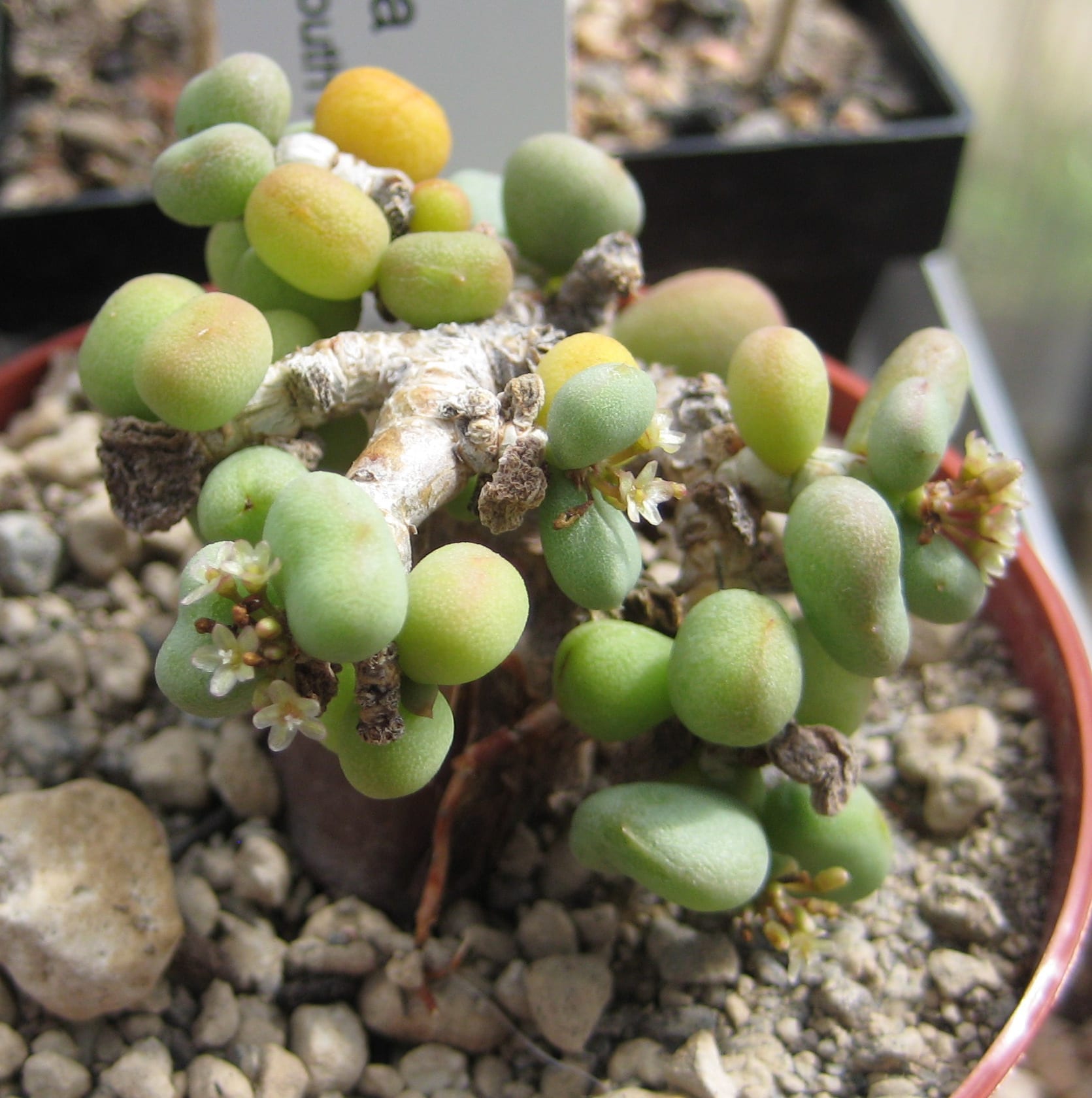
 © Michael Wolf / CC BY-SA 3.0
Ceraria pygmaea
Ceraria pygmaea is a diminutive caudex-forming succulent native to the border region between South Africa and Namibia. Its knobby, half-buried caudex sends out short branches that spread low to the ground, eventually forming a mound roughly 20 cm tall and 30 cm across. The thick, blue-green leaves resemble jelly beans and are part of the plant's charm, though they are notoriously easy to knock off, often dropping at the slightest touch. Growth is slow, and shaping that gnarled caudex over the years makes this a plant best suited to experienced growers.
View Ceraria pygmaea encyclopedia →0% commission on your first sales!Register by September 30, 2026 and your first 2 plants are commission-free!
Grower Wanted!
List your plants on GrowerDirect and sell directly to customers nationwide!
6 Transparency Commitments from GrowerDirect
Our Grower disclose all key information for Caudex Plants listings, ensuring complete transparency on variety, origin, light needs, and difficulty.
- Variety Disclosed
- Real Plant Photos
- Color Details
- Origin Disclosed
- Light Requirements
- Difficulty Level
Browse all 145 varieties
Light Requirements
Difficulty Level
No listings match your filters
Adjust your filters, or get notified when new listings arrive.
Getting alerts is free with a member account. When new listings match your saved search, we'll notify you by email and in-app.
Browse other categories
Verified growers (preview)
Are you growing caudex plants?
Register as a grower and connect with buyers directly.
Apply as a growerCeraria pygmaea key facts
- Growing Difficulty
- Advanced
- Lifespan
- Slow-growing and long-lived (little published data)
- Size
- A mound about 20 cm tall and 30 cm across; caudex 7–10 cm wide
- Watering
- A little succulent fertilizer in the growing season
- Light & Placement
- Very heat-tolerant; grow in full sun to light shade. Strong light is needed for flowering and compact growth.
- Watering
- Water normally while new leaves and shoots are growing and cut back to almost dry when growth stops. Never let water stand around the roots; overwatering, or watering while it is not growing, can rot it quickly.
- Temperature & Overwintering
- It is said to tolerate about −5°C if kept dry, but avoid cold combined with wet soil.
- Soil & Repotting
- The roots are shallow: use a small, shallow pot and a gritty, very free-draining mix; clay pots help it dry between waterings.
- Pruning & Shaping
- Once lifted above the soil the caudex stops enlarging, so keep it buried for several years and raise it only when the plant is mature.
- Propagation
- Propagate from seed or cuttings. Sow seed on the surface of a mineral mix; it germinates in one to two weeks at 15–21°C. Being dioecious, it needs male and female plants to set seed.
About Ceraria pygmaea
Ceraria pygmaea is a small South African/Namibian caudex succulent with a knobby, half-buried caudex and jelly-bean-like blue-green leaves. An advanced-level species — here's what to know before growing it.
7 things to know before growing Ceraria pygmaea
1Light and Airflow
Ceraria pygmaea thrives with plenty of direct sun and good air circulation, whether outdoors or on a bright windowsill or balcony. Poor airflow can allow excess humidity to build up around the plant, so keep it somewhere breezy.
2Water With Rhythm
Water thoroughly once the soil has dried out completely during the growing season, then cut back sharply during dormancy. Because the caudex stores moisture, overwatering easily leads to root rot, so err on the side of keeping the plant on the dry side.
3Fast-Draining Soil
Choose a fast-draining mix formulated for succulents and caudex plants, blending in pumice or hard-fired akadama works well. Preventing water from lingering around the roots is key to keeping that knobby caudex healthy.
4Repot During Active Growth
Repot during the active growing season, when the roots are putting on new growth. Handle the root ball carefully to avoid damaging the caudex, which sits partly buried in the soil. Repot only when needed, since frequent disturbance stresses the plant.
5Seasonal Growth Cycle
Growth is slow, so adjusting care to the seasonal cycle matters. Provide ample light and water during the active growing period, then let the plant rest with minimal watering once it enters dormancy. Protect it from sudden temperature swings and cold.
6Leaves Drop Easily
The thick, jelly-bean-like blue-green leaves are famously prone to dropping, even a light touch can dislodge them. Handle the plant gently when moving or tending it, and avoid brushing against the foliage where possible.
7Check the Caudex Condition
When choosing a plant, check that the knobby, partly buried caudex looks firm and healthy. Since growth is slow, it's worth enjoying the individual character and shape of each caudex and taking a patient, long-term approach to raising it.
Frequently asked questions about Ceraria pygmaea
- Q.Can beginners grow this plant?
- A.Ceraria pygmaea is generally considered an advanced-level species. It requires careful attention to watering cycles and placement, making it best suited to growers with prior experience with succulents or caudex plants.
- Q.How large does it grow?
- A.It forms a mound roughly 20 cm tall and 30 cm across, with an underground caudex reaching about 7–10 cm in diameter. Because growth is slow, reaching this size takes many years.
- Q.The leaves keep falling off, is that normal?
- A.Yes, the leaves of Ceraria pygmaea are naturally prone to dropping at the slightest touch, and this is simply a characteristic of the species. Try to avoid brushing against the foliage when handling the plant.
- Q.How long does it live?
- A.It's generally regarded as a slow-growing, long-lived species, though detailed data on its lifespan is limited. Part of the appeal is the patience of nurturing it slowly over many years.
- Q.How often should I water it?
- A.Water only after the soil has dried out completely, and adjust frequency with the season, watering more generously during active growth and cutting back during dormancy. This dry-wet contrast is key to healthy care.
Handy Growing Tools for Ceraria pygmaea
Learn more about Ceraria pygmaea in the encyclopedia
View Ceraria pygmaea encyclopedia entry →
Care difficulty, size, origin and light needs — all basics covered.
More in this category
Can't find the plant you're looking for?
Post your wishes for free and growers with matching plants will contact you with introductions.