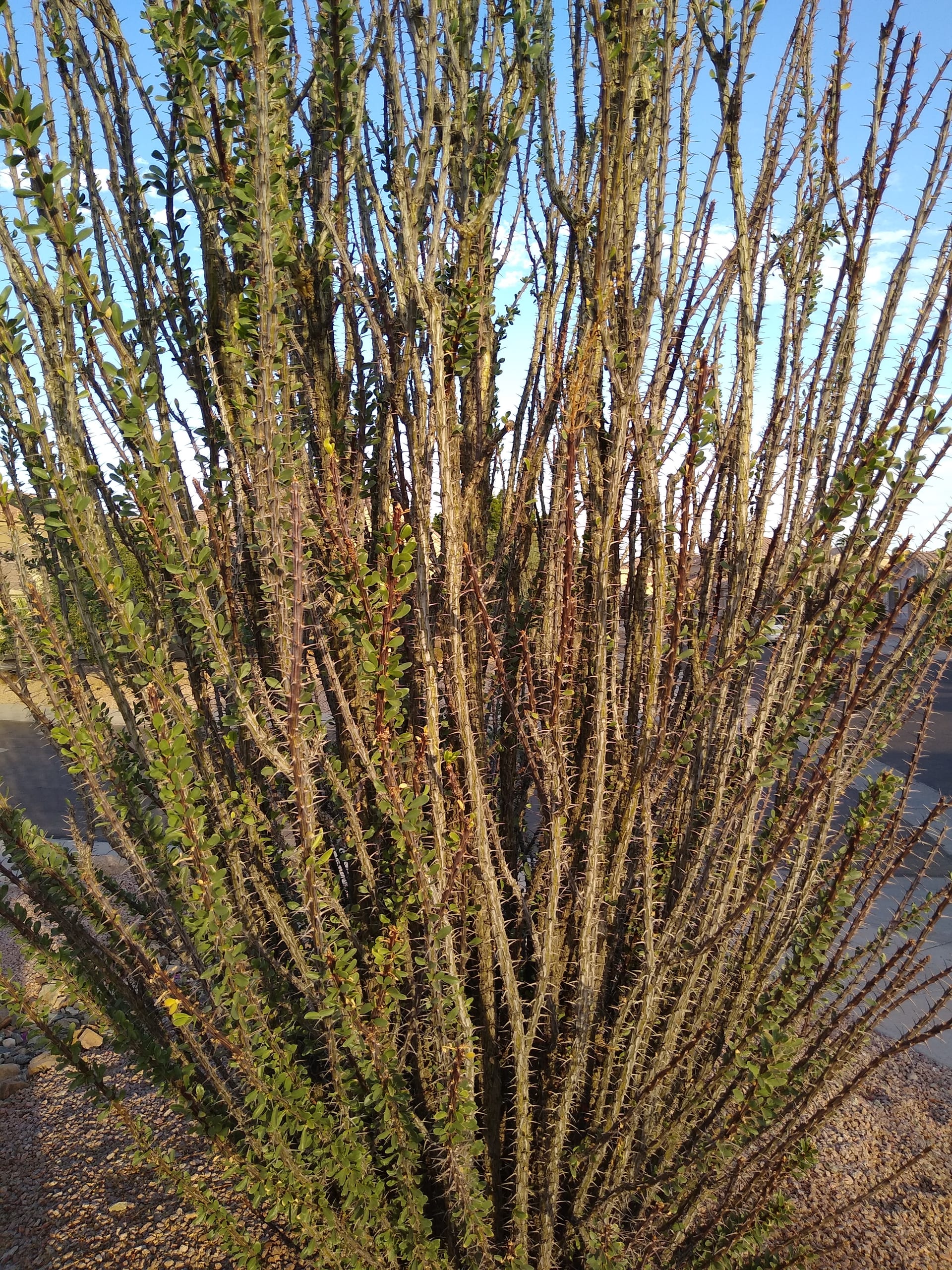
 © Prahlad balaji / CC BY-SA 4.0
Ocotillo
Fouquieria splendens, better known as ocotillo, is a striking desert plant from North America that sends up a cluster of thin, spiny stems directly from its base. During dry spells the stems stay bare, but shortly after rain they flush green with new leaves, a dramatic transformation that's part of its appeal. Clusters of tubular red flowers appear at the stem tips, adding a bright accent to the desert. In the wild it is a shrub 2.5 to 6 meters tall; in a pot, removing side branches helps the base of the main stem thicken, so you can enjoy watching it develop over time. In Japan it's sometimes sold under the subspecies names breviflora or campanulata.
View Ocotillo encyclopedia →0% commission on your first sales!Register by September 30, 2026 and your first 2 plants are commission-free!
Grower Wanted!
List your plants on GrowerDirect and sell directly to customers nationwide!
6 Transparency Commitments from GrowerDirect
Our Grower disclose all key information for Caudex Plants listings, ensuring complete transparency on variety, origin, light needs, and difficulty.
- Variety Disclosed
- Real Plant Photos
- Color Details
- Origin Disclosed
- Light Requirements
- Difficulty Level
Browse all 145 varieties
Light Requirements
Difficulty Level
No listings match your filters
Adjust your filters, or get notified when new listings arrive.
Getting alerts is free with a member account. When new listings match your saved search, we'll notify you by email and in-app.
Browse other categories
Verified growers (preview)
Are you growing caudex plants?
Register as a grower and connect with buyers directly.
Apply as a growerOcotillo key facts
- Growing Difficulty
- Intermediate
- Lifespan
- Long-lived shrub taking 60–100 years to mature
- Size
- 2.5–6 m (rarely 10 m) tall; stems about 6 cm thick at the base
- Watering
- Light feeding in the growing season
- Light & Placement
- It grows best in full sun to part shade.
- Watering
- Give moderate water while it is in leaf and keep it dry while it is leafless and dormant.
- Soil & Repotting
- A plant of dry rocky ground: use a free-draining mix. Seedlings grow fast and need a deep pot for their stout taproot.
- Pruning & Shaping
- To show off the swollen base, side branches are often pruned away to enlarge the main trunk.
- Propagation
- Propagate from seed or cuttings; in its native range cut stems used as fencing often take root to form a living fence.
About Ocotillo
Fouquieria splendens (ocotillo) is a North American desert plant with spiny stems that leaf out after rain and bear red tubular flowers. In the wild it is a shrub 2.5 to 6 meters tall.
7 things to know before growing Ocotillo
1Light & placement
Ocotillo thrives in strong, direct sun, so an all-day sun spot outdoors suits it best. If kept indoors, place it by the brightest south-facing window you have and make sure air circulates around it.
2Watering rhythm
While the plant is actively leafing out, water thoroughly whenever the topsoil dries. Once it drops its leaves and enters dormancy, cut back watering sharply and keep it on the dry side.
3Fast-draining soil
A well-draining cactus or succulent mix suits ocotillo well. Blending in pumice or hard akadama helps ensure the drainage that keeps roots from rotting over the long term.
4Repotting
Repot every few years during dormancy to prevent the roots from becoming pot-bound. The roots are delicate, so work quickly, and hold off on watering for a while afterward to let them recover.
5Seasonal care shifts
Care needs change dramatically between the growing season and dormancy. Give it plenty of sun and water while it's in leaf, then switch to a drier, cooler regimen once it drops its leaves for the season.
6Choosing a healthy plant
Look for a plant with firm, unwrinkled stems, since shriveling can signal dehydration. The condition of the spines and the base of the stems is another good health indicator, and during the leafing season, good leaf coverage is a useful sign too.
7Cold protection & winter
Ocotillo enjoys heat but doesn't tolerate cold well, so bring it to a bright spot indoors as temperatures drop. Keep it on the dry side through dormancy so it winters over without excess moisture.
Frequently asked questions about Ocotillo
- Q.Is it normal for the leaves to appear and drop repeatedly?
- A.This isn't a sign of disease — it's simply how ocotillo behaves naturally. It flushes with new leaves within days of rainfall, then drops them again and goes dormant as conditions dry out.
- Q.Can it be grown indoors?
- A.Yes, it can be kept indoors as long as the spot gets plenty of light and airflow. It's hard to match the intensity of outdoor direct sun indoors, though, so place it at the brightest window available.
- Q.When does it bloom?
- A.During its active growing season, clusters of red tubular flowers appear in spikes at the stem tips. Whether and when it flowers can vary depending on the individual plant's condition and growing conditions.
- Q.Is this suitable for beginners?
- A.It's generally considered an intermediate-level plant to grow. Because watering needs to shift dramatically between the growing season and dormancy, prior experience with succulents or cacti will make it easier to manage.
- Q.How large does it grow?
- A.In the wild it typically reaches 2.5 to 6 meters tall, occasionally as much as 10 meters, with stems around 6cm thick at the base.
Handy Growing Tools for Ocotillo
Learn more about Ocotillo in the encyclopedia
View Ocotillo encyclopedia entry →
Care difficulty, size, origin and light needs — all basics covered.
More in this category
Can't find the plant you're looking for?
Post your wishes for free and growers with matching plants will contact you with introductions.