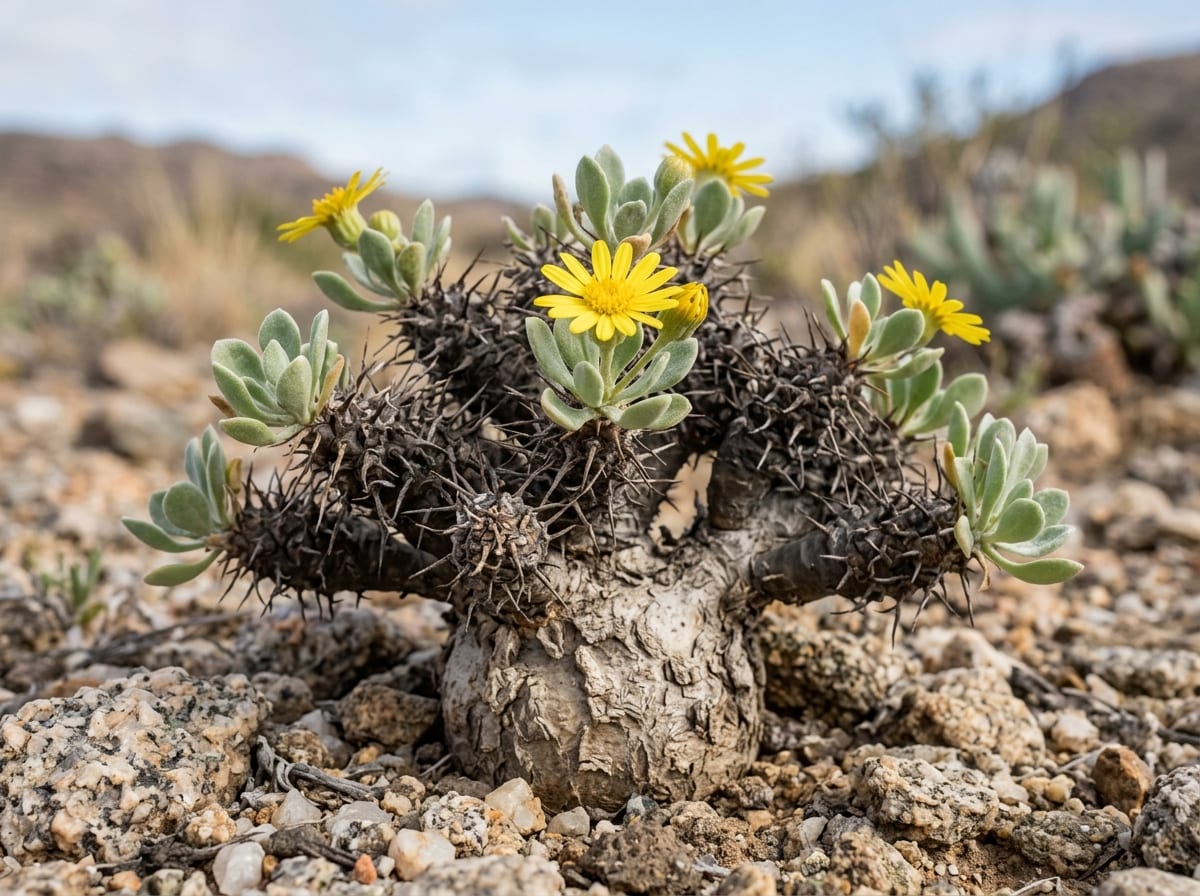
Othonna euphorbioides
Othonna euphorbioides is a caudex-forming member of the daisy family (Asteraceae), native to South Africa. Its swollen, potato-like caudex sends up short branches, and the old flower stalks that remain after blooming harden into small thorn-like spurs — a quirky trait for this species. At the branch tips, clusters of pale green, spoon-shaped leaves dusted with a fine white bloom give the plant a distinctly cactus- or euphorbia-like look, despite its daisy-family origins. Growth is slow, and as a winter-grower it rewards patient care with an increasingly characterful, gnarled silhouette over the years.
View Othonna euphorbioides encyclopedia →0% commission on your first sales!Register by September 30, 2026 and your first 2 plants are commission-free!
Grower Wanted!
List your plants on GrowerDirect and sell directly to customers nationwide!
6 Transparency Commitments from GrowerDirect
Our Grower disclose all key information for Caudex Plants listings, ensuring complete transparency on variety, origin, light needs, and difficulty.
- Variety Disclosed
- Real Plant Photos
- Color Details
- Origin Disclosed
- Light Requirements
- Difficulty Level
Browse all 146 varieties
Light Requirements
Difficulty Level
No listings match your filters
Adjust your filters, or get notified when new listings arrive.
Getting alerts is free with a member account. When new listings match your saved search, we'll notify you by email and in-app.
Browse other categories
Verified growers (preview)
Are you growing caudex plants?
Register as a grower and connect with buyers directly.
Apply as a growerOthonna euphorbioides key facts
- Growing Difficulty
- Intermediate
- Lifespan
- Slow-growing and long-lived (little published data)
- Size
- 10–15 cm (rarely 30 cm) tall, broader than tall
- Watering
- Light feeding in the growing season
- Light & Placement
- Grow it in full sun; conditions close to its harsh habitat keep it compact.
- Watering
- A winter grower: begin watering in autumn as the leaves appear, and let the mix dry between waterings.
- Dormancy Care
- It is semi-deciduous and rests in summer; keep it as dry as possible then to avoid rot.
- Soil & Repotting
- Use a sandy, very free-draining mix. The roots are shallow, so plant it firmly so it does not rock in the pot.
- Propagation
- Easily raised from seed: sow in autumn in a sandy, well-drained mix, cover lightly with grit or pumice and keep moist; germination takes about two weeks.
About Othonna euphorbioides
Othonna euphorbioides is a winter-growing Asteraceae succulent with a potato-like caudex, thorn-like old flower stalks, and pale, powdery leaves — a cactus-like shrublet best suited to intermediate growers.
7 things to know before growing Othonna euphorbioides
1Sun and Airflow
Othonna euphorbioides is a winter-grower that puts on most of its growth from autumn through spring. During this period, give it as much sun and airflow as possible, ideally outdoors or by a bright window. Strong midsummer sun can scorch the leaves, so move it to bright partial shade over summer.
2Watering Changes by Season
During the autumn-to-spring growing season, water thoroughly once the soil surface dries out. In summer, when growth slows to a near standstill, cut back sharply on watering — letting the leaves soften slightly before giving a small amount of water helps prevent root rot.
3Well-Draining Soil
A fast-draining caudex mix suits this plant well. Base it on mineral components like akadama and pumice, keeping organic matter to a minimum to reduce the risk of rot while supporting healthy caudex development.
4Repot During the Growing Season
The best time to repot is early autumn, just as growth resumes. Gently loosen the roots when removing the plant from its pot, trim away any damaged roots, and replant into fresh soil. Because growth is slow, frequent repotting isn't necessary.
5Let It Rest Through Summer
As a winter-grower, this Othonna enters dormancy and may drop leaves once summer heat sets in. Cutting back on water and keeping it in a bright, airy spot to rest quietly through the hot months is key to keeping the plant healthy long-term.
6Thorn-Like Old Flower Stalks
After flowering finishes, the spent flower stalks harden and remain on the branches as small thorn-like spurs. This is simply a natural sign of growth, and older plants develop an increasingly distinctive branching structure because of it — there's no need to remove them.
7Choosing a Healthy Plant
Look for a plant with a firm, plump caudex free of excessive wrinkling. Leaves at the branch tips should be well-coated in their characteristic white bloom, without discoloration or damage. Since growth is slow, it's worth checking the caudex size and branch structure carefully before choosing.
Frequently asked questions about Othonna euphorbioides
- Q.Can beginners grow this plant?
- A.Othonna euphorbioides is generally considered suited to intermediate growers rather than complete beginners. Its winter-growing habit requires switching watering routines with the seasons, so some prior experience with succulents or caudex plants is helpful.
- Q.How big does it grow?
- A.Plants typically reach around 10 to 15 cm in height, occasionally up to about 30 cm in rare cases. Rather than growing tall, it tends to spread wider than it is tall as it branches out.
- Q.What are the thorn-like spikes on the branches?
- A.They are the hardened remains of old flower stalks after blooming, not true thorns and not harmful to handle. They naturally accumulate as a sign that the plant is maturing.
- Q.Is it normal for leaves to drop in summer?
- A.Yes — as a winter-grower, it can enter dormancy and shed leaves during the hot summer months. This is a normal part of its growth cycle, so there's no need to worry, but watering should be reduced while it rests.
- Q.How fast does it grow?
- A.Growth is slow, and detailed information on its long-term lifespan is limited. Growing it patiently over time allows the caudex and branches to develop their distinctive, characterful shape.
Handy Growing Tools for Othonna euphorbioides
Learn more about Othonna euphorbioides in the encyclopedia
View Othonna euphorbioides encyclopedia entry →
Care difficulty, size, origin and light needs — all basics covered.
More in this category
Can't find the plant you're looking for?
Post your wishes for free and growers with matching plants will contact you with introductions.