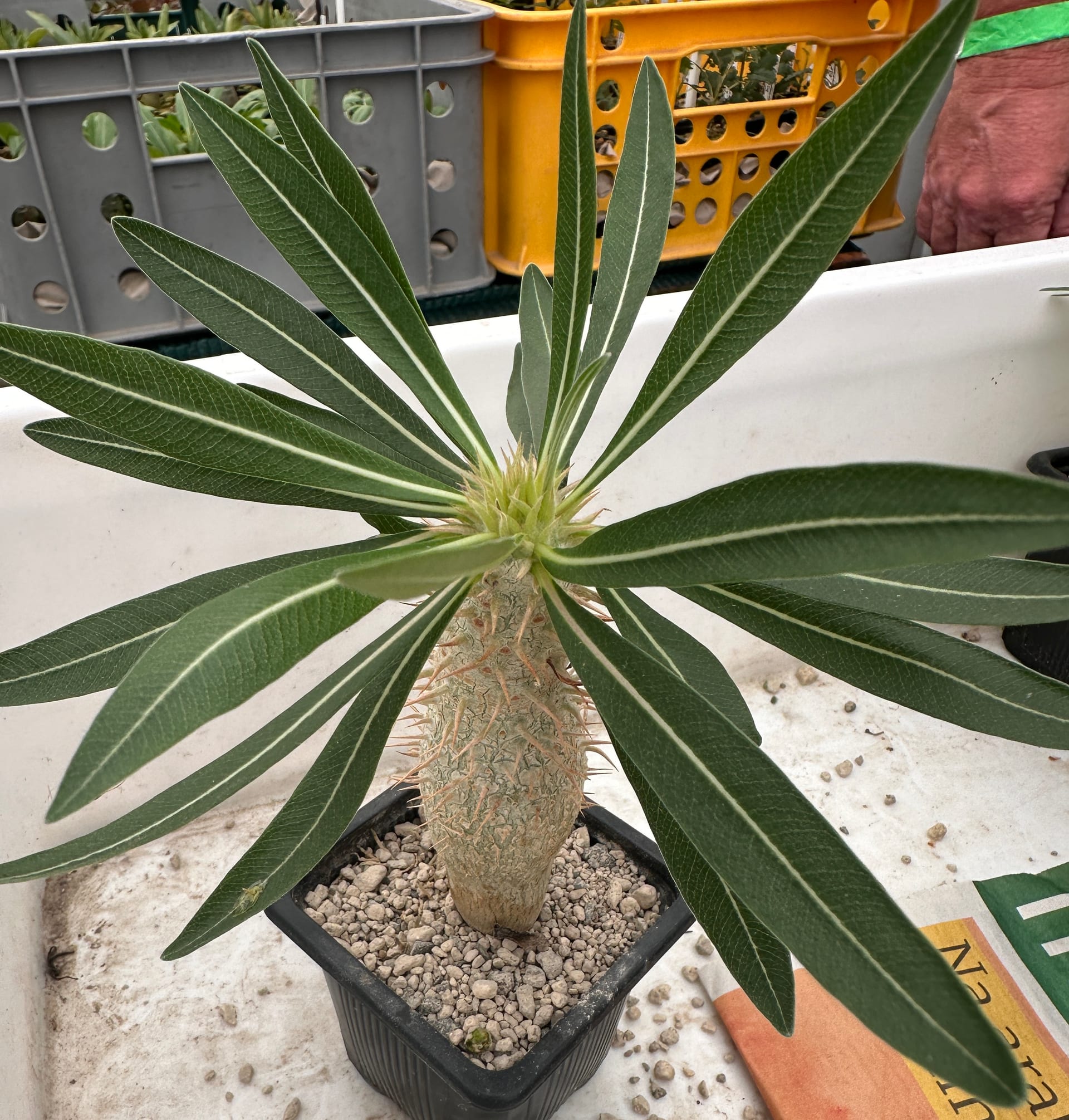
 © Michael Wolf (Webseite) / CC BY-SA 3.0
Pachypodium inopinatum
Pachypodium inopinatum is a compact caudiciform species native to north-central Madagascar, belonging to the rosulatum group of pachypodiums. It develops a rounded, swollen trunk from which slender, spine-covered branches reach upward, giving it the bold silhouette typical of caudex plants. While most rosulatum-group pachypodiums bloom yellow, this species stands out with its distinctive ivory-toned flowers. Plants can reach around 50cm in trunk height, with a caudex up to about 35cm in diameter. Because it calls for a bit more experience to grow well, it is best suited to intermediate keepers who want to enjoy its unusual form and flower color over time.
View Pachypodium inopinatum encyclopedia →0% commission on your first sales!Register by September 30, 2026 and your first 2 plants are commission-free!
Grower Wanted!
List your plants on GrowerDirect and sell directly to customers nationwide!
6 Transparency Commitments from GrowerDirect
Our Grower disclose all key information for Caudex Plants listings, ensuring complete transparency on variety, origin, light needs, and difficulty.
- Variety Disclosed
- Real Plant Photos
- Color Details
- Origin Disclosed
- Light Requirements
- Difficulty Level
Browse all 146 varieties
Light Requirements
Difficulty Level
No listings match your filters
Adjust your filters, or get notified when new listings arrive.
Getting alerts is free with a member account. When new listings match your saved search, we'll notify you by email and in-app.
Browse other categories
Verified growers (preview)
Are you growing caudex plants?
Register as a grower and connect with buyers directly.
Apply as a growerPachypodium inopinatum key facts
- Growing Difficulty
- Intermediate
- Lifespan
- Little data available
- Size
- Trunk up to about 50 cm tall; caudex up to 35 cm across
- Watering
- Sparingly in the growing season
- Light & Placement
- As a rock-dwelling species, give it a sunny position in the growing season.
- Watering
- Water once the soil dries in the growing season and reduce water after leaf fall.
- Temperature & Overwintering
- Little is recorded on its cold tolerance, so overwinter it dry in a warm room away from frost.
- Soil & Repotting
- Use a free-draining mix and repot at the start of the growing season.
- Pests & Cautions
- Pachypodium sap is toxic and the spines are sharp. Wear thick gloves or wrap the trunk in several layers of newspaper when repotting or moving it. It is critically endangered and wild plants do appear on the market; nursery seedlings arrive with established roots and do not depend on wild collection, so they are worth choosing over wild-collected plants.
About Pachypodium inopinatum
A compact Madagascar caudex with a thick trunk, spiny upright branches, and rare ivory-toned flowers. Grows to about 50cm tall with a 35cm caudex; best suited to intermediate growers.
7 things to know before growing Pachypodium inopinatum
1Bright light and placement
This species prefers strong light, so keep it outdoors or in a sunny window with as much light as possible. Moving it into intense sun too suddenly can scorch the leaves, so acclimate a newly acquired plant gradually. Good airflow also helps prevent the plant from staying too damp.
2Basic watering
During the growing season, water thoroughly once the soil surface has dried, keeping a clear rhythm between watering and drying out. Because the trunk and caudex store moisture, overwatering can easily lead to root rot. Avoid letting water sit in the saucer beneath the pot.
3Well-draining soil
Choose a fast-draining mix, such as a commercial succulent or cactus soil. Blending in items like akadama or pumice improves drainage and helps reduce the risk of root rot. Placing coarse pumice at the bottom of the pot is also a good precaution.
4When to repot
Repot roughly once every one to two years, during the active growing period. Carefully remove the plant from its pot without damaging the caudex or roots, trimming away any damaged roots before setting it into fresh soil. After repotting, hold off on watering for a few days to let the roots recover.
5Seasonal care
Care should shift noticeably between the active growing season and the dormant period. As temperatures drop and growth slows, cut back on watering and keep the soil on the dry side. Moving the plant to a bright spot indoors helps protect it from excessive cold.
6Choosing a healthy plant
Look for a plant with a firm, plump trunk and caudex, free of wrinkling. It is also worth checking for any wounds, dark discoloration, or soft spots. The condition of the spines and leaves at the branch tips can give a good sense of overall health.
7Enjoying the flowers
One of this species' appeals is its ivory-toned flowers, an unusual color within the rosulatum group. Flowering generally calls for a well-established plant, so keeping it healthy with plenty of light and a clear watering rhythm is the best path toward seeing it bloom.
Frequently asked questions about Pachypodium inopinatum
- Q.Is this species suitable for beginners?
- A.This species is generally considered better suited to intermediate growers. Having some prior experience with succulents or other Pachypodium species makes it easier to manage watering and placement.
- Q.How large does it grow?
- A.It can reach a trunk height of around 50cm, with a caudex up to about 35cm in diameter. Growth is slow, so it is a plant to enjoy over many years.
- Q.What do the flowers look like?
- A.While most species in the rosulatum group produce yellow flowers, this species is notable for its ivory-toned blooms. That distinctive flower color is part of what makes it appealing to collectors.
- Q.Should it be brought indoors in winter?
- A.As temperatures fall and growth slows, it is reassuring to move the plant to a bright, warm indoor spot while cutting back on watering. Avoiding sudden temperature swings helps keep it healthy.
- Q.How often does it need repotting?
- A.Repotting roughly once every one to two years, during the active growing season, is a good guideline. This helps prevent root-bound conditions and soil breakdown, supporting healthy growth.
Handy Growing Tools for Pachypodium inopinatum
Learn more about Pachypodium inopinatum in the encyclopedia
View Pachypodium inopinatum encyclopedia entry →
Care difficulty, size, origin and light needs — all basics covered.
More in this category
Can't find the plant you're looking for?
Post your wishes for free and growers with matching plants will contact you with introductions.