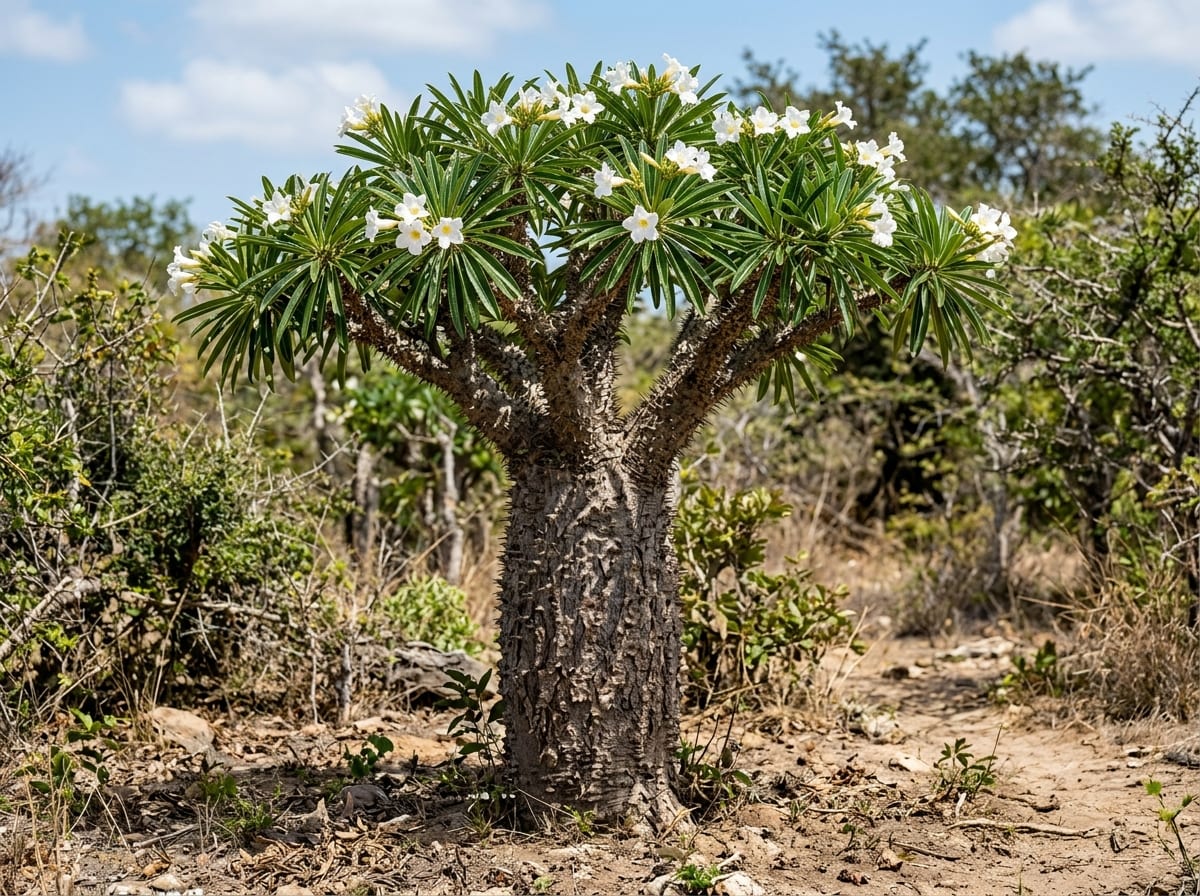
Pachypodium sofiense
Pachypodium sofiense is a tree-form Pachypodium native to northwestern Madagascar, closely related to P. rutenbergianum. Its spine-tipped branches carry dense, palm-like rosettes of narrow leaves, and mature plants produce abundant clusters of white flowers. In the wild it can reach around 5 meters tall, slowly developing into a striking, sculptural specimen over many years. Best suited to intermediate growers, it rewards patience with a truly distinctive silhouette.
View Pachypodium sofiense encyclopedia →0% commission on your first sales!Register by September 30, 2026 and your first 2 plants are commission-free!
Grower Wanted!
List your plants on GrowerDirect and sell directly to customers nationwide!
6 Transparency Commitments from GrowerDirect
Our Grower disclose all key information for Caudex Plants listings, ensuring complete transparency on variety, origin, light needs, and difficulty.
- Variety Disclosed
- Real Plant Photos
- Color Details
- Origin Disclosed
- Light Requirements
- Difficulty Level
Browse all 146 varieties
Light Requirements
Difficulty Level
No listings match your filters
Adjust your filters, or get notified when new listings arrive.
Getting alerts is free with a member account. When new listings match your saved search, we'll notify you by email and in-app.
Browse other categories
Verified growers (preview)
Are you growing caudex plants?
Register as a grower and connect with buyers directly.
Apply as a growerPachypodium sofiense key facts
- Growing Difficulty
- Intermediate
- Lifespan
- Long-lived tree (little published data)
- Size
- About 5 m tall in habitat
- Watering
- Regularly during the growing season
- Light & Placement
- A tree of seasonally dry forest, it should be grown in a sunny spot during the growing season.
- Watering
- Water once the soil dries while in leaf, and reduce water after leaf fall.
- Dormancy Care
- It is deciduous and rests leafless in winter, its dry season. Keep it dry while dormant and resume watering when new leaves appear.
- Temperature & Overwintering
- Little is recorded on its cold tolerance, so keep it in a warm room away from frost in winter.
- Soil & Repotting
- Use a free-draining mix and repot at the start of the growing season, increasing pot size step by step as it grows large.
- Pests & Cautions
- Pachypodium sap is toxic and the spines are sharp. Wear thick gloves or wrap the trunk in several layers of newspaper when repotting or moving it. Nursery seedlings arrive with established roots and do not depend on wild collection, so they are worth choosing over wild-collected plants.
About Pachypodium sofiense
Pachypodium sofiense is a tree-form succulent from northwestern Madagascar, with spiny branches, dense narrow leaves, and clusters of white flowers. An intermediate-level species reaching about 5m in habitat.
7 things to know before growing Pachypodium sofiense
1Placement and Light
Pachypodium sofiense prefers strong light, so keep it outdoors or near a bright window with plenty of sun and good air circulation. Insufficient light during the growing season can cause the stem to stretch and become leggy, so give it ample sun exposure while it's actively growing.
2Watering Rhythm
During the growing season (spring through fall), water thoroughly once the soil has dried out, aiming for a clear wet-dry cycle. Once the plant enters dormancy its water uptake slows, so reduce both the amount and frequency and keep it on the drier side.
3Soil and Drainage
Choose a fast-draining mix formulated for succulents and caudiciforms. Using drainage material at the bottom of the pot along with a coarse substrate helps prevent root rot and keeps this tree-form Pachypodium healthy.
4When to Repot
Once the plant feels root-bound, repot into a slightly larger container at the start of the growing season. After repotting, hold off on watering for several days to a week and keep it out of direct sun while the roots settle.
5Winter and Seasonal Care
Winter is a dormant period when growth slows considerably. As temperatures drop, move the plant to a bright spot indoors and cut back on watering to protect it from cold and excess moisture — key points for keeping it healthy long-term.
6Choosing a Healthy Plant
Look for a plant with a firm, well-formed trunk and a stable base that doesn't wobble. Also check that the leaf tips are free of damage or blackening and that the growing points at the branch tips look healthy.
7Enjoying Its Spines and Form
The branch tips bear spines, and as the plant grows, the texture of its bark and the pattern of its branching gradually change. Since this tree-form species can reach around 5 meters tall in the wild, it's a plant to enjoy for the way its silhouette evolves over many years.
Frequently asked questions about Pachypodium sofiense
- Q.Is this species suitable for beginners?
- A.This is generally considered an intermediate-level Pachypodium rather than a beginner plant. It suits growers who already understand the basics of succulent care, such as adjusting watering between growing and dormant seasons. It's better approached as a step up once you have some experience with caudiciforms.
- Q.Can it be grown indoors, or will it get too large?
- A.In the wild it's a large tree-form species that can reach around 5 meters, but in a pot it grows slowly over many years. It can be kept indoors in a bright spot or outdoors, adjusting the location and pot size as it develops.
- Q.How often does it need watering?
- A.This varies significantly by season. Water thoroughly once the soil dries out during the growing season, then reduce watering frequency and keep it drier during dormancy.
- Q.How is it different from the closely related P. rutenbergianum?
- A.It's a closely related tree-form Pachypodium from Madagascar with a similar overall appearance. Individual plants vary in form and branching, so telling the two apart can sometimes require specialist knowledge.
- Q.What do the flowers look like?
- A.Mature plants produce abundant clusters of white flowers at the branch tips. Flowering requires the plant to reach a certain level of maturity, so younger plants may take time before they bloom.
Handy Growing Tools for Pachypodium sofiense
Learn more about Pachypodium sofiense in the encyclopedia
View Pachypodium sofiense encyclopedia entry →
Care difficulty, size, origin and light needs — all basics covered.
More in this category
Can't find the plant you're looking for?
Post your wishes for free and growers with matching plants will contact you with introductions.