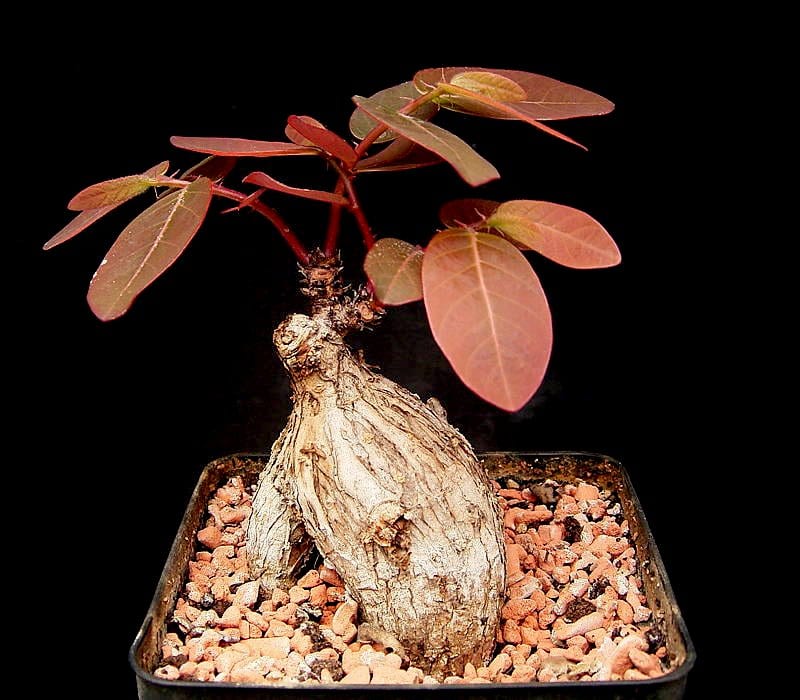
 © Frank Vincentz / CC BY-SA 3.0
Phyllanthus mirabilis
Phyllanthus mirabilis is a small tree native to Thailand, valued for its twisting branches and glossy, pinnate foliage. When grown in dry conditions, even young plants develop a swollen, caudex-like base over time. One of its most charming traits is its leaf movement: the small leaflets fold shut in pairs each evening, like a butterfly closing its wings, then reopen again in the morning. In the wild it can reach 8 meters in height with a trunk up to 30cm across, but container culture keeps it compact and manageable. This is considered an intermediate-level plant to grow, and with patience, a caudex can thicken past 10cm in diameter over several decades, becoming a striking centerpiece with real presence.
View Phyllanthus mirabilis encyclopedia →0% commission on your first sales!Register by September 30, 2026 and your first 2 plants are commission-free!
Grower Wanted!
List your plants on GrowerDirect and sell directly to customers nationwide!
6 Transparency Commitments from GrowerDirect
Our Grower disclose all key information for Caudex Plants listings, ensuring complete transparency on variety, origin, light needs, and difficulty.
- Variety Disclosed
- Real Plant Photos
- Color Details
- Origin Disclosed
- Light Requirements
- Difficulty Level
Browse all 146 varieties
Light Requirements
Difficulty Level
No listings match your filters
Adjust your filters, or get notified when new listings arrive.
Getting alerts is free with a member account. When new listings match your saved search, we'll notify you by email and in-app.
Browse other categories
Verified growers (preview)
Are you growing caudex plants?
Register as a grower and connect with buyers directly.
Apply as a growerPhyllanthus mirabilis key facts
- Growing Difficulty
- Intermediate
- Lifespan
- Long-lived (a caudex over 10 cm across takes several decades)
- Size
- Up to 8 m tall and 30 cm across in the wild; stays small in a pot
- Watering
- Light feeding in the growing season
- Light & Placement
- It does not need much sun; grow it in bright, light shade.
- Watering
- With an open, free-draining mix it can be watered generously in the growing season: water until it drains, then let the mix dry somewhat.
- Temperature & Overwintering
- It drops its leaves in winter. Cut watering to about once a month, and stop altogether when temperatures fall to around 10°C.
- Soil & Repotting
- Use a rich but free-draining mix. Keep it in a pot and train it like a bonsai; planted in the ground the caudex fades.
- Propagation
- Propagate from seed, or from stem or root cuttings.
- Pests & Cautions
- Space plants apart so air can move between the branches and leaves.
About Phyllanthus mirabilis
Phyllanthus mirabilis is a Thai caudiciform plant with twisting branches and glossy pinnate leaves that fold shut each evening. An intermediate-level species whose caudex thickens gradually over many years.
7 things to know before growing Phyllanthus mirabilis
1Bright Partial Shade
Phyllanthus mirabilis doesn't need strong sun; keep it in bright partial shade. Crowded foliage traps moisture, so space plants apart for good airflow.
2Water With Clear Wet-Dry Cycles
During active growth, water thoroughly once the soil surface dries out, letting the caudex store moisture. As the plant slows down and enters dormancy, cut back on watering to keep the roots on the drier side and avoid rot.
3Choose a Fast-Draining Mix
A caudiciform-specific potting mix, or a blend of akadama and pumice, works well for good drainage. Since excess moisture can damage the caudex, make sure the pot itself drains freely too.
4Repot During Active Growth
Once roots fill the pot, move up to a slightly larger container during a period of active growth. Handle the roots gently, and plant shallowly so the caudex isn't buried too deep in the soil.
5Bring It Indoors in Winter
As a native of tropical Thailand, this plant is sensitive to cold. When temperatures drop, move it to a bright spot indoors, keep it warm, and water more sparingly while it rests.
6Watch the Leaves Open and Close
Each evening, the leaflets fold together in pairs like a butterfly closing its wings, then reopen in the morning. This daily rhythm is one of the plant's most distinctive features and can also hint at how much light and warmth it's getting.
7Picking a Healthy Plant
Look for a specimen with a firm, unblemished caudex at the base. Since this species is considered suited to intermediate growers, first-time caudiciform keepers may want to research its care before bringing one home.
Frequently asked questions about Phyllanthus mirabilis
- Q.How long does it take for the caudex to swell?
- A.Caudex growth is a slow process — a base more than 10cm across usually belongs to a plant that's been growing for several decades. It's a plant to enjoy patiently over the long term rather than rush.
- Q.Is this a good plant for beginners?
- A.This species is generally considered suited to intermediate growers rather than complete beginners. Some prior experience with watering and placement for caudiciform plants will make it easier to care for.
- Q.Why do the leaves close in the evening?
- A.It's a natural trait of this species — the paired leaflets fold together each evening, much like a butterfly closing its wings, and reopen again the next morning. It's simply part of the plant's daily rhythm and one of its most charming characteristics.
- Q.How large does this plant get?
- A.In its native habitat it can grow into a tree up to 8 meters tall with a trunk around 30cm across. In a pot, however, its size can be kept much more compact.
- Q.How often should it be repotted?
- A.Repot when the roots have filled the current pot, choosing a time during active growth. It doesn't need frequent repotting — just check root growth periodically and repot as needed.
Handy Growing Tools for Phyllanthus mirabilis
Learn more about Phyllanthus mirabilis in the encyclopedia
View Phyllanthus mirabilis encyclopedia entry →
Care difficulty, size, origin and light needs — all basics covered.
More in this category
Can't find the plant you're looking for?
Post your wishes for free and growers with matching plants will contact you with introductions.