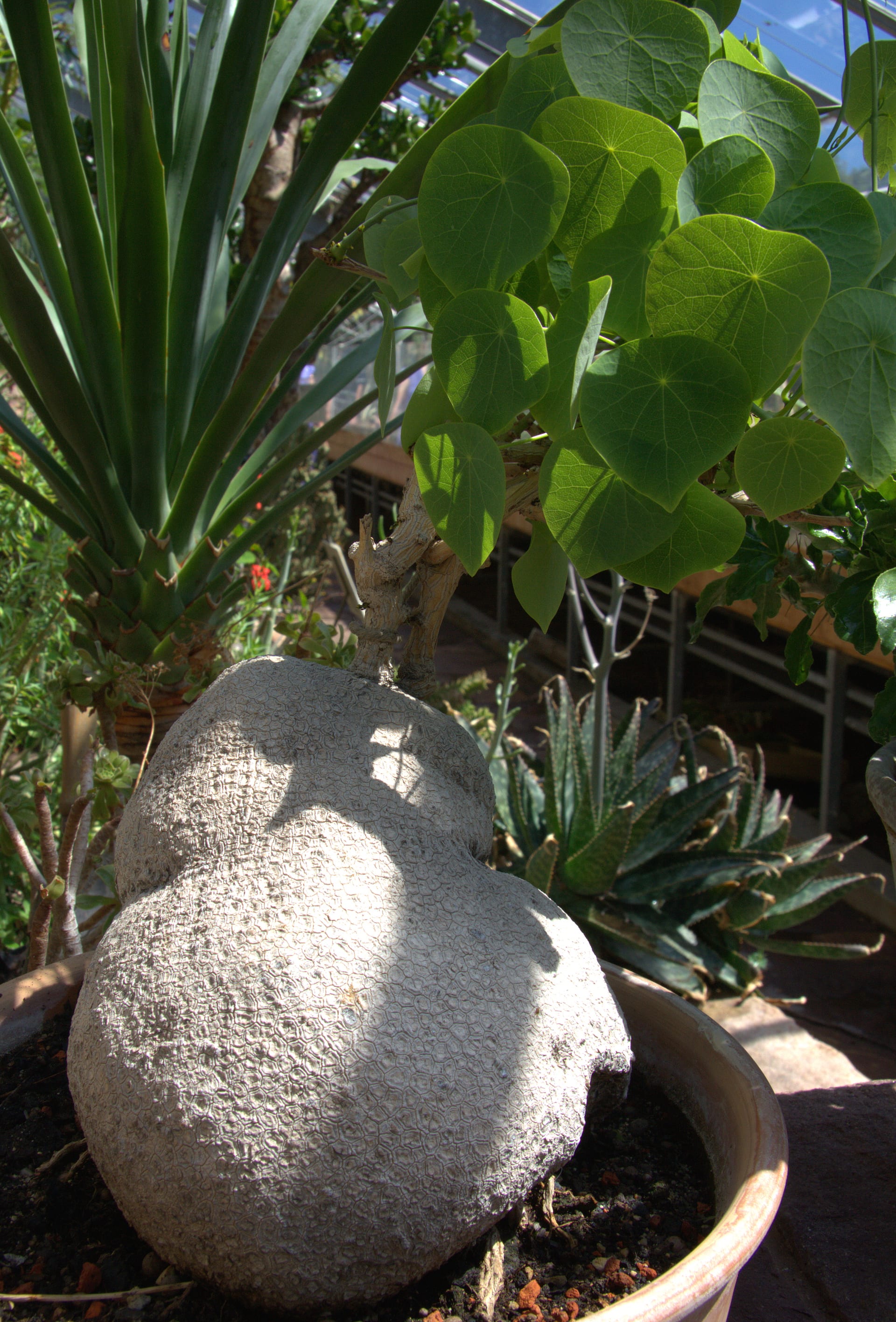
 © C T Johansson / CC BY 3.0
Stephania suberosa
Stephania suberosa is a vining caudex plant in the Menispermaceae family, native to the dry landscapes of Thailand and Cambodia. Its most striking feature is a large, above-ground tuber wrapped in thick, deeply fissured, cork-like bark that grows more characterful with age. Once the growing season begins, vines emerge quickly from the tuber and unfurl round, lotus-like leaves, giving the plant a look unlike typical caudex succulents. Tubers are said to live for over a century, making this a rewarding but advanced-level plant suited to patient, experienced growers.
View Stephania suberosa encyclopedia →0% commission on your first sales!Register by September 30, 2026 and your first 2 plants are commission-free!
Grower Wanted!
List your plants on GrowerDirect and sell directly to customers nationwide!
6 Transparency Commitments from GrowerDirect
Our Grower disclose all key information for Caudex Plants listings, ensuring complete transparency on variety, origin, light needs, and difficulty.
- Variety Disclosed
- Real Plant Photos
- Color Details
- Origin Disclosed
- Light Requirements
- Difficulty Level
Browse all 145 varieties
Light Requirements
Difficulty Level
No listings match your filters
Adjust your filters, or get notified when new listings arrive.
Getting alerts is free with a member account. When new listings match your saved search, we'll notify you by email and in-app.
Browse other categories
Verified growers (preview)
Are you growing caudex plants?
Register as a grower and connect with buyers directly.
Apply as a growerStephania suberosa key facts
- Growing Difficulty
- Advanced
- Lifespan
- Tubers may live for more than 100 years
- Size
- Vines 4 m or more; tubers can exceed 50 kg
- Watering
- Sparingly in the growing season
- Light & Placement
- Grow in a bright, warm place out of direct sun; it does best at 25°C or more.
- Watering
- Start watering only after leaves appear, and even in the spring-to-summer growing season water only about once a month. Do not water while it is leafless.
- Dormancy Care
- The vines die back and it rests in winter, its dry season. Remove dead vines and keep the tuber dry and warm.
- Temperature & Overwintering
- It is cold-sensitive; bring it into a warm room for winter.
- Soil & Repotting
- As a limestone plant, give it a free-draining mix, with the tuber set above the soil.
- Pests & Cautions
- It is difficult in cultivation, and most large tubers on the market were dug from the wild. Check that it has rooted and is producing leaves, and choose plants with active vines.
About Stephania suberosa
A caudex vine from Thailand and Cambodia, Stephania suberosa grows a large tuber with deeply fissured, cork-like bark and round, lotus-shaped leaves. Tubers can reportedly live over a century in this advanced-level plant.
7 things to know before growing Stephania suberosa
1Bright, Warm, Out of Direct Sun
Grow Stephania suberosa in a bright, warm spot out of direct sun; it does best at 25°C or above. Poor airflow can lead to rot or mold, so avoid stuffy, enclosed spots.
2Water Sparingly
Start watering only once leaves appear, and even in the spring-to-summer growing season water only about once a month. Give no water while it is leafless. When the vines die back for winter dormancy, remove them and let the tuber rest dry in a warm place.
3Well-Draining Soil
Choose a fast-draining mix, such as a dedicated caudex or succulent blend combining akadama, pumice, and perlite. Because the tuber sits largely above the soil surface, constantly damp potting mix can quickly damage the roots and the tuber itself.
4Repot During Dormancy
Repotting is safest while the plant is dormant and leafless. As the tuber grows heavier over time, choose a stable, appropriately sized pot and avoid burying the tuber too deeply in the soil.
5Managing Seasonal Dieback
As temperatures drop, the vines and leaves naturally die back, leaving only the bare tuber through dormancy. This is a normal seasonal cycle rather than a sign of disease, so there is no need to worry when the foliage disappears — simply switch to dormant-season care.
6Inspecting the Tuber
When choosing a plant, look for a tuber with firm, solid texture and the characteristic deep, cork-like fissures on its surface. Avoid individuals with soft spots, dents, or visible wounds, as these can indicate damage inside the tuber.
7Training the Vines
Since the vines can extend well over 4 meters, setting up a trellis, stake, or hooks to guide their direction makes the plant much easier to manage. Depending on your space, you can also let the vines trail from a hanging pot for a different look.
Frequently asked questions about Stephania suberosa
- Q.Can beginners grow Stephania suberosa?
- A.Stephania suberosa is considered an advanced-level plant to grow. Because incorrect watering or dormancy care can easily damage the tuber, it's best suited to growers who already have experience with caudex plants.
- Q.The leaves dropped in winter — is it dying?
- A.Leaf and vine dieback as temperatures fall is a normal part of this plant's seasonal cycle, not a sign it has died. Reduce watering and switch to dormant-season care, and new growth will return when the season turns.
- Q.How big does the tuber get?
- A.The above-ground tuber enlarges over time and can reportedly exceed 50 kg in weight. Because growth is slow and gradual, a large tuber is generally a sign of an older, well-established plant.
- Q.How long do the vines grow, and do I need a trellis?
- A.The vines can extend more than 4 meters in length. If you want to guide their direction, setting up a stake or trellis in advance will make ongoing care much easier.
- Q.What kind of location suits this plant best?
- A.A bright, warm spot out of direct sun suits it best. It does well at 25°C or above and is sensitive to cold, so bring it into a warm room for winter.
Handy Growing Tools for Stephania suberosa
Learn more about Stephania suberosa in the encyclopedia
View Stephania suberosa encyclopedia entry →
Care difficulty, size, origin and light needs — all basics covered.
More in this category
Can't find the plant you're looking for?
Post your wishes for free and growers with matching plants will contact you with introductions.