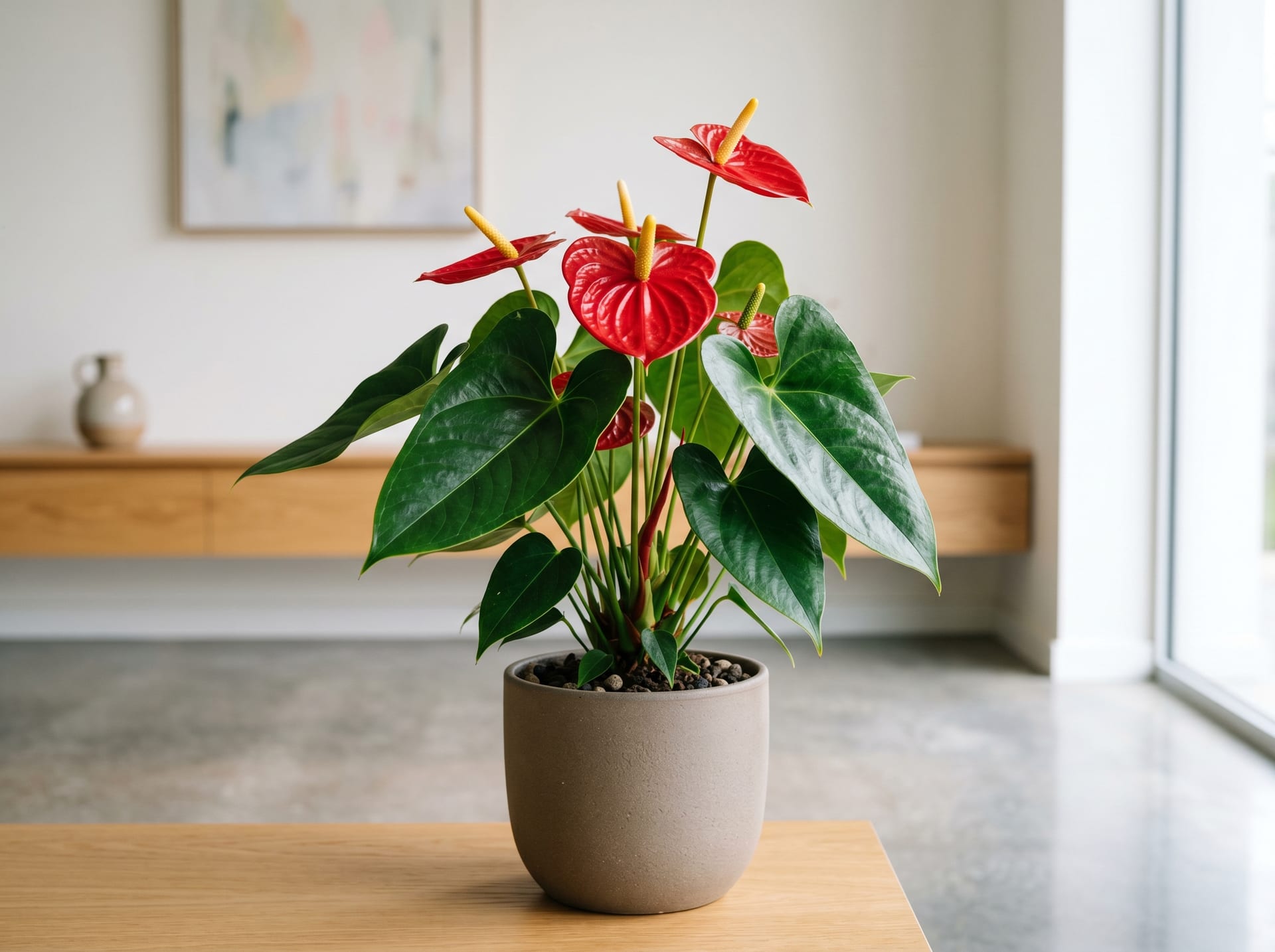
Anthurium
A tropical plant with long-lasting heart-shaped spathes (the colorful flower-like part). Available in red, pink, white and green. Loves warm, humid indoor conditions.
View Anthurium encyclopedia →Grower Wanted!
List your plants on GrowerDirect and sell directly to customers nationwide!
6 Transparency Commitments from GrowerDirect
Every Grower selling Foliage Plants provides complete transparency: variety, origin, light requirements, and care difficulty.
- Variety Information
- Real Photos
- True Colors
- Origin Information
- Light Requirements
- Care Difficulty
Browse all 139 varieties
Light Requirements
Care Difficulty
No listings match your filters
Adjust your filters, or get notified when new listings arrive.
Getting alerts is free with a member account. When new listings match your saved search, we'll notify you by email and in-app.
Browse other categories
Verified growers (preview)
Are you growing foliage plants?
Register as a grower and connect with buyers directly.
Apply as a growerAnthurium key facts
- Growing Difficulty
- Intermediate
- Lifespan
- Perennial
- Size
- 30-80cm
- Temperature
- 18〜30℃
- Humidity
- 60〜80%
- Watering
- Liquid fertilizer twice monthly in spring-fall
- Placement
- Bright indirect light optimal. Direct sun damages spathe
- Watering
- Water when topsoil dries. Good drainage is key
- Humidity
- Prefers high humidity. Mist leaves regularly
- Temperature & Overwintering
- Ideal temperature is 22-28°C and it suffers below 15°C. In winter keep it in a bright room that stays warm enough, away from cold drafts.
- Soil & Repotting
- Plant in a well-draining mix and feed liquid fertilizer twice a month from spring to autumn. Repot one size up when rootbound.
- Notes
- Contains calcium oxalate. Toxic to pets and children
About Anthurium
Anthurium is a perennial plant in the Araceae family, native to the tropical rainforests of Central and South America. Its name derives from Greek words meaning "flower" and "tail." Introduced to Europe in the 19th century, it has since been extensively cultivated worldwide, with more than 900 known species today. Its most distinctive feature is the heart-shaped spathe — a modified leaf that resembles a flower — which comes in a rich palette of red, pink, white, green, and purple, and bears a characteristic glossy sheen that catches the light beautifully. Rising from the center of the spathe is the spadix, a slender cream or yellow spike that contains the true flowers. Anthurium blooms throughout the year in warm indoor conditions, with individual spathes retaining their color for two to four months, making it one of the longest-lasting ornamental houseplants available. The keys to success are providing bright indirect light and maintaining adequate humidity — once these are in place, even beginners can grow it with confidence.
Featured Growers Selling Anthurium
Browse all Anthurium growers (1 total) →7 things to know before growing Anthurium
1Avoid Direct Sunlight
Anthurium thrives in bright, indirect light, but direct sunlight can scorch the leaves and spathes, causing discoloration. A spot near a window filtered by a sheer curtain provides ideal lighting conditions.
2Warmth and Humidity Are Key
The ideal growing temperature is 18–28°C. Below 10°C growth slows significantly, and temperatures under 5°C can damage the plant. In dry conditions, leaf tips tend to brown, so maintaining humidity between 50–70% using a mister or humidifier helps keep the plant healthy.
3Water Thoroughly but Infrequently
Water thoroughly once the top layer of soil has dried out, as overwatering can lead to root rot. Pour until water drains from the bottom, and empty the saucer promptly. During winter, reduce watering frequency further to prevent moisture buildup.
4Toxic to Pets and Children
All parts of the anthurium plant contain calcium oxalate crystals, which can cause burning sensations in the mouth and vomiting if ingested. It is strongly recommended to keep the plant out of reach of pets and young children. Wearing rubber gloves when handling the plant helps prevent skin irritation.
5Fertilize Lightly in Growing Season
During the growing season (spring through autumn), applying a diluted liquid fertilizer at half the recommended strength once or twice a month promotes better flowering. Over-fertilizing can damage the roots, so avoid exceeding the stated dosage. Fertilizing should be suspended during winter.
6Repot Every Two Years
When roots become crowded in the pot, growth slows and the number of spathes tends to decrease. Repotting into a slightly larger container every two years is a good guideline, with May to June being the ideal time. Using a well-draining potting mix formulated for tropical houseplants helps prevent root rot.
7Tips for Prolonged Blooming
Under suitable conditions, each spathe can remain attractive for two to four months. Promptly removing spent spathes encourages the development of new flower buds. Insufficient light is a common reason for reduced blooming, so ensuring adequate brightness is the key to keeping the plant flowering consistently.
Frequently asked questions about Anthurium
- Q.Why has my anthurium stopped flowering?
- A.The most common causes are insufficient light, lack of fertilizer, or a pot-bound root system. Try moving the plant to a brighter spot with indirect light and apply a diluted liquid fertilizer during the growing season. If the roots are crowded, repotting should help stimulate new blooms.
- Q.The leaves are turning yellow. What should I do?
- A.Yellowing leaves are most often caused by overwatering and root rot, or by scorching from direct sunlight. Check whether the soil is staying too wet and reduce watering, then reassess the plant's position. If many leaves are yellowing at once, inspect the roots for signs of rot.
- Q.Is anthurium safe to keep around cats and dogs?
- A.Anthurium is toxic to cats and dogs; ingestion can cause oral irritation and vomiting. It is best placed on a high shelf or in a separate room where pets cannot reach it. If a pet ingests any part of the plant, consult a veterinarian promptly.
- Q.What should I watch out for when caring for anthurium in winter?
- A.Cold temperatures and dry air are the two main threats in winter. Keep the plant in a spot that stays above 10°C, and counteract heating-induced dryness with a humidifier or regular misting. Also make sure the plant is not positioned directly in the airflow from a heater or air conditioner, as this can damage the leaves.
- Q.Why is the color of my anthurium's spathe fading?
- A.Spathes naturally fade and turn green over time as they age — this is a normal part of the bloom cycle. Removing the faded flower stalk at its base reduces strain on the plant and encourages new buds to emerge. If no new flowers appear afterward, check that the plant is receiving enough indirect light.
Handy Growing Tools for Anthurium
Learn more about Anthurium in the encyclopedia
View Anthurium encyclopedia entry →
Care difficulty, size, origin and light needs — all basics covered.
Anthurium related articles
Complete Guide to Growing Anthuriums (Red Flowers) | Optimal Light, Water, and Humidity Conditions
A complete guide to cultivation methods for producing red spathes (bracts) on Anthuriums every month. Detailed explanations of reproducing the native habitat environment, optimal lighting (no direct sun), maintaining 60%+ humidity, soil design to prevent root rot, and seasonal management.
A Beginner's Guide to Rare Aroids (Araceae) | How to Choose and Grow Monstera, Philodendron, and Anthurium
Focusing on rare Monstera, Philodendron, and Anthurium, this guide explains the characteristics of popular aroid (Araceae) species, basic care methods (light, water, soil, and humidity), and propagation tips for beginners.
Aroid (Araceae) Potting Mix Guide | Optimal Soil Preparation and Material Selection
Aroids are a general term for Araceae family plants, including Monstera, Philodendron, and Anthurium. Many are epiphytic and prone to root rot in standard potting soil. Explains soil material characteristics and potting soil mixing recipes by plant variety.
[2026] Trending Foliage Plants to Watch | Popular Species Featured on Social Media
Discover the foliage plant trends capturing social media in 2026. Learn the characteristics, price ranges, and sourcing methods for popular variegated Monstera, Philodendron, Anthurium, and more.
More in this category
Can't find the plant you're looking for?
Post your wishes for free and growers with matching plants will contact you with introductions.