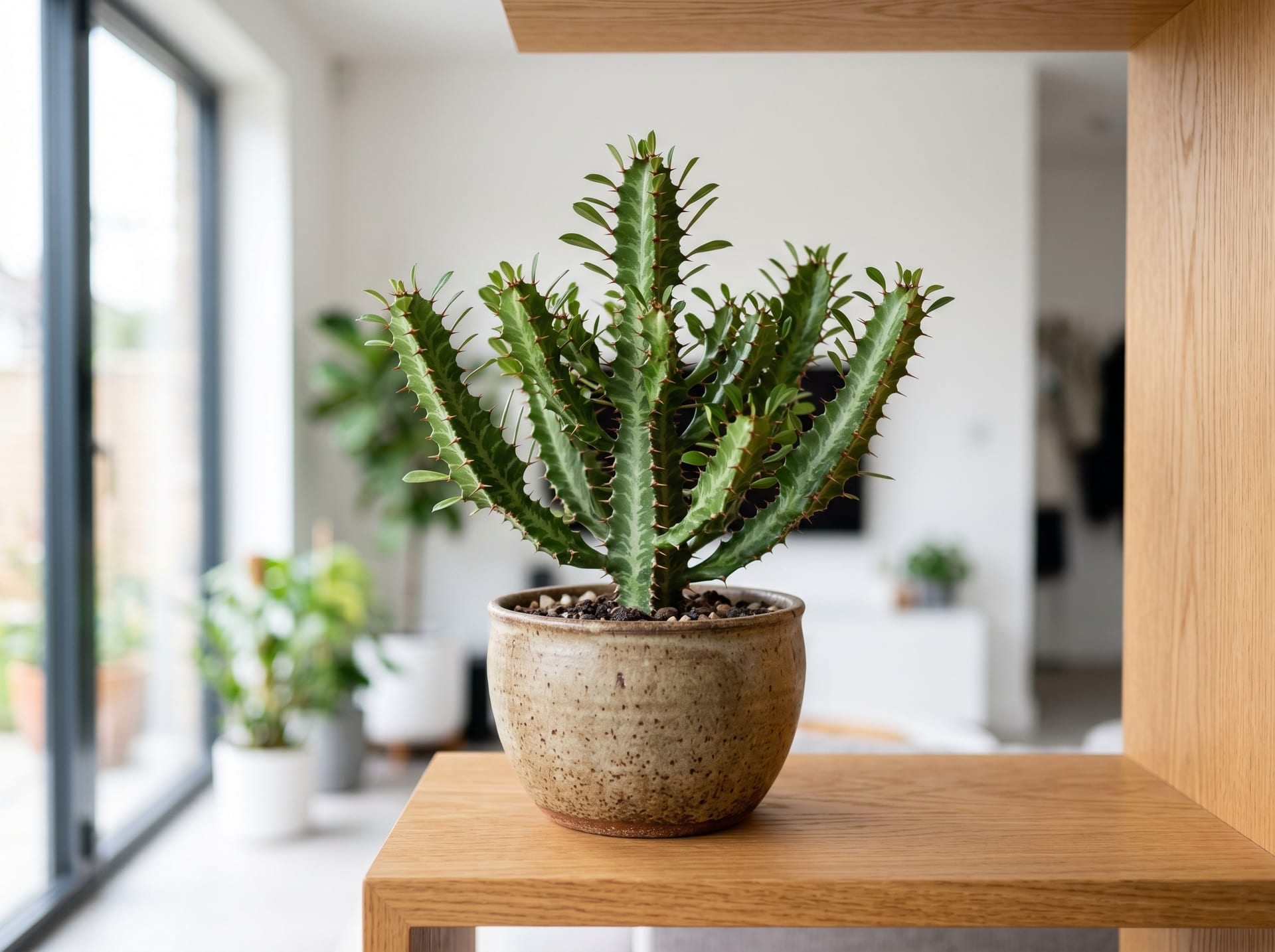
Euphorbia
Many resemble cacti but are entirely different family. Obesa and Horrida popular. Toxic white latex requires careful handling.
View Euphorbia encyclopedia →Grower Wanted!
List your plants on GrowerDirect and sell directly to customers nationwide!
6 Transparency Commitments from GrowerDirect
Grower disclose this information for Succulents & Cacti. We guarantee transparency in variety, origin, light requirements, and difficulty level.
- Variety Disclosed
- Real Photos
- Color Details
- Origin Disclosed
- Light Requirements
- Difficulty Level
Browse all 131 varieties
Light Requirements
Difficulty Level
No listings match your filters
Adjust your filters, or get notified when new listings arrive.
Getting alerts is free with a member account. When new listings match your saved search, we'll notify you by email and in-app.
Browse other categories
Verified growers (preview)
Are you growing succulents & cacti?
Register as a grower and connect with buyers directly.
Apply as a growerEuphorbia key facts
- Growing Difficulty
- Intermediate
- Lifespan
- 10+ years
- Size
- 5cm-1m (varies by variety)
- Temperature
- 5〜35℃
- Light & Placement
- Loves sun and needs good airflow. Outdoors choose an airy sunny spot; indoors a bright windowsill.
- Watering
- Water sparingly, only once the soil dries. It dislikes wet soil and rots easily, so keep it on the dry side.
- Temperature & Overwintering
- Growing range is 5-35°C. In winter keep lows at 5-10°C or above, though this varies by species.
- Soil & Repotting
- Use a well-draining mix with extra pumice. To avoid wet soil, choose a pot that dries out quickly.
- Propagation
- Propagate by cuttings or seed. For cuttings, wash off the latex from the cut end and let it dry before inserting into soil.
- Notes
- Toxic white latex — avoid skin contact
About Euphorbia
Euphorbia is one of the largest and most diverse plant genera, with over 2,000 species distributed across Africa, Madagascar, and beyond. Many bear a striking resemblance to cacti—not through shared ancestry, but through convergent evolution in response to arid environments. Its potent latex has long been known in medicine and as a poison. The visual diversity within the genus is remarkable: the spherical symmetry of E. obesa, the fierce spines of E. horrida, and the candelabra forms of E. lactea all belong to the same family. Their appeal to growers lies in a rewarding simplicity—minimal watering and bright light are all they truly need to maintain sculptural forms for years. Slow-growing and long-lived, Euphorbia rewards patience and offers a genuinely long-term relationship between plant and keeper.
7 things to know before growing Euphorbia
1Toxic Latex Warning
Euphorbias exude a white latex sap when cut or damaged that can cause skin irritation and is harmful if it contacts the eyes. Always wear rubber gloves when pruning or repotting, and wash your hands thoroughly afterward. Keep plants out of reach of pets and small children.
2Water Sparingly
Euphorbias are drought-tolerant and root rot from overwatering is the most common cause of failure. During the growing season (spring to autumn), water only after the soil has dried out completely; in winter, reduce watering to once a month or less. Never let the pot sit in standing water.
3Provide Plenty of Sunlight
Euphorbias thrive in bright light and should be placed in the sunniest spot available year-round. A south-facing windowsill is ideal for indoor cultivation; insufficient light leads to etiolation and poor form. In peak summer, use shade cloth if direct midday sun is intense.
4Protect from Cold and Frost
Most Euphorbias stop growing below 5–10°C and can be damaged or killed by frost. Bring outdoor plants inside before temperatures drop significantly. Cold hardiness varies considerably by species, so confirm the tolerance of your specific variety at the time of purchase.
5Wide Size Variation by Species
Euphorbias vary enormously in mature size, from compact species just 5 cm across to large columnar types reaching about 1 metre tall. Before buying, check the expected mature size and plan your space and pot size accordingly. The spherical Euphorbia obesa is generally compact, making it well-suited for collections.
6Repot Every 2–3 Years
When roots become pot-bound, growth slows, so repot into a slightly larger container every two to three years. Do this at the start of the growing season in spring, using a well-draining cactus or succulent mix. Always wear gloves during repotting to avoid contact with the latex sap.
7Fertilise Lightly
Euphorbias are adapted to nutrient-poor soils, so over-fertilising causes weak, stretched growth and root damage. Apply a dilute balanced fertiliser or slow-release granules once a month during the growing season (spring to summer). Stop feeding from autumn onward to allow the plant to prepare for dormancy.
Frequently asked questions about Euphorbia
- Q.What should I do if sap gets on my skin?
- A.Rinse the affected area immediately and thoroughly with soap and water. If sap enters the eyes, flush with clean water for at least 15 minutes and seek medical attention if irritation persists. The best prevention is to wear gloves and protective eyewear before handling the plant.
- Q.How do I tell Euphorbia apart from a cactus?
- A.The easiest way is to look at the sap: Euphorbia exudes milky white latex, while cacti produce clear watery sap. Euphorbia spines also tend to grow in pairs, and they lack the distinct areoles—the small cushion-like spots—from which cactus spines emerge.
- Q.Can I leave Euphorbia outside in winter?
- A.Most Euphorbia species suffer damage below 5°C, so they need to be brought indoors during winter in most parts of Japan. A few cold-hardy species like E. rigida can tolerate light frost, but as a general rule, move plants to a warm, bright indoor location before the first frost to be safe.
- Q.Why are the leaves turning yellow and dropping?
- A.Overwatering is the most common cause. Watering before the soil fully dries out leads to root rot, which manifests as yellowing and leaf drop. Cold temperatures and insufficient light are the next most frequent culprits. Review your watering schedule and check that the plant is getting adequate warmth and sunlight.
- Q.Which Euphorbia varieties are best for beginners?
- A.The compact, spherical E. obesa is often recommended because its form is easy to read and it is manageable to grow. However, Euphorbias are sensitive to excess moisture and prone to root rot, so water sparingly and only after the soil has dried out. When buying, check that the plant is firm and free of damage, and that its mature size suits your space.
Handy Growing Tools for Euphorbia
Learn more about Euphorbia in the encyclopedia
View Euphorbia encyclopedia entry →
Care difficulty, size, origin and light needs — all basics covered.
Euphorbia related articles
Monadenium Caudex Plant Care Guide | Water Management, Dormancy, and Cautions about Latex Sap
A comprehensive guide to growing Monadenium. Learn everything about caring for this East African caudex succulent: placement and light management, switching watering schedules between growth and dormancy periods, creating well-draining soil mixes, safety precautions with Euphorbiaceae latex sap, and propagation through cuttings and division.
Caudex Plants: Seed Growing vs. Air Layering | Complete Comparison of Differences, Advantages & Disadvantages
Complete comparison of two caudex propagation methods: seed growing and air layering. Detailed explanations of actual procedures, costs, success rates, advantages and disadvantages using Pachypodium, Adenium, Euphorbia and more.
Top 15 Popular Euphorbia Ranking 2026: Valida, Obesa, White Ghost & More Compared
A ranking guide to popular Euphorbia species. Compare 15 species favored by collectors—including Valida, Obesa, White Ghost, Lactea, Neriifolia, and Suzannae—by characteristics, ease of care, and price range.
Caudex Plants & Potting | Pot Coordination Techniques to Highlight Individuality
A guide to selecting and displaying pots that bring out the individuality of caudex plants such as Operculicarya, Adenium, and Euphorbia. We explore material, shape, and color compatibility, as well as display techniques using height, angles, and grouping.
Summer-type caudex plants: types and how to grow them | Maximizing growth during the active season
An explanation of major varieties of caudex plants that grow in summer and how to cultivate them. Introduces summer-type varieties such as Pachypodium, Adenium, and Euphorbia, along with active growth period management and dormancy preparation.
More in this category
Can't find the plant you're looking for?
Post your wishes for free and growers with matching plants will contact you with introductions.