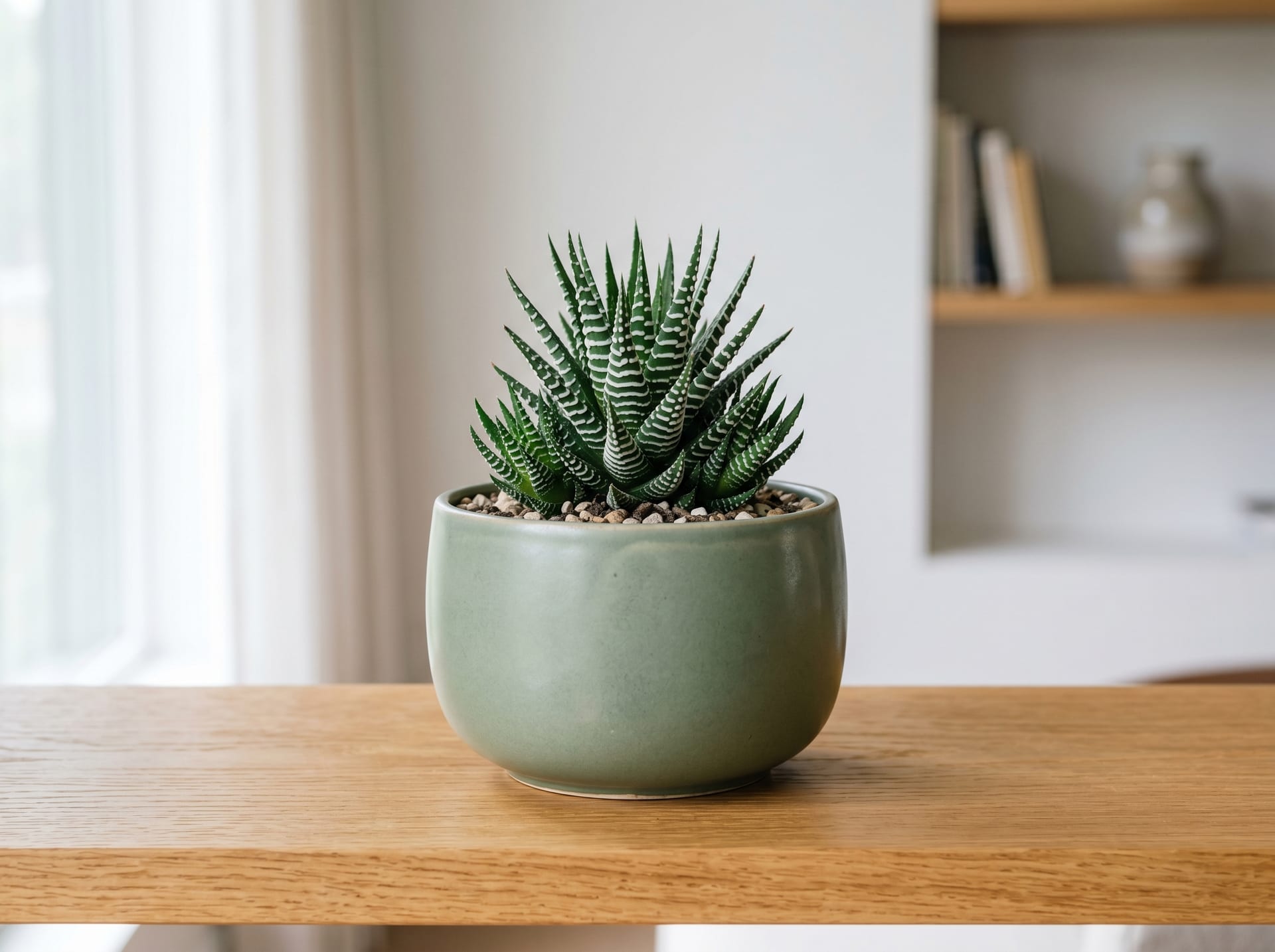
Haworthia
Unique succulent with translucent leaf tips called 'windows' that transmit light. Shade-tolerant, thriving in bright indirect light indoors. Obtusa and Retusa are popular. Compact and space-efficient.
View Haworthia encyclopedia →Grower Wanted!
List your plants on GrowerDirect and sell directly to customers nationwide!
6 Transparency Commitments from GrowerDirect
Grower disclose this information for Succulents & Cacti. We guarantee transparency in variety, origin, light requirements, and difficulty level.
- Variety Disclosed
- Real Photos
- Color Details
- Origin Disclosed
- Light Requirements
- Difficulty Level
Browse all 131 varieties
Light Requirements
Difficulty Level
No listings match your filters
Adjust your filters, or get notified when new listings arrive.
Getting alerts is free with a member account. When new listings match your saved search, we'll notify you by email and in-app.
Browse other categories
Verified growers (preview)
Are you growing succulents & cacti?
Register as a grower and connect with buyers directly.
Apply as a growerHaworthia key facts
- Growing Difficulty
- Beginner-friendly
- Size
- 3-15cm
- Temperature
- 5〜35℃
- Watering & Fertilizer
- Water: every 2 weeks in spring/fall / monthly in summer and winter
- Placement
- Bright indirect light is ideal. Direct sun causes leaf burn
- Watering
- In the spring and autumn growing seasons, water once the soil dries, roughly every two weeks. In midsummer and midwinter cut back to about once a month.
- Temperature & Overwintering
- Manageable between 5 and 35°C, with an ideal range of 15 to 25°C. In winter keep it in a bright indoor spot that stays above 5°C.
- Soil
- Well-draining mix. Kanuma and Akadama base
- Propagation
- Offset division is reliable. Leaf propagation difficult for most varieties
- Notes
- Thick roots prefer deep pots. Use deeper containers over shallow ones
About Haworthia
Haworthia is a succulent native to southern Africa. In the wild, it grows in sheltered spots such as beneath rocks or at the base of grasses, naturally avoiding direct sunlight—a habit that translates directly into its ease of indoor care. Its most distinctive feature is the translucent "window" at the tip of each leaf, a unique structure that draws light into the leaf. Window shape and patterning vary greatly between varieties, and popular ones include Obtusa and Retusa. Slow-growing and compact enough to fit in the palm of a hand, Haworthia is ideal for collecting multiple varieties side by side even in small spaces.
Featured Growers Selling Haworthia
Browse all Haworthia growers (1 total) →5 things to know before growing Haworthia
1Indirect Light Is Key
Direct sunlight can scorch the leaves and cause the translucent windows to lose their clarity. Bright indirect light — such as a north- or east-facing windowsill or behind a sheer curtain — is ideal. If leaves start to look washed out, simply move the plant a little further from the light source.
2Water Sparingly
Water only after the soil has dried out. In the spring and autumn growing seasons, about once every two weeks is a good guide; in midsummer and midwinter, when growth slows, reduce watering to about once a month. Never let the plant sit in standing water — empty the saucer immediately after each watering to prevent root rot.
3Use Well-Draining Soil
A commercially available succulent or cactus mix works well straight out of the bag. Avoid general-purpose potting soil, which retains too much moisture and can cause root rot. Terracotta pots or plastic pots with drainage holes help keep the roots healthy by promoting airflow and quick drainage.
4Comfortable Temperature Range
Haworthia can be kept at roughly 5–35°C, but the ideal range is 15–25°C. In winter, keep it in a bright indoor spot that stays above 5°C. In summer, ensure good air circulation to prevent humidity buildup.
5Propagate via Offsets
Dividing the offsets (pups) that form at the base of the mother plant is the most reliable way to propagate Haworthia. Once a pup has grown large enough, gently detach it, let the cut end dry, then plant it in fresh soil. Leaf cuttings are difficult for many varieties, so division is the recommended method for beginners.
Frequently asked questions about Haworthia
- Q.Can Haworthia grow in a room with little sunlight?
- A.Haworthia thrives in bright indirect light, so it can grow near a north-facing window or in a well-lit indoor spot. However, very dark conditions can cause etiolation—stretching and losing its compact shape—so choose a location with as much natural light as possible.
- Q.Is it okay if I forget to water it?
- A.As a succulent, Haworthia stores water in its leaves and can typically survive several weeks without watering. In fact, overwatering poses a far greater risk than underwatering, making it a great choice for those who travel frequently.
- Q.Is it safe in households with pets or small children?
- A.Haworthia is generally considered to have low toxicity and is regarded as relatively safe in households with dogs, cats, or young children. That said, ingesting large amounts cannot be guaranteed safe, so placing it out of reach is still recommended.
- Q.Does it need to be repotted right after purchase?
- A.Repotting immediately after purchase is not mandatory, but if the roots are severely crowded or the soil is old and poorly draining, repotting sooner is beneficial. After repotting, hold off on watering for a while to allow the roots to settle.
Handy Growing Tools for Haworthia
Learn more about Haworthia in the encyclopedia
View Haworthia encyclopedia entry →
Care difficulty, size, origin and light needs — all basics covered.
Haworthia related articles
Top 10 Succulents for Beginners | Expert Selection of Echeveria, Haworthia, Sedum, Aloe & More
For beginners growing succulents for the first time, we've carefully selected 10 easy-to-grow species. We explain in detail the characteristics, care tips, and availability of popular varieties like Echeveria, Haworthia, Sedum, Aloe, and Kalanchoe from a beginner's perspective.
Complete Guide to Growing Haworthia | Differences Between Soft-Leaf and Hard-Leaf Types and Care Tips
A complete growing guide that explains the differences between soft-leaf and hard-leaf Haworthia, proper light conditions, watering and soil selection, propagation methods, and repotting timing in an easy-to-understand way for beginners.
How to Keep Haworthia Windows Clear | Window Transparency by Variety and Cultivation Without Fogging
Haworthia window transparency is determined largely by variety; cultivation can only prevent fogging. This guide explains four causes of clouding and indentation, the difference between deep planting to emphasize windows and etiolation, and how to select varieties by transparency, such as Obtusa.
[2026 Edition] 10 Common Mistakes with Succulents and How to Fix Them
A thorough guide to 10 common mistakes beginners make with succulents—overwatering, insufficient light, poor air circulation—plus care tips for popular species like Echeveria, Haworthia, and Sedum, with practical strategies to keep your plants alive.
Echeveria vs Haworthia: Complete Comparison | Growing Methods, Cost, and Key Differences
In-depth comparison of Echeveria and Haworthia covering basic profiles including native habitat and appearance, care differences in light, watering, and placement, propagation methods and pricing, which one fits your lifestyle, seasonal care calendar, and selection guide.
Succulents Price Guide: Market Prices for Popular Species & How to Get Them
A guide to typical prices for popular succulents like Echeveria and Haworthia, plus market rates for rare varieties. We also cover price differences across direct producer sales, specialty shops, and online retailers, plus tips for spotting quality plants.
More in this category
Can't find the plant you're looking for?
Post your wishes for free and growers with matching plants will contact you with introductions.