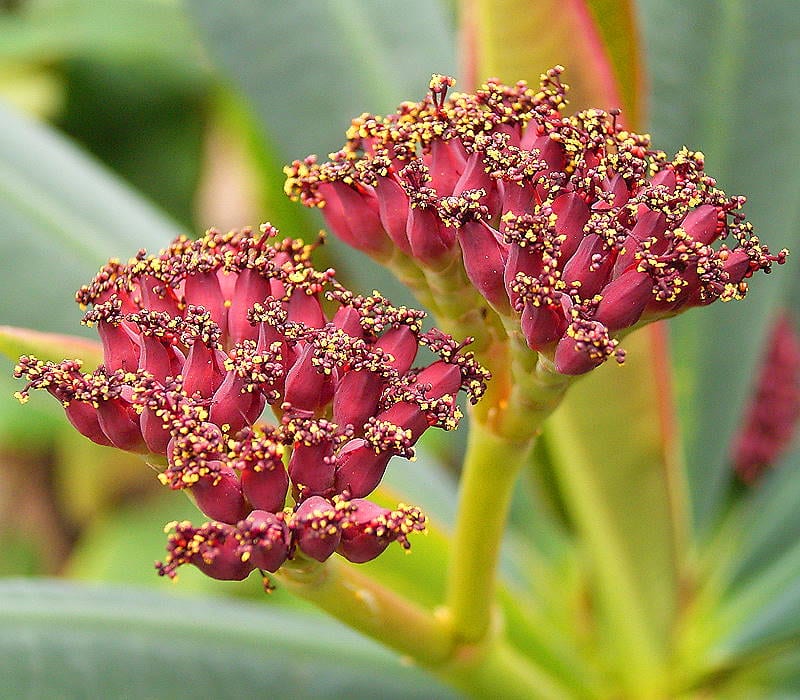
 © Frank Vincentz / CC BY-SA 3.0
Euphorbia pachypodioides
Euphorbia pachypodioides is a succulent with a thick, cylindrical trunk reminiscent of Pachypodium, topped with large leaves that are bluish green above and reddish purple beneath. In the rainy season it produces small flowers wrapped in dark purple bracts before the new leaves appear. Plants grow 35–50 cm tall, occasionally reaching 70 cm, with a trunk 5–8 cm across. Growth is slow and the plant is long-lived, although little is documented about its lifespan. Its cultivation difficulty is rated for experienced growers, so it suits people who are already comfortable with careful watering and winter care.
View Euphorbia pachypodioides encyclopedia →0% commission on your first sales!Register by September 30, 2026 and your first 2 plants are commission-free!
Grower Wanted!
List your plants on GrowerDirect and sell directly to customers nationwide!
6 Transparency Commitments from GrowerDirect
Our Grower disclose all key information for Caudex Plants listings, ensuring complete transparency on variety, origin, light needs, and difficulty.
- Variety Disclosed
- Real Plant Photos
- Color Details
- Origin Disclosed
- Light Requirements
- Difficulty Level
Browse all 146 varieties
Light Requirements
Difficulty Level
No listings match your filters
Adjust your filters, or get notified when new listings arrive.
Getting alerts is free with a member account. When new listings match your saved search, we'll notify you by email and in-app.
Browse other categories
Verified growers (preview)
Are you growing caudex plants?
Register as a grower and connect with buyers directly.
Apply as a growerEuphorbia pachypodioides key facts
- Growing Difficulty
- Advanced
- Lifespan
- Slow-growing and long-lived (little published data)
- Size
- 35-50 cm tall (rarely 70 cm), stem 5-8 cm thick
- Watering
- Sparingly in the growing season
- Light & Placement
- It likes a bright, warm, sunny spot and tolerates partial shade. Plants grown in shade scorch badly if moved suddenly into sun, so acclimatise gradually.
- Watering
- The growing season is short; water well during it. Excess water when not growing kills it quickly, so keep it dry in winter.
- Temperature & Overwintering
- It is tender; keep it at 12°C or above in winter and protect from frost.
- Soil & Repotting
- Use a mineral, very free-draining mix. Once established it is content in the same pot for years, so repot sparingly.
- Propagation
- It is self-fertile; seed sown in spring or summer germinates in about three weeks, and first-year seedlings are fairly easy. It can also be grafted.
- Pests & Cautions
- Like all Euphorbia, its white latex irritates skin and eyes. Wear gloves when cutting or repotting and keep it away from eyes and mouth. As a critically endangered species with a tiny range, choose nursery-raised seedlings over wild-collected plants.
About Euphorbia pachypodioides
Learn about Euphorbia pachypodioides, a cylindrical trunk crowned with large leaves that are bluish green above and reddish purple below. It grows 35–50 cm tall and is best suited to experienced growers, with tips on light and watering.
7 things to know before growing Euphorbia pachypodioides
1Bright light and good airflow
A bright spot with good airflow is the basic requirement. Sudden exposure to strong sun can damage the leaves, so when you move the plant, introduce it to brighter light gradually.
2Water mainly in the growing season
During the growing season, water thoroughly until it drains from the bottom of the pot, but only after the soil has fully dried. The trunk stores water, so constant wetness can damage the roots and the base of the trunk. When in doubt, give less.
3Choose a fast-draining mix
A mix that drains quickly and lets air reach the roots, built mostly from mineral components, works well. Choosing a pot that is not oversized for the trunk makes it easier to predict how long the soil takes to dry.
4Repot gently to protect roots
Repot when growth is starting up, disturbing the roots as little as possible. Because the plant grows slowly, it rarely needs frequent repotting; do it when the pot starts to feel crowded with roots. The trunk has spines, and the milky sap from cuts can irritate skin, so wear gloves when handling it.
5Plan for winter dormancy
When the weather turns cold, growth stops and the plant may drop its leaves and rest. Keep it in a bright place away from chilly drafts, cut back watering sharply, and wait for spring.
6Flowers come before new leaves
The small flowers, wrapped in dark purple bracts, open before the new leaves that come with the rainy season. Knowing that flowers appear first helps you stay calm and simply watch the plant when the leaves have not yet emerged.
7Choose a sound plant
Look for a firm trunk with no soft spots or discoloration at the base. If the plant has leaves, check their color and condition. If it is dormant, check that the trunk is plump. It also helps to ask the grower about the conditions the plant was raised in.
Frequently asked questions about Euphorbia pachypodioides
- Q.Can a beginner grow it?
- A.Its cultivation difficulty is rated for experienced growers. Watering and winter care both need attention, so it is best to gain experience with succulents or caudiciform plants first.
- Q.How large does it grow?
- A.It reaches 35–50 cm in height, occasionally up to 70 cm, with a trunk 5–8 cm across. It grows slowly and is long-lived, though there is little documentation on its lifespan.
- Q.My plant lost its leaves in winter. Is it dead?
- A.The plant may drop its leaves and go dormant in the cold season, so leaf loss alone does not mean it has died. Check that the trunk is still firm rather than soft, keep watering minimal, and wait for warmer weather.
- Q.When and how does it flower?
- A.It produces small flowers wrapped in dark purple bracts, opening before the new leaves that come with the rainy season. Flowering also depends on the plant's condition, so keeping it healthy comes first.
- Q.What should I be careful of when handling it?
- A.The trunk has spines, and milky sap from wounds or cuts can irritate skin. Wear gloves when handling the plant, and rinse with water if sap touches you. If it gets in your eyes or symptoms persist, consult a medical professional.
Handy Growing Tools for Euphorbia pachypodioides
Learn more about Euphorbia pachypodioides in the encyclopedia
View Euphorbia pachypodioides encyclopedia entry →
Care difficulty, size, origin and light needs — all basics covered.
More in this category
Can't find the plant you're looking for?
Post your wishes for free and growers with matching plants will contact you with introductions.