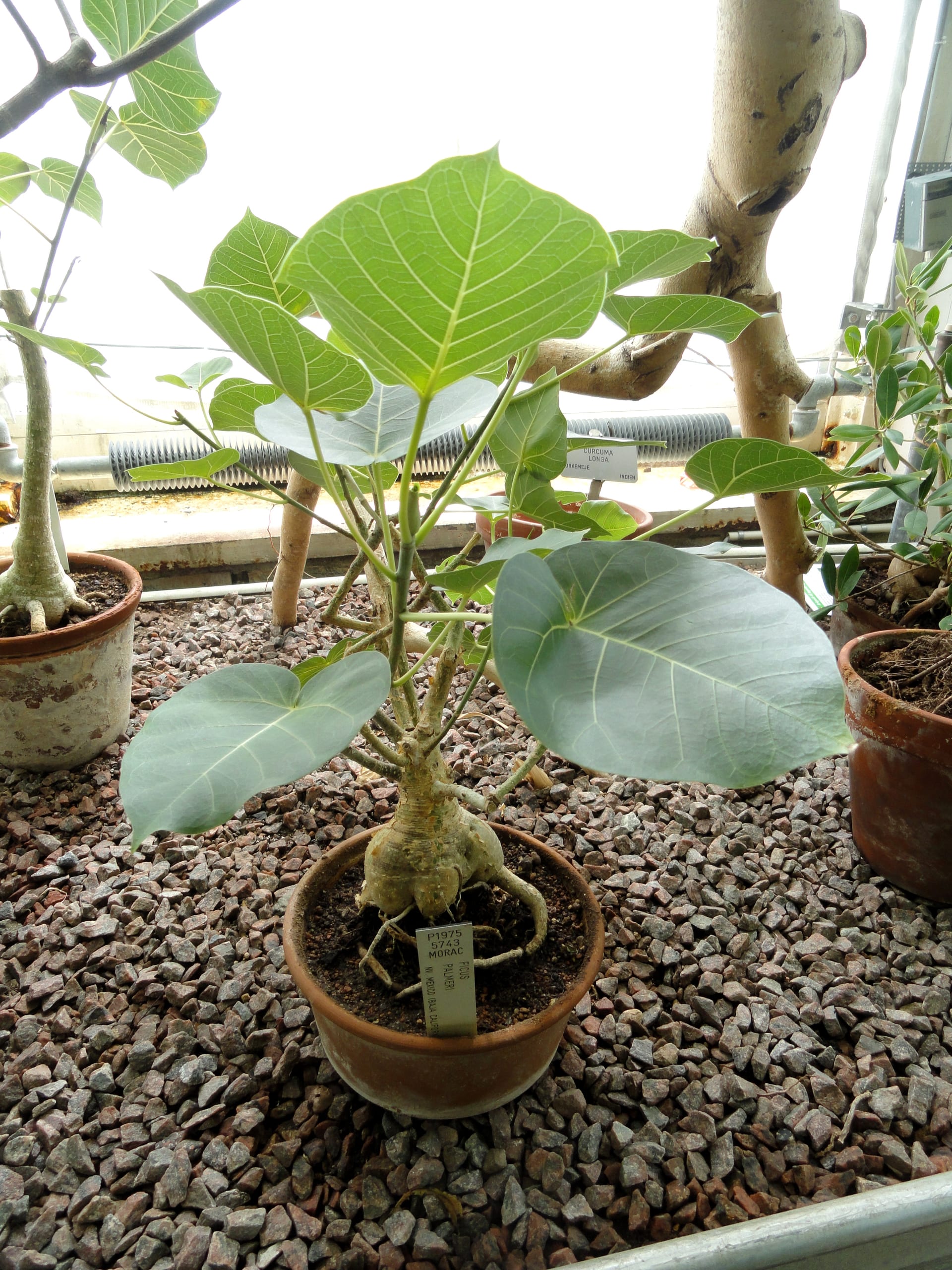
 © Daderot / CC0
Palmer's fig
Ficus palmeri is a fig native to the arid lands of Mexico's Baja California peninsula and Sonora. It is a subspecies of Ficus petiolaris, usually sold in Japan as 'Parumerii' and treated separately from its parent species, prized for its plump, swollen base. Few sources describe how to tell it apart from the parent subspecies by appearance, so the name depends on the seller's label. Care follows that of F. petiolaris, with moderate watering and bright partial shade, and getting the basics right makes it a good match for intermediate growers. Planted in a shallow pot with the base slightly raised above the soil, it shows off its caudiciform character.
View Palmer's fig encyclopedia →0% commission on your first sales!Register by September 30, 2026 and your first 2 plants are commission-free!
Grower Wanted!
List your plants on GrowerDirect and sell directly to customers nationwide!
6 Transparency Commitments from GrowerDirect
Our Grower disclose all key information for Caudex Plants listings, ensuring complete transparency on variety, origin, light needs, and difficulty.
- Variety Disclosed
- Real Plant Photos
- Color Details
- Origin Disclosed
- Light Requirements
- Difficulty Level
Browse all 146 varieties
Light Requirements
Difficulty Level
No listings match your filters
Adjust your filters, or get notified when new listings arrive.
Getting alerts is free with a member account. When new listings match your saved search, we'll notify you by email and in-app.
Browse other categories
Verified growers (preview)
Are you growing caudex plants?
Register as a grower and connect with buyers directly.
Apply as a growerPalmer's fig key facts
- Growing Difficulty
- Intermediate
- Lifespan
- Long-lived woody plant (little published data)
- Size
- Little published data on size for this subspecies; stays small in a pot
- Watering
- Light feeding in the growing season
- Light & Placement
- Like the parent species, it is said to do best in bright partial shade; avoid harsh afternoon sun.
- Watering
- It prefers moderate water: water thoroughly when the pot dries in the growing season, without keeping it constantly wet.
- Temperature & Overwintering
- A plant of dry north-western Mexico with little published data on cold tolerance; overwinter it indoors in a bright spot and water sparingly.
- Soil & Repotting
- Use a free-draining mix; to display the swollen base, use a shallower pot with the base slightly raised.
- Pests & Cautions
- Because there is little published guidance for telling it apart from typical F. petiolaris, names depend on the seller's label; choose plants with known provenance if this matters.
About Palmer's fig
Ficus palmeri is a caudiciform fig native to Mexico's Baja California peninsula, known for its swollen base and smooth bark. Here's what intermediate growers should know about placement, watering, and everyday care.
7 things to know before growing Palmer's fig
1Light & Placement
Like its parent species, it is said to grow well in bright partial shade. Avoid harsh afternoon sun. In winter, keep it in a bright spot indoors and water sparingly.
2Watering Basics
Let the soil dry out fully before watering thoroughly. Since the caudex itself stores moisture, erring toward less frequent watering with a clear dry-wet cycle helps prevent root rot.
3Fast-Draining Soil
A caudiciform-plant mix, or a succulent soil blended with pumice or perlite, works well. Since the roots are sensitive to prolonged wetness, make sure the pot itself drains freely too.
4When to Repot
Repot during active growth, moving up to a slightly larger pot while disturbing the root ball as little as possible. Hold off on watering for several days to a week afterward so the roots can settle before taking up moisture again.
5Seasonal Care
During the growing season keep it in bright partial shade and water thoroughly when the soil dries. In winter, keep it in a bright spot indoors and water sparingly. Leaf drop doesn't necessarily mean the plant is struggling; it's often just a natural seasonal response.
6Choosing a Healthy Plant
Look for a caudex that feels firm with no soft or damaged spots, which makes ongoing care easier. It's also worth checking leaf color and branch structure so you get a well-balanced specimen overall.
7Showcasing the Swollen Base
Ficus palmeri is enjoyed for its thickened, caudex-like base. Planting it in a shallow pot with the base slightly raised above the soil shows off that swollen form.
Frequently asked questions about Palmer's fig
- Q.Can beginners grow Ficus palmeri?
- A.It's fairly drought-tolerant, but getting the watering and placement right takes some know-how, so it's better suited to intermediate growers. Once you have the basics down, it's an easy plant to keep for the long term.
- Q.My plant dropped its leaves in winter — is it dying?
- A.Ficus palmeri can shed its leaves as temperatures drop, and this is often just a natural response rather than a sign of decline. If the caudex and branches still feel firm, it's usually fine to simply wait and watch until the weather warms up.
- Q.Is it okay if the caudex gets a scratch or scar?
- A.A minor scratch often isn't a serious issue, but there's some risk of moisture building up around the wound, so it's worth keeping an eye on. If you're concerned, avoid over-handling it and instead keep the plant in a well-ventilated spot while you watch how it settles.
- Q.Is it better to grow it outdoors or indoors?
- A.Most growers switch between the two depending on the season. Outdoors works well when it's warm and sunny, while moving it to a bright spot indoors as temperatures drop tends to make care easier.
- Q.How is it different from the parent species, Ficus petiolaris?
- A.Ficus palmeri is treated as a subspecies of Ficus petiolaris, and in Japan it's sold separately from the parent species under the name "Parumerii," valued for its swollen caudex base. The two share a lot in appearance and care, but palmeri is generally grown and appreciated for its own distinct form.
Handy Growing Tools for Palmer's fig
Learn more about Palmer's fig in the encyclopedia
View Palmer's fig encyclopedia entry →
Care difficulty, size, origin and light needs — all basics covered.
More in this category
Can't find the plant you're looking for?
Post your wishes for free and growers with matching plants will contact you with introductions.