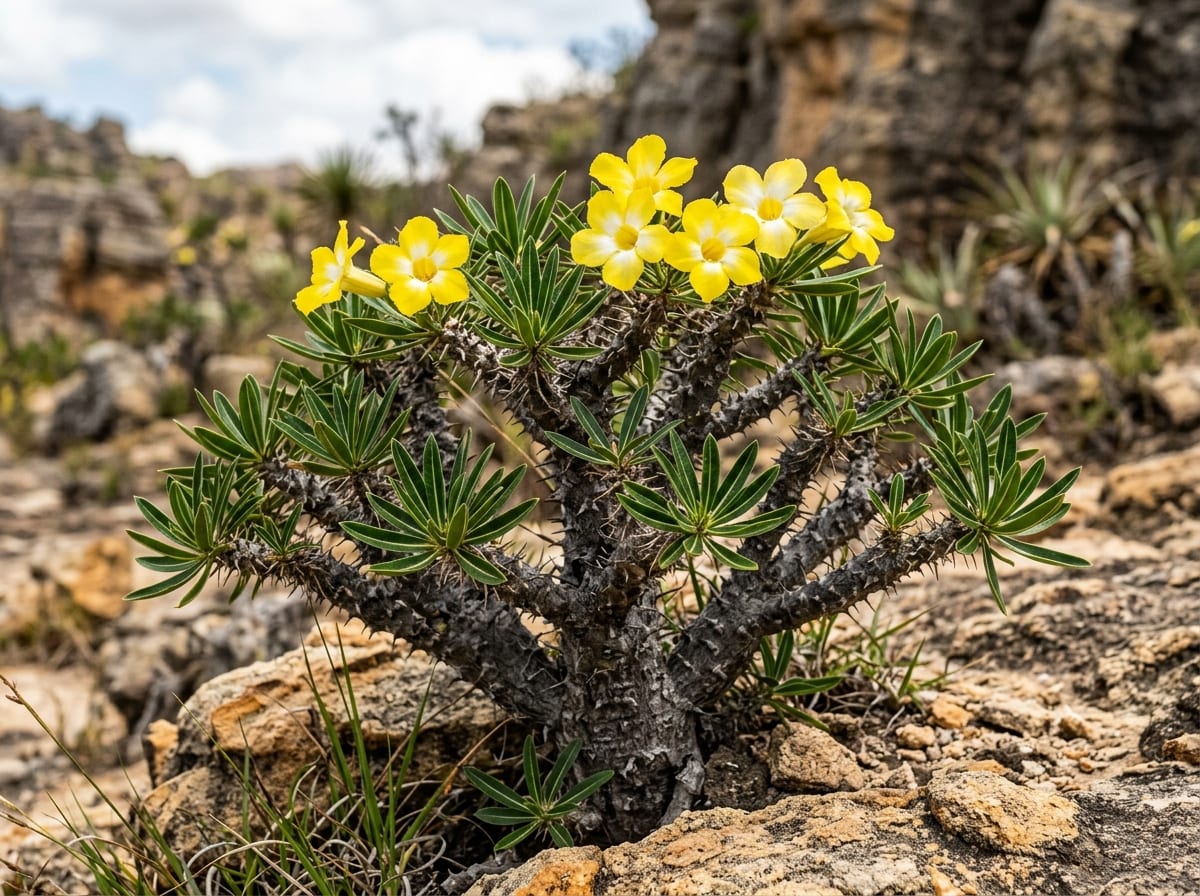
Pachypodium bicolor
Pachypodium bicolor is a yellow-flowered pachypodium from Madagascar's rosulatum group. Its name, meaning "two-colored," comes from its distinctive blooms: golden yellow petals with a white throat where the flower tube meets the center. The plant develops a thick, swollen trunk with densely branching, slightly drooping growth, reaching about 25 to 50cm in height. This combination of a chunky caudex and striking two-tone flowers makes it a favorite among caudiciform plant collectors. It's considered an intermediate-level plant to grow, but that makes watching it develop its character over time all the more rewarding.
View Pachypodium bicolor encyclopedia →0% commission on your first sales!Register by September 30, 2026 and your first 2 plants are commission-free!
Grower Wanted!
List your plants on GrowerDirect and sell directly to customers nationwide!
6 Transparency Commitments from GrowerDirect
Our Grower disclose all key information for Caudex Plants listings, ensuring complete transparency on variety, origin, light needs, and difficulty.
- Variety Disclosed
- Real Plant Photos
- Color Details
- Origin Disclosed
- Light Requirements
- Difficulty Level
Browse all 146 varieties
Light Requirements
Difficulty Level
No listings match your filters
Adjust your filters, or get notified when new listings arrive.
Getting alerts is free with a member account. When new listings match your saved search, we'll notify you by email and in-app.
Browse other categories
Verified growers (preview)
Are you growing caudex plants?
Register as a grower and connect with buyers directly.
Apply as a growerPachypodium bicolor key facts
- Growing Difficulty
- Intermediate
- Lifespan
- Little data available
- Size
- 25-50 cm tall; crown about 50 cm across
- Watering
- Sparingly in the growing season
- Light & Placement
- It grows on cliffs in open forest, so give it a sunny position in the growing season.
- Watering
- Water once the soil dries in the growing season and reduce water while leafless from autumn to spring.
- Temperature & Overwintering
- Little is recorded on its cold tolerance, so overwinter it dry in a warm room away from frost.
- Soil & Repotting
- Its habitat is porous sandstone, so in cultivation use a coarse, porous, free-draining mix such as pumice.
- Pests & Cautions
- Pachypodium sap is toxic and the spines are sharp. Wear thick gloves or wrap the trunk in several layers of newspaper when repotting or moving it. It resembles other yellow-flowered relatives, so check the label against the scientific name and the white throat.
About Pachypodium bicolor
Pachypodium bicolor, a Madagascar caudiciform with two-tone yellow flowers and a white throat. This intermediate-level plant grows into a slightly drooping shrub, 25 to 50cm tall, prized by succulent collectors.
7 things to know before growing Pachypodium bicolor
1Sunlight and Placement
As a Madagascar native, Pachypodium bicolor prefers a spot with plenty of sun and good airflow. Grow it outdoors in full sun from spring through autumn, and move it to a bright indoor window when temperatures start to drop.
2Watering Basics
During the growing season, water thoroughly once the soil surface has dried out, giving the plant a clear wet-dry rhythm. Avoid overwatering, since soggy soil can lead to root rot — always let water drain freely from the pot.
3Well-Draining Soil
A well-draining mix formulated for caudiciform or succulent plants works best. Blending in akadama or pumice improves aeration and helps keep the thick trunk and roots healthy.
4Repotting Tips
The base of the trunk and roots are easily damaged, so repot carefully during the growing season. Avoid disturbing the root ball too much, and move up to a slightly larger pot with fresh, well-draining soil.
5Winter Dormancy Care
As growth slows, the plant may drop its leaves and enter dormancy. During this period, cut back on watering to reduce stress on the plant.
6Choosing a Good Plant
Look for a specimen with a firm, plump trunk free of soft spots or scarring. A plant with dense branching from a thick trunk shows off the characteristic look of Pachypodium bicolor.
7Enjoying Its Branching Form
Dense branching from a thick trunk and a slightly drooping habit are hallmarks of this variety. Displaying it on a shelf or stand at some height makes it easier to appreciate the spread and droop of its branches.
Frequently asked questions about Pachypodium bicolor
- Q.Is this a good plant for beginners?
- A.Pachypodium bicolor is generally considered better suited to growers with some succulent or caudiciform experience. That said, once you get the hang of watering and placement, beginners can grow it successfully too.
- Q.What does "bicolor" refer to in its name?
- A.Bicolor means "two-colored," referring to its yellow flowers with a white throat where the petals meet the center. This two-tone coloring is one of the easiest ways to distinguish it from related species.
- Q.How big does it grow?
- A.It typically reaches about 25 to 50cm in height, with a canopy spread of around 50cm. It develops dense branching from a thick trunk and grows into a slightly drooping shrub shape.
- Q.When does it bloom?
- A.Detailed information on bloom timing is still limited, and it can vary by plant and growing conditions. When it does flower during the growing season, you can enjoy its yellow blooms with the distinctive white throat.
- Q.What should I watch for in winter care?
- A.As temperatures drop, growth slows and the plant may drop its leaves and go dormant. Water less frequently during this time, and keep it in a warm, sunny spot.
Handy Growing Tools for Pachypodium bicolor
Learn more about Pachypodium bicolor in the encyclopedia
View Pachypodium bicolor encyclopedia entry →
Care difficulty, size, origin and light needs — all basics covered.
More in this category
Can't find the plant you're looking for?
Post your wishes for free and growers with matching plants will contact you with introductions.