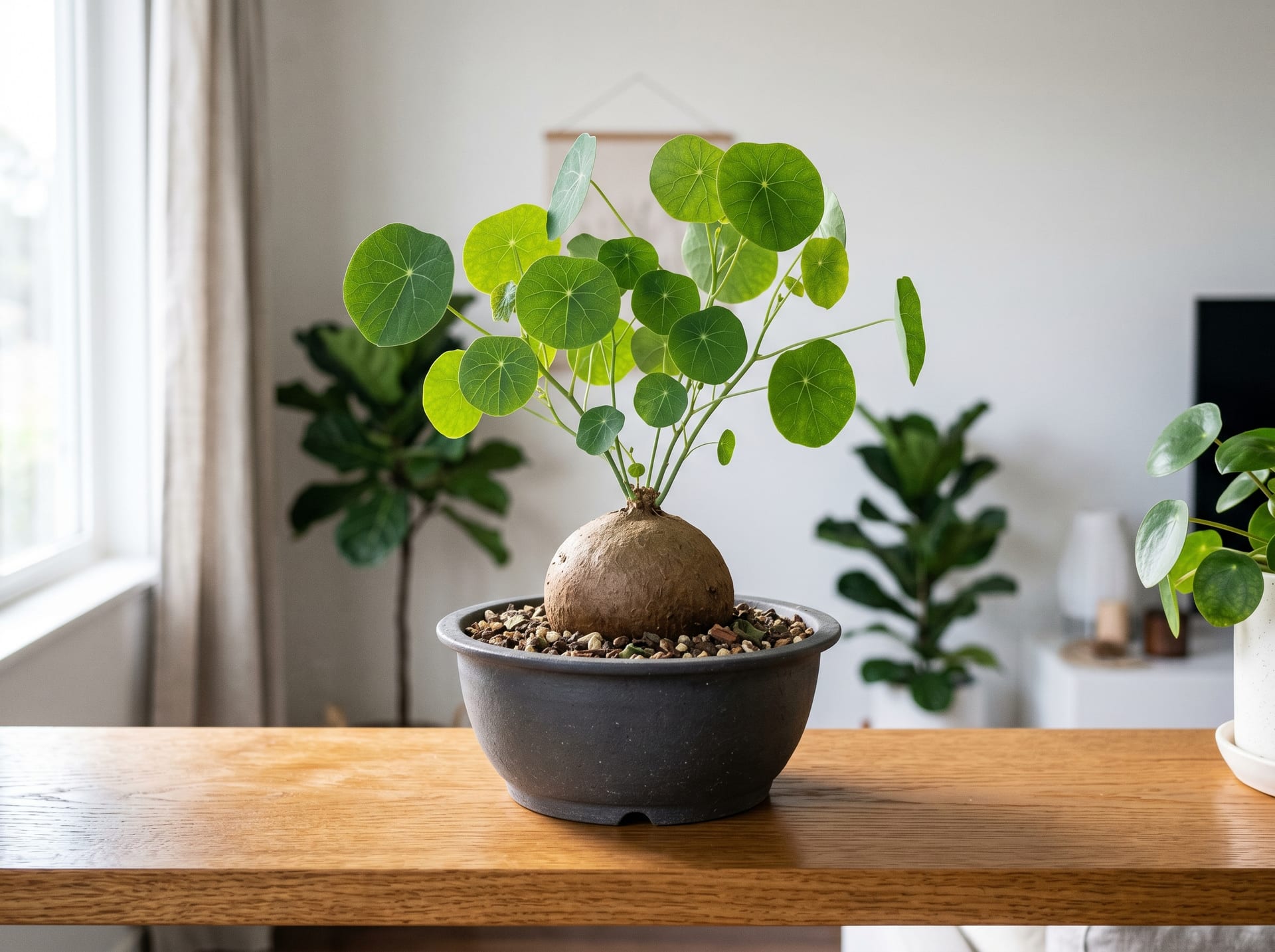
Stephania
Stephania is a caudex-forming plant prized for its distinctive, smooth, slightly flattened tuber, from which a single stem rises to carry round, lotus-like peltate leaves. Native to Southeast Asia, including Thailand, Laos and Cambodia, it drops its leaves completely and goes dormant in winter. Its cold tolerance is rather low, so keep it indoors where temperatures stay at or above 10°C. Its sculptural appearance makes it a standout both as a collector's piece and an interior accent plant, and it can be enjoyed for many years once you get the key points right.
View Stephania encyclopedia →Grower Wanted!
List your plants on GrowerDirect and sell directly to customers nationwide!
6 Transparency Commitments from GrowerDirect
Our Grower disclose all key information for Caudex Plants listings, ensuring complete transparency on variety, origin, light needs, and difficulty.
- Variety Disclosed
- Real Plant Photos
- Color Details
- Origin Disclosed
- Light Requirements
- Difficulty Level
Browse all 146 varieties
Light Requirements
Difficulty Level
No listings match your filters
Adjust your filters, or get notified when new listings arrive.
Getting alerts is free with a member account. When new listings match your saved search, we'll notify you by email and in-app.
Browse other categories
Verified growers (preview)
Are you growing caudex plants?
Register as a grower and connect with buyers directly.
Apply as a growerStephania key facts
- Growing Difficulty
- Intermediate
- Lifespan
- 10+ years
- Size
- Caudex 5-15cm
- Light & Placement
- Grow in bright indirect light to soft direct sun. Light that is too strong scorches the leaves, so choose filtered light such as through a sheer curtain.
- Watering
- From spring to autumn water moderately once the soil dries. Withhold water during winter dormancy, but take care not to let the caudex dry out excessively.
- Temperature & Overwintering
- Cold tolerance is somewhat low, so overwinter indoors at 10°C or above. It drops all its leaves and rests in winter, so keep it warm and on the dry side.
- Soil & Repotting
- Use a mix that drains well yet retains a little moisture. Planting with the top of the caudex above the soil helps prevent rot.
- Dormancy Care
- It drops its leaves and rests in winter. Even while dry, avoid letting the caudex shrivel by keeping it out of direct sun and heater drafts.
- Pests & Cautions
- Care is needed during sprouting and rooting. To wake a dormant tuber, place it in a warm, bright spot and begin watering little by little.
About Stephania
Stephania is a perennial caudiciform plant of the family Menispermaceae, native to tropical and subtropical regions including Southeast Asia. Its most defining feature is a flattened, roughly spherical caudex that sits prominently above the soil, growing slowly over the years into a uniquely sculptural form that makes each specimen one of a kind. A single stem rises from the caudex and carries round, peltate leaves. With well-draining soil, soft light and winter temperatures kept at or above 10°C, it can be enjoyed for more than a decade, and the caudex keeps its presence even after the leaves drop in winter.
5 things to know before growing Stephania
1Don't Bury the Caudex
Stephania's caudex prefers good air circulation, so it is commonly planted with half or more of the tuber above the soil surface. Burying it too deep traps moisture and can lead to rot. Use the nursery's original planting depth as a guide and adjust gradually to your preference.
2Watch for Spring Sprouting
As temperatures rise in spring, new shoots will emerge from the caudex. Resume watering gradually at this point and move the plant to a brighter location. Delaying the transition can slow growth, so check your caudex regularly as spring approaches.
3Use Fast-Draining Soil
A fast-draining mix formulated for succulents or caudex plants is recommended. Blending akadama, kanuma, and perlite in suitable ratios helps prevent waterlogging. Standard potting soil retains too much moisture and can cause root rot over time.
4Bring Indoors for Winter
Stephania has rather low cold tolerance and should be overwintered indoors where temperatures stay at or above 10°C, which means indoor care is necessary in most parts of Japan. Even during dormancy, keep it in a warm spot out of direct sun and away from drafts of heater air. Keeping it in a pot makes seasonal moves much easier.
5Fertilize Sparingly
During the growing season (spring through summer), a small amount of slow-release fertilizer can support caudex development, but over-fertilizing may cause excessive vine growth or root stress. No fertilizer is needed during dormancy. A formula designed for succulents or foliage plants is a practical choice.
Frequently asked questions about Stephania
- Q.The caudex is shriveling — is my plant dying?
- A.Even when you withhold water during dormancy, avoid letting the caudex dry out to the point of shriveling. If you notice shrinkage, check whether direct sun or heater air is reaching the plant and move it if so. If the caudex is not completely dried out or hardened, it will often plump back up once the growing season begins and watering resumes. If shriveling continues during the growing season, check for root rot or root damage.
- Q.Why isn't my Stephania sprouting after dormancy?
- A.If sprouting hasn't occurred by spring, the temperature may still be too low. Sprouting and rooting are promoted by warmth and humidity of around 25°C (77°F), so try moving the plant to a warm, bright spot. Repotting stress or root condition can also affect the timing of new growth.
- Q.How can I grow a larger caudex?
- A.Caudex growth is inherently slow, changing gradually over many years. Providing consistent watering and light fertilization during the growing season, along with ample soft light, lays the foundation for steady development. Repotting periodically helps prevent root-bound stress and supports continued growth.
- Q.Can Stephania be grown from seed?
- A.Yes, but germination requires warm, humid conditions of around 25°C (77°F) and fresh seeds, with variable success rates. Seeds can be difficult to source domestically, so purchasing from specialist nurseries or reputable sellers is advisable. Cuttings are generally not viable; propagation is mainly done by seed.
- Q.Is Stephania toxic to pets or children?
- A.Many Stephania species contain alkaloids that may cause illness if ingested. It is advisable to keep the plant out of reach of young children and pets. If accidental ingestion occurs, seek advice from a medical professional or veterinarian promptly.
Handy Growing Tools for Stephania
Learn more about Stephania in the encyclopedia
View Stephania encyclopedia entry →
Care difficulty, size, origin and light needs — all basics covered.
Stephania related articles
How to Enjoy Caudex Plants (Bizarre Plants) | Managing Caudex Foliage Plants such as Stephania and Elephant's Foot
Explains how to care for caudex foliage plants for indoor enjoyment (Stephania, Elephant's Foot, and others). Covers summer/winter dormancy cycles, proper watering rhythm, light requirements, and differences from typical caudex collections.
How to Grow Stephania erecta | Rooting Management, Watering, and Budding Tips After Dormancy
For rooted plants, it's a beginner-friendly caudex plant. The challenge lies in bare caudex without roots—rooting management requires April–July and a bottom temperature of 25–28°C. We explain the monthly budding steps, watering decisions based on pot weight, and the critical 10°C winter threshold.
More in this category
Can't find the plant you're looking for?
Post your wishes for free and growers with matching plants will contact you with introductions.